








 CoinDesk
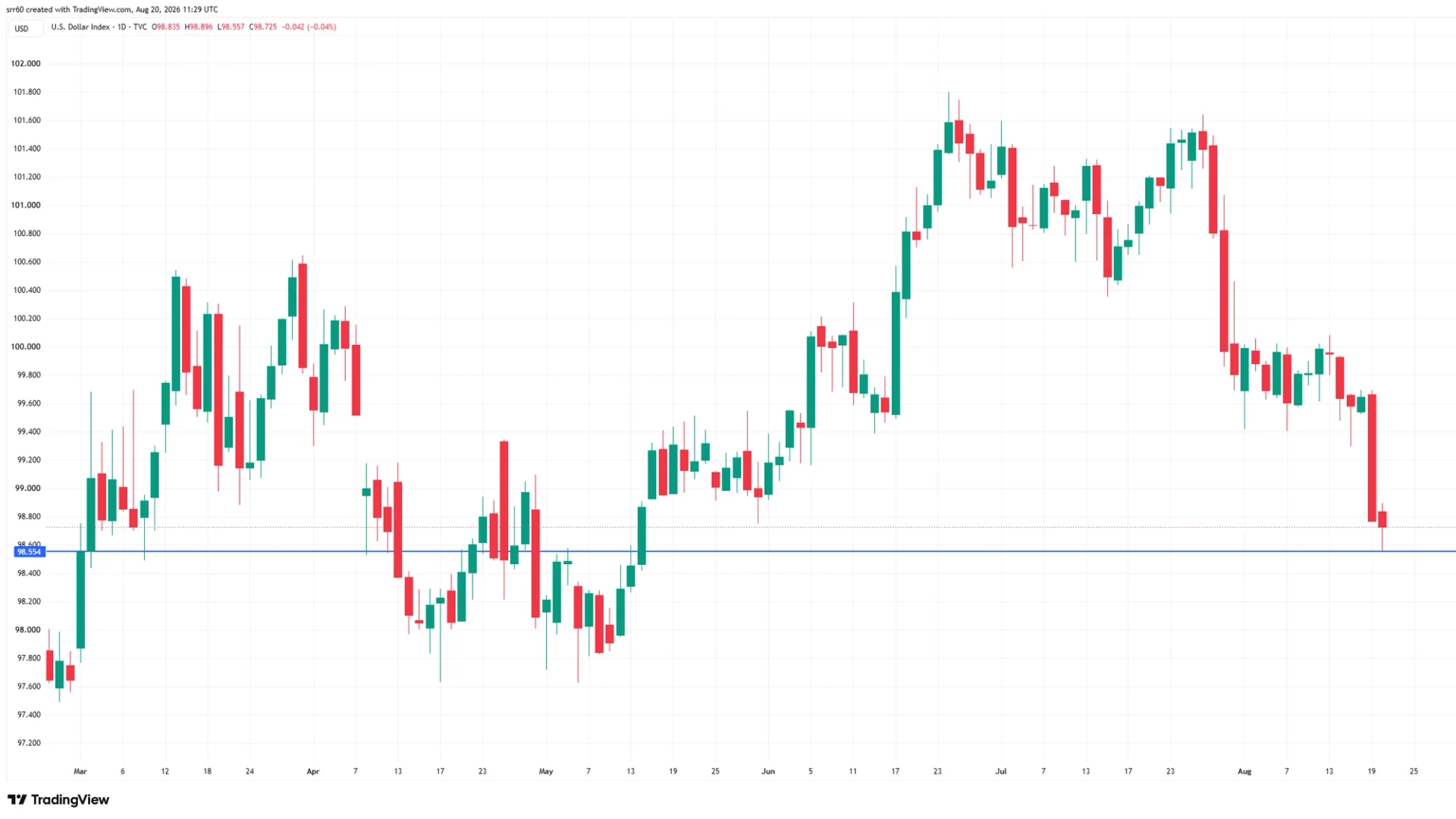


Bitcoin topped $71,000 on Wednesday after the Dollar Index slid 0.88% to 98.77, its lowest reading since May, as bond market relief and White House support signals for U.S. Treasuries pulled capital into scarce assets. The 24-hour move triggered more than $3.3 billion in liquidations across crypto, roughly $3 billion of which were short positions. Short sellers absorbed close to $2.7 billion in forced losses as BTC vaulted past key resistance, the largest wave of forced short closures on record going back to 2021.
Why it matters
Pedro Fontes, a research analyst at Mercado Bitcoin, framed the setup as precisely the kind of environment that strengthens the case for Bitcoin: a world where the largest debt market needs explicit support to function with greater stability pushes demand toward assets that are scarce, predictable, and outside the logic of public debt expansion. Strive CEO Matt Cole added on X that he has long believed the Dollar Index is in a structural decline that is likely to continue, and that the trend could translate into a sustained bullish environment for bitcoin. The pair has historically traded inversely to DXY, and a fresh multi-month low in the index gives the correlation fresh fuel.
Market impact
Bitcoin's weekly chart is pressing above core resistance at $68,000 after a 14% advance, with a confirmed weekly candle close opening a clear path toward the next resistance zone at $78,000. The $3 billion in short liquidations leaves fewer positions exposed to forced buying, which can compound the move higher. That setup is partially offset by BTC's margin-borrow rate climbing to 4.6% from 3.9% before the rally, a signal that traders are already reentering short positions. Today's session hinges on initial jobless claims and any further White House signals on Treasury support, with geopolitical headlines likely to move long-end yields.

Frequently asked questions
-
Why did Bitcoin top $71,000 on Wednesday?
Bitcoin's rally was triggered by bond market relief following White House support signals for U.S. Treasuries, which weakened the dollar and pulled capital into scarce assets outside the logic of public debt expansion.
-
What is the Dollar Index and why does its slide matter for Bitcoin?
The Dollar Index measures the U.S. currency against a basket of trading partners and slid 0.88% to 98.77, its lowest since May. Strive CEO Matt Cole said the DXY is in a structural decline that is likely to continue, which historically supports Bitcoin.
-
How large were the short liquidations during the Bitcoin rally?
The 24-hour move triggered more than $3.3 billion in crypto liquidations, roughly $3 billion of which were short positions. Short sellers absorbed nearly $2.7 billion in forced losses, the largest wave of forced short closures on record going back to 2021.
-
What is the next technical resistance level for Bitcoin?
Bitcoin's weekly chart is pressing above $68,000 resistance after a 14% advance. A confirmed weekly candle close above that level opens a clear path to the next resistance zone at $78,000.
-
Why are some traders cautious despite the rally?
BTC's margin-borrow rate has climbed to 4.6% from 3.9% before the rally, suggesting traders are already reentering short positions and could weigh on the move if the macro backdrop turns.
 CoinTelegraph
 WatcherGuru
 CryptoSlate
 Crypto Capital Venture