








 CoinDesk
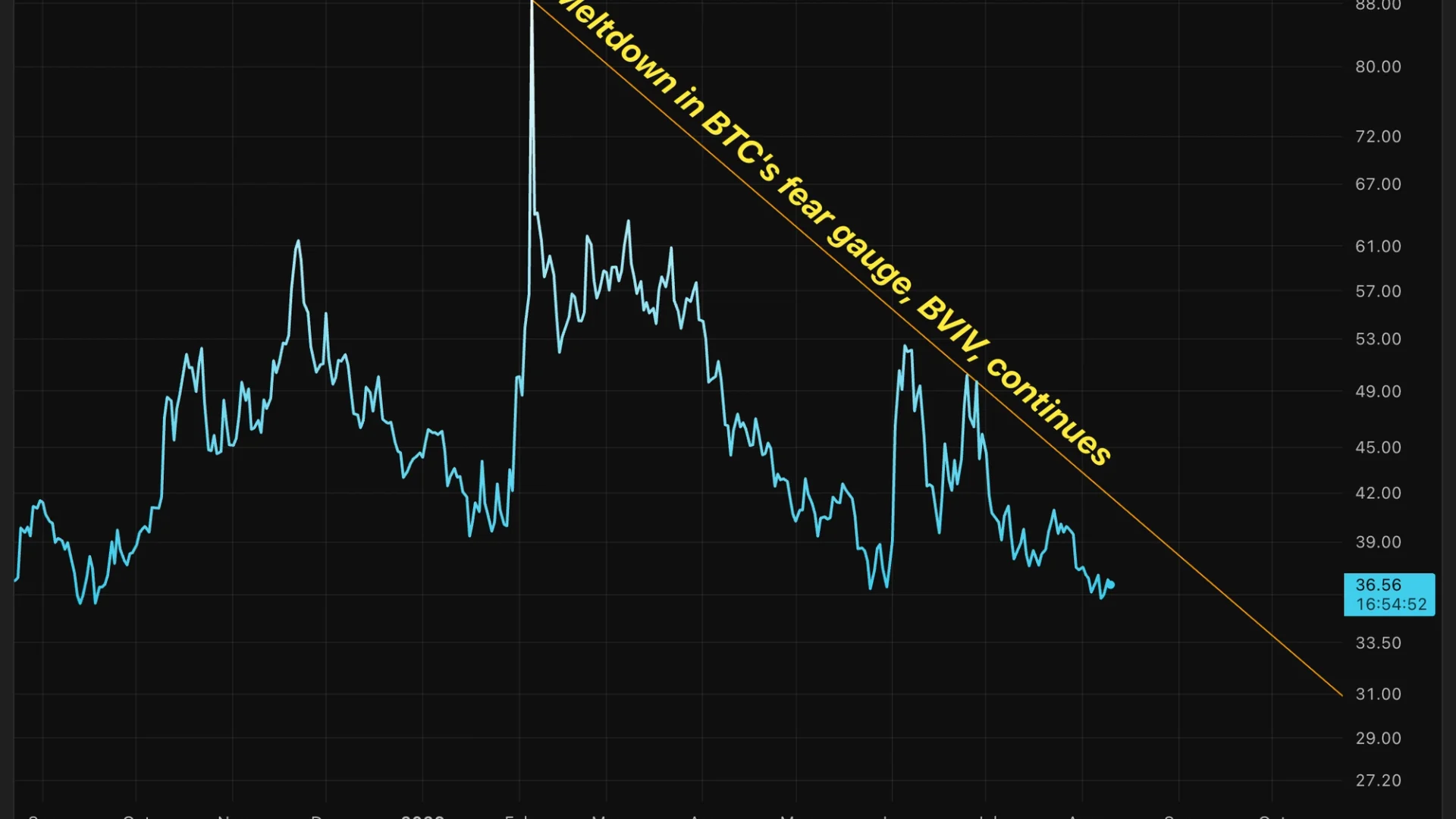



Volmex's BVIV index, a gauge of Bitcoin's annualized 30-day implied volatility, fell to 35.59% over the weekend, its lowest level since September, after spiking above 90% in February as Bitcoin dropped from $90,000 to nearly $60,000. Bitcoin has held between $62,000 and $66,000 since early July, draining demand for options that bet on a large move. Yet put options remain more expensive than calls, keeping downside protection in demand.
Why it matters
FalconX derivatives head Griffin Sears described the move as a broad supply-demand imbalance. Directional option demand has faded, while miners and corporate treasuries are selling calls through systematic overwriting programs to generate yield on spot BTC holdings. The added supply suppresses implied volatility.
A midyear lull and cooler spot market have also compressed realized volatility, putting further downward pressure on BVIV. But elevated put skew shows traders still pay a premium for protection against a deeper Bitcoin decline. Low volatility therefore signals fewer expected near-term swings, not an all-clear on downside risk.
Market impact
Professional volatility traders are shifting from outright long-volatility positions toward relative value in Bitcoin's term structure and put skew. For BTC borrowers and leveraged investors, cheap implied volatility can create a false sense of security and encourage aggressive positioning without enough protection.
That leaves positions vulnerable if the range breaks and a sharp move triggers forced liquidations. The key market signal is the split between compressed headline volatility and persistent demand for puts: calm pricing on the surface, but expensive insurance underneath.

Frequently asked questions
-
Why did BVIV fall to 35.59% despite persistent concern about Bitcoin?
Bitcoin's range-bound price reduced demand for directional options, while miners and corporate treasuries sold calls through systematic overwriting programs, adding supply that suppressed implied volatility.
-
What does elevated put skew indicate for Bitcoin options?
Elevated put skew shows traders still pay a premium for downside insurance. Overall volatility is low, but protection against a deeper Bitcoin decline remains expensive.
-
How does the current BVIV reading compare with February's spike?
BVIV is at 35.59%, compared with a spike above 90% in February when Bitcoin dropped from $90,000 to nearly $60,000.
-
What are professional volatility traders targeting instead of outright volatility?
They are shifting from outright long-volatility positions toward relative value in Bitcoin's term structure and elevated put skew.
-
Why can low implied volatility raise liquidation risk for leveraged BTC borrowers?
Low implied volatility can make leverage look cheap and encourage aggressive positioning without enough protection. A sharp move can expose under-hedged positions to forced liquidations.
 TheBlock
 WuBlockchain
 CryptoSlate
 Lookonchain
 Glassnode
 Crypto Rank News
 CoinTelegraph