








 CoinDesk

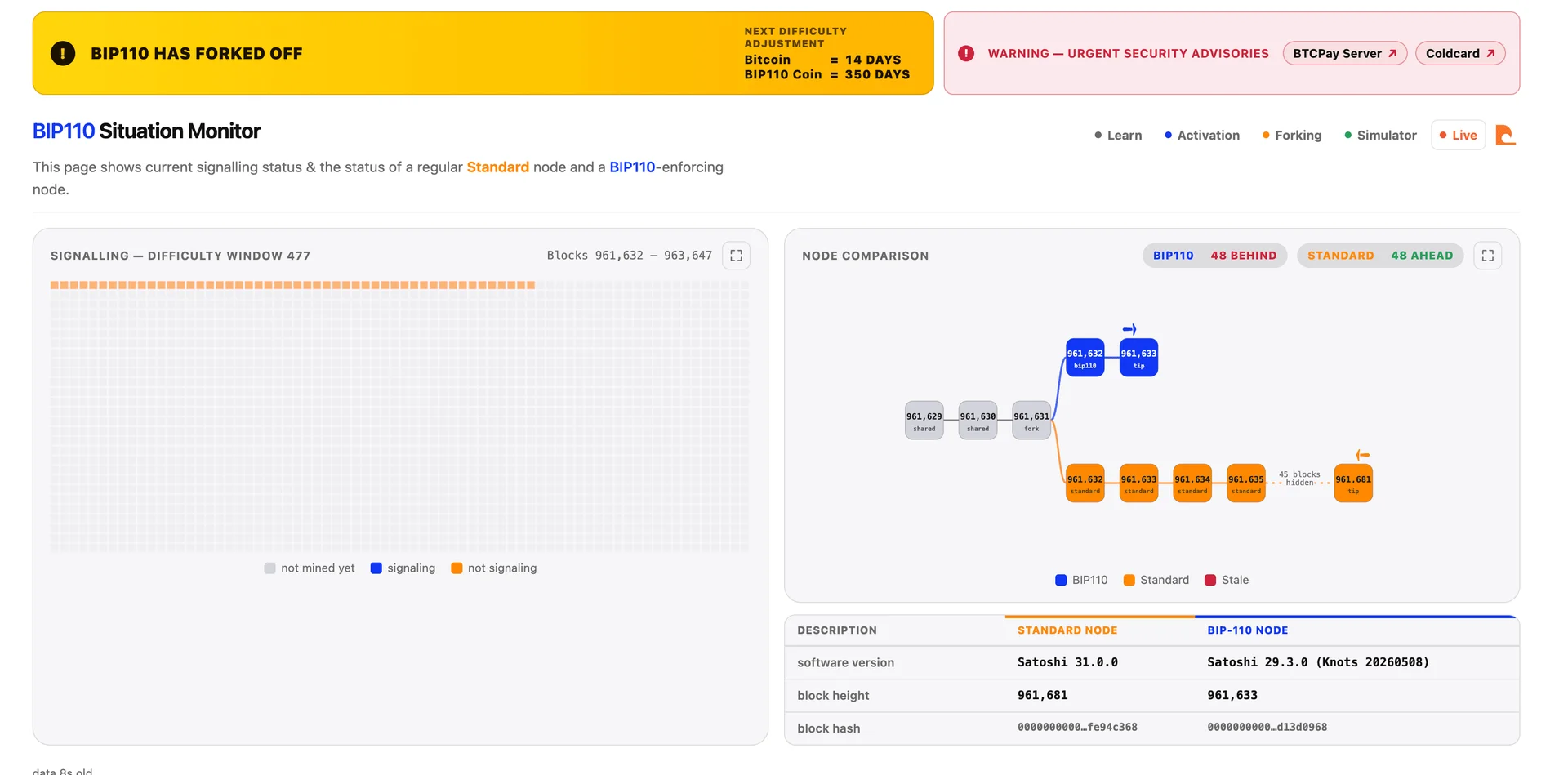


The BIP-110 breakaway chain has produced just two blocks in roughly eight hours, while the main Bitcoin chain advanced by 48 blocks to 961,681. The fork began at block 961,632, and BIP-110 nodes now reject blocks that do not signal support for the proposal, leaving the minority chain at 961,633. Only 2.53% of blocks signaled for BIP-110 over the past two weeks, far below the 55% threshold cited for activation without a split.
Why it matters
BIP-110 would temporarily stop images, text and other non-financial data from being stored in Bitcoin transactions for one year. Supporters argue that such material consumes block space, adds congestion and raises costs for people sending payments. Critics say anyone who pays the fee has bought the right to use that space and that miners and node operators should not decide which transactions are legitimate.
The split turns that dispute over Bitcoin's block space into a test of chain coordination. AntPool mined the first non-signaling block accepted by the main network but rejected by BIP-110 nodes, while a miner using Ocean produced the alternative block followed by the breakaway chain. Both are mining pools that coordinate operators and share rewards.
Market impact
The fork inherited Bitcoin's current mining difficulty while controlling only a tiny share of hashpower. Bitcoin retargets difficulty every 2,016 blocks to keep blocks arriving roughly every ten minutes, but the breakaway chain cannot reach that adjustment quickly. At its recent pace, the next adjustment is about 350 days away, compared with 14 days for Bitcoin, leaving confirmations on the fork slow.
Users handling fork coins also face replay-style risk because both chains accept identical transactions. A signed transaction made to send fork coins can be rebroadcast on Bitcoin, potentially allowing a buyer to collect real BTC from the same seller. The BIP-110 signaling window ends at block 963,647, and the chain is not on pace to approach it.

Frequently asked questions
-
Why is the BIP-110 chain producing blocks so slowly?
Bitcoin adjusts mining difficulty every 2,016 blocks, but the fork inherited the current setting while controlling only a tiny share of hashpower. That combination leaves its blocks hours apart.
-
What does BIP-110 propose changing in Bitcoin transactions?
It would temporarily stop images, text and other non-financial data from being stored in Bitcoin transactions for one year. Supporters cite congestion and fees, while critics defend users' control of paid block space.
-
How much mining support does BIP-110 have?
Only 2.53% of blocks signaled support over the past two weeks, compared with the 55% cited for activation without a split.
-
Why can selling fork coins create replay-style risk?
Both chains accept identical transactions, so a signed transaction intended to send fork coins can also be rebroadcast on Bitcoin. A buyer could then collect BTC from the same seller.
-
What is the BIP-110 signaling deadline?
The signaling window ends at block 963,647. At the fork's recent pace, it is not on track to approach that block, while its next difficulty adjustment is roughly 350 days away.
 WatcherGuru
 Crypto News
 CryptoSlate
 WuBlockchain
 Crypto Capital Venture