








 CoinDesk
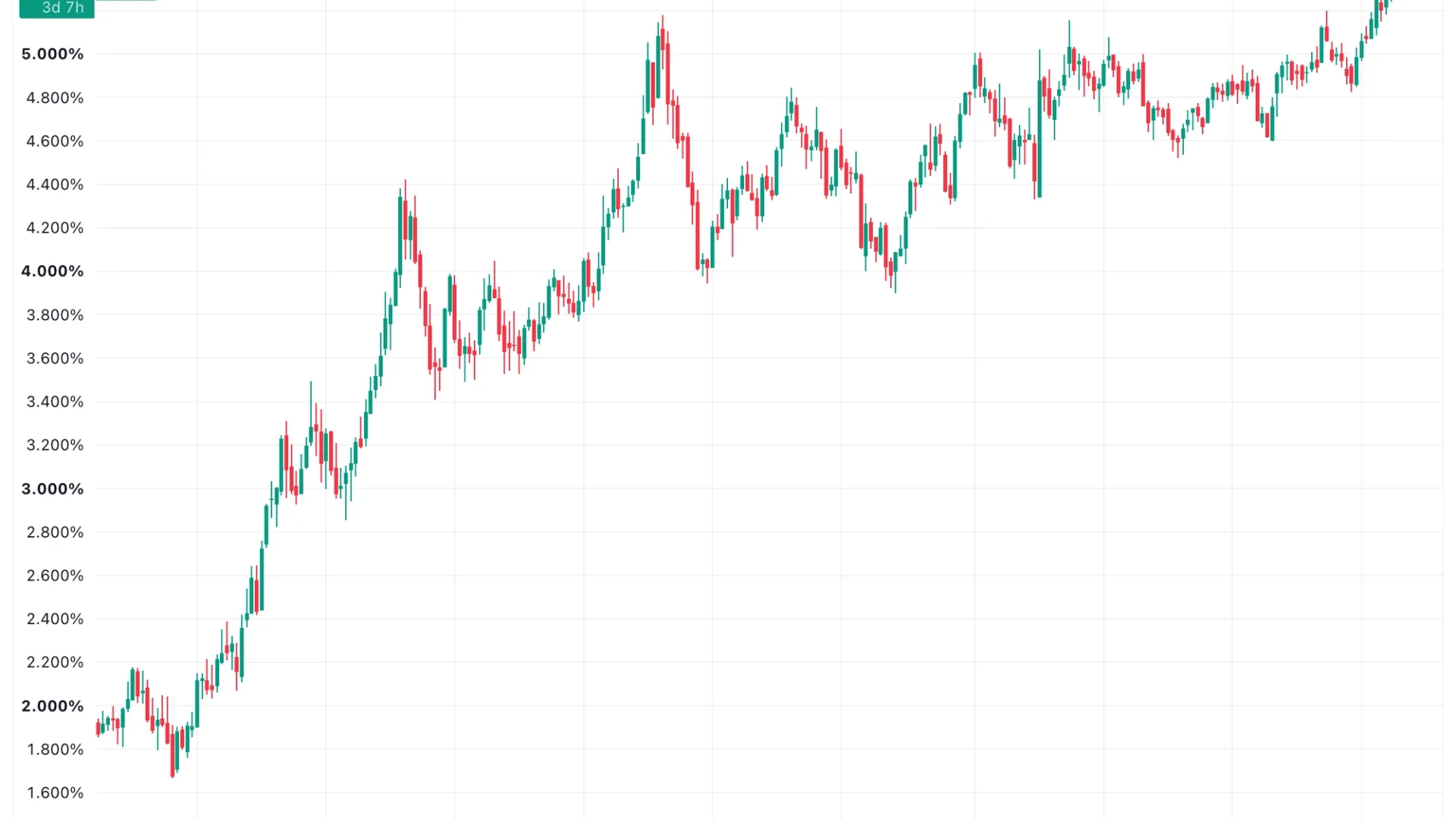


The 30-year U.S. Treasury yield climbed to 5.33% this week, its highest level since 2007, as a wave of long-duration issuance and worries about sovereign debt quality pushed global borrowing costs to multi-decade highs. TLT, the long-duration Treasury ETF, fell to an all-time low of $81.35 on Monday.
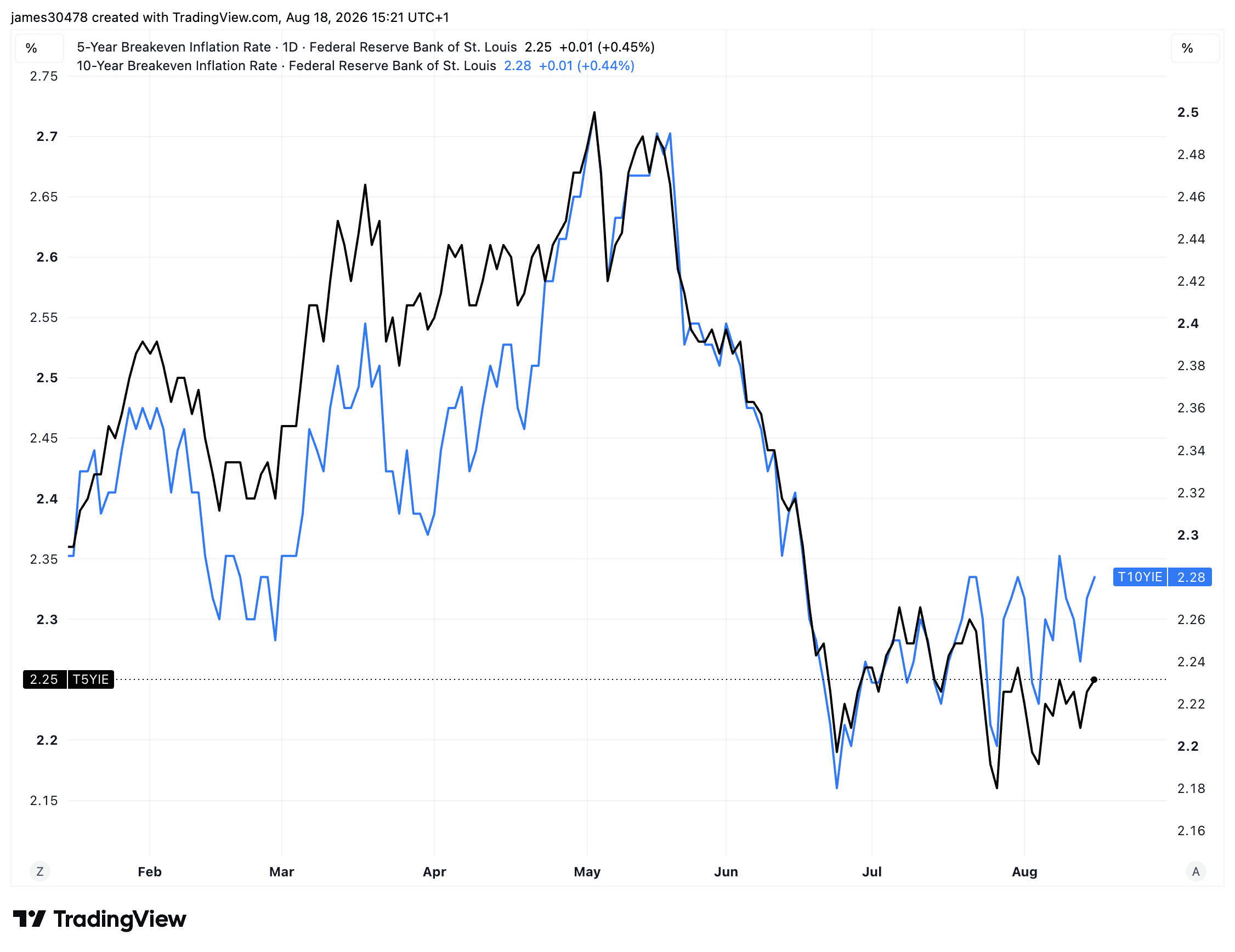
The pressure is global. U.K. gilt yields are pushing toward 6%, French borrowing costs are at their highest since 2008, and Japan's long-term yields continue to set fresh records. WTI crude has held above $84 for weeks, up 25% from its July low, but inflation expectations have stayed roughly flat: 2.25% on the five-year, 2.28% on the ten-year. The market is not pricing a hot economy. It is pricing debt.
Why it matters
U.S. government debt is approaching $40 trillion, and the marginal seller of duration is no longer the Treasury. Hyperscalers have issued a combined $159 billion of bonds in 2026, up 47% from a year earlier, almost entirely to finance AI infrastructure. Goldman Sachs expects total issuance to reach $400 billion this year. Every basis point of yield rise raises the cost of refinancing that debt, and the marginal bid behind long-duration paper is thinning.
Jim Cramer's read summed up the new regime: "5.31% isn't that bad for 20-year paper." That sentence is the market accepting structurally higher yields rather than fighting them.
Market impact
The textbook hedge trade says gold and BTC, both non-yielding, should suffer when bonds pay 5%. Gold has done the opposite, gaining roughly 10% this month as investors hedge sovereign credibility risk rather than opportunity cost. Bitcoin has not. BTC has underperformed broad risk assets for nine straight months and now trades just above $64,000 in a low-volatility summer lull. The digital-gold thesis is being tested in real time, and so far the answer is no.

Frequently asked questions
-
Why are long-term bond yields surging to multi-decade highs?
Sovereign debt is approaching $40 trillion in the U.S., and AI hyperscalers have issued $159 billion of long-duration paper this year, up 47% year-over-year. The combined supply is overwhelming demand at the long end, pushing yields to 5.33% on the 30-year, the highest since 2007.
-
How high has the 30-year U.S. Treasury yield gone?
The 30-year U.S. Treasury yield climbed to 5.33% this week, its highest level since 2007. Long-duration Treasuries have been selling off globally, with U.K. gilt yields pushing toward 6% and French borrowing costs at their highest since 2008.
-
How much AI-infrastructure debt have hyperscalers issued in 2026?
Hyperscalers issued a combined $159 billion of bonds in 2026, up 47% from a year earlier, almost entirely to fund AI infrastructure. Goldman Sachs expects total issuance tied to the AI buildout to reach $400 billion for the full year.
-
Why hasn't Bitcoin rallied like gold during the debt selloff?
Gold gained roughly 10% this month as investors hedge sovereign credibility risk, while Bitcoin has underperformed broad risk assets for nine straight months and trades just above $64,000. The digital-gold hedge narrative is being tested, and BTC has so far failed to track gold's flight-to-quality bid.
-
What does the bond yield surge mean for crypto and risk assets?
Higher yields raise the opportunity cost of holding non-yielding assets like BTC and pull capital toward fixed income. Combined with the broader risk-off tone from the debt selloff, the setup pressures speculative assets until yields stabilize or reverse.
 WatcherGuru
 CryptoSlate
 CoinTelegraph
 Benjamin Cowen
 TheBlock