








 CoinDesk
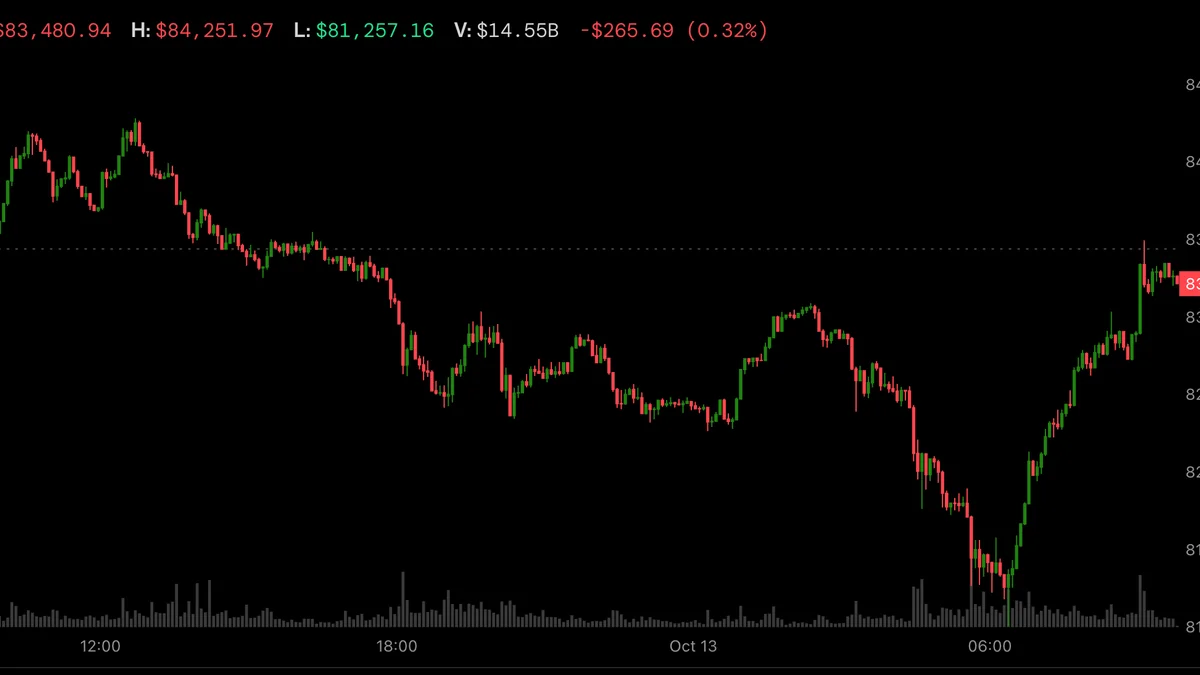



Bitcoin climbed back above $83,000 after briefly falling under $81,000 at 00:50 UTC, decoupling from a sharp slide in Asian risk assets ahead of Thursday's US CPI report. The rebound came as South Korea's KOSPI plunged more than 6% intraday to its lowest level since late July, with Samsung Electronics and SK Hynix each down roughly 8% on a fifth straight losing session. Nasdaq futures slipped 0.6%, extending Monday's 0.78% decline.
Why it matters
The divergence is the story. Bitcoin has spent much of the past year trading as a high-beta tech proxy, so a session where it bounces while Korean chipmakers and US tech futures sell off together reads as genuine relative strength rather than luck. The KOSPI rout was driven by concerns over AI-related valuations and rising competition from Chinese memory-chip producers, pressures specific to equities that crypto simply shrugged off.
The macro backdrop is less friendly. WTI crude held near $92.67 and Brent hovered around $106 after fresh attacks in Saudi Arabia and continued threats to shipping through the Strait of Hormuz kept energy uncertainty elevated. Higher oil strengthens the inflation case and, with it, the prospect of Fed rate hikes, while the Dollar Index held near 102.50, its highest since April last year.
Market impact
Thursday's CPI print is the next major catalyst, and the institutional read is hedging rather than exit. "I expect institutional investors to focus on adding protection through derivatives and hedging strategies rather than materially reducing their underlying exposure," said Paul Howard, senior director at market-making firm Wincent. "This is typically how committed institutional participants manage periods of heightened risk."
Watch whether Bitcoin holds the $83,000 level through the CPI print and whether options desks report increased demand for downside protection. A break back toward $81,000 alongside a hot inflation number would suggest the decoupling was a one-session reprieve rather than a regime change.


Frequently asked questions
-
Why did Bitcoin rebound above $83,000 while Korean stocks plunged?
Bitcoin fell under $81,000 before recovering above $83,000 as the KOSPI slid more than 6% on chip-stock weakness. The divergence suggests crypto temporarily traded independently of the equity sell-off.
-
What role does Thursday's US CPI report play for crypto traders?
CPI is the next major catalyst. Market makers like Wincent's Paul Howard expect institutions to hedge via derivatives rather than reduce core crypto exposure.
-
How does elevated oil prices affect Bitcoin?
WTI near $92.67 and Brent around $106 raise inflation concerns, strengthening the case for Fed rate hikes, which is a headwind for risk assets including cryptocurrencies.
-
Why did Samsung and SK Hynix fall roughly 8%?
Both chipmakers dropped about 8%, extending losing streaks to five sessions, on concerns over AI-related valuations and rising competition from Chinese memory-chip producers.
-
What does the Dollar Index level signal for crypto?
The Dollar Index held near 102.50, its highest since April of the previous year. A strong dollar typically pressures crypto and other risk assets.
 TheBlock
 Lookonchain
 WatcherGuru
 WuBlockchain
 Altcoin Daily
 Benjamin Cowen
 CryptoSlate
 CoinTelegraph
 Crypto News