


 CryptoSlate
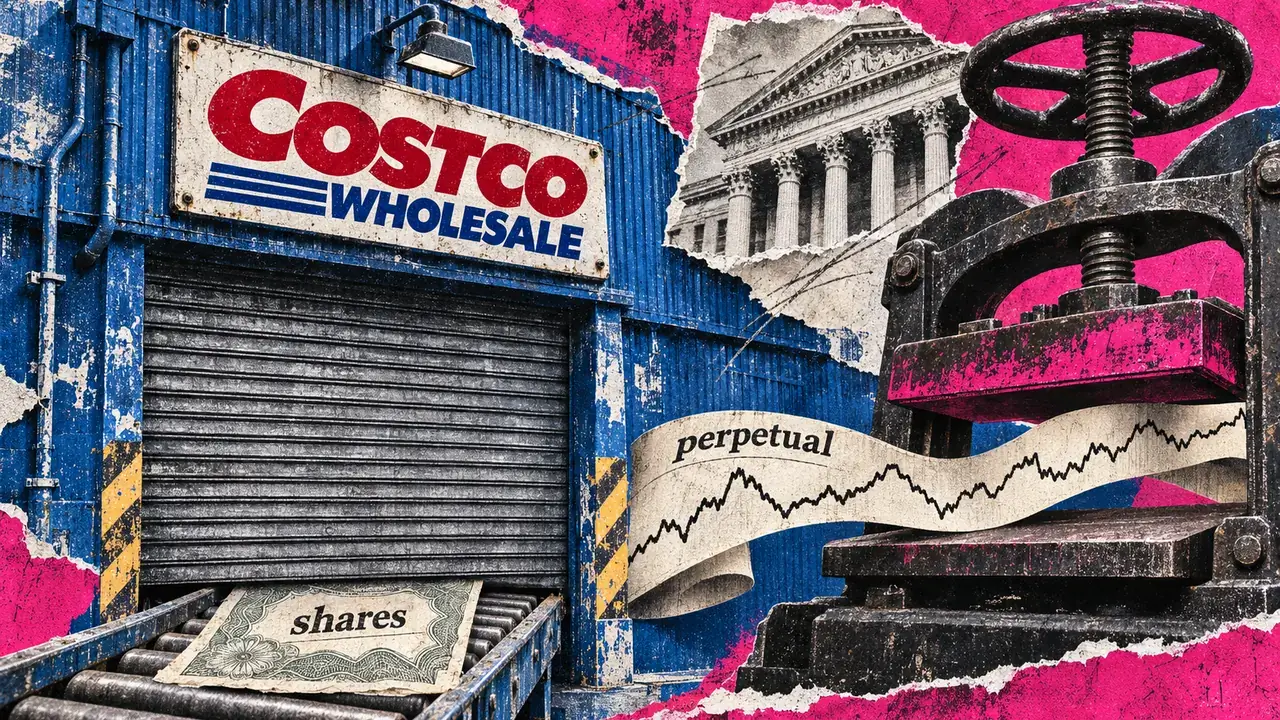
Costco and 66 other issuers have filed objections blocking third-party tokenized versions of their shares from OKXICE, the proposed venue backed by NYSE owner ICE. Yet anyone wanting price exposure to Costco without owning a share can already get it: Kalshi lists a Costco perpetual futures contract with no expiry, no voting rights, and up to 4.9x leverage. The two products sit on separate legal tracks, and the court challenge to the perp route reached a critical stage on Nov. 3.
Why it matters
The SEC's September exemption requires any qualifying venue to preserve full shareholder rights in tokenized shares, including votes, dividends, and liquidation claims, and gives issuers 30 days to object after being notified. Costco exercised that right, and under SEC staff guidance a timely objection prevents the venue from listing that token. The company's reach stops at the token, though. A perp tracks the same stock price through collateral, funding payments, and contractual adjustments, with no shareholder entitlement attached.
That distinction is now in front of a federal court. CFTC Chairman Michael Selig said on Nov. 3 that equity perpetuals could begin trading as security futures under a joint CFTC-SEC framework, deemed approved under Regulation 40.3. The Capital Markets Alliance Association, with declarations from Cboe and Citadel Securities, argues a contract without future delivery cannot qualify as a security future, and Cboe warns such trades would escape the consolidated surveillance of the securities markets. Judge Valerie Caproni found the challengers likely to succeed on the CFTC's authority but denied an emergency restraining order, setting Nov. 10 for the alliance's reply.
Market impact
Wall Street is betting on both sides of the split. ICE announced an investment and agreement with Trade[XYZ] on Oct. 29 to bring its Hyperliquid-based perpetual markets into the US, with distribution planned through its OKX joint venture, pending approvals. The same group backing tokenized ownership sees a market in selling pure price exposure.
For traders, the practical difference is risk. Kalshi's Costco page showed maximum leverage of 4.9x on Nov. 6, so $1,000 of collateral supports $4,900 of exposure, and a 10% adverse move would cost roughly $490, nearly half the collateral. Watch the Nov. 10 filing deadline and whether the injunction bid freezes the perp market while the issuer objection list keeps growing.

Frequently asked questions
-
Why did Costco object to tokenized versions of its shares?
Costco is among 67 issuers on OKXICE's Nov. 5 objection notice. Under the SEC's September exemption, an exchange must notify an issuer before listing third-party tokenized stock, and a timely objection prevents the venue from offering that token.
-
What is a stock perpetual futures contract?
A stock perp offers leveraged price exposure to a share with no scheduled expiry. Holders receive neither shares nor voting rights, and funding payments between longs and shorts keep the contract price near the underlying stock.
-
Are stock perps legal in the US right now?
CFTC Chairman Michael Selig said equity perpetuals are deemed approved under Regulation 40.3 as security futures in a joint CFTC-SEC framework. A court challenge is ongoing, and Judge Valerie Caproni found the challengers likely to succeed, though trading remains undisturbed for now.
-
How much leverage does Kalshi's Costco perp offer?
Kalshi's Costco page showed maximum leverage of 4.9x on Nov. 6, meaning $1,000 of collateral supports $4,900 of price exposure. A 10% adverse move would cost about $490, nearly half the original collateral.
-
What is ICE's role in the stock-perp market?
ICE, the NYSE's parent, announced an investment and agreement with Trade[XYZ] on Oct. 29 to bring Hyperliquid-based perpetual markets into the US, with distribution planned through its OKX joint venture, subject to approvals.
 WatcherGuru
 CoinDesk
 Crypto News
 Altcoin Daily
 TheBlock
 CoinTelegraph