








 CoinDesk

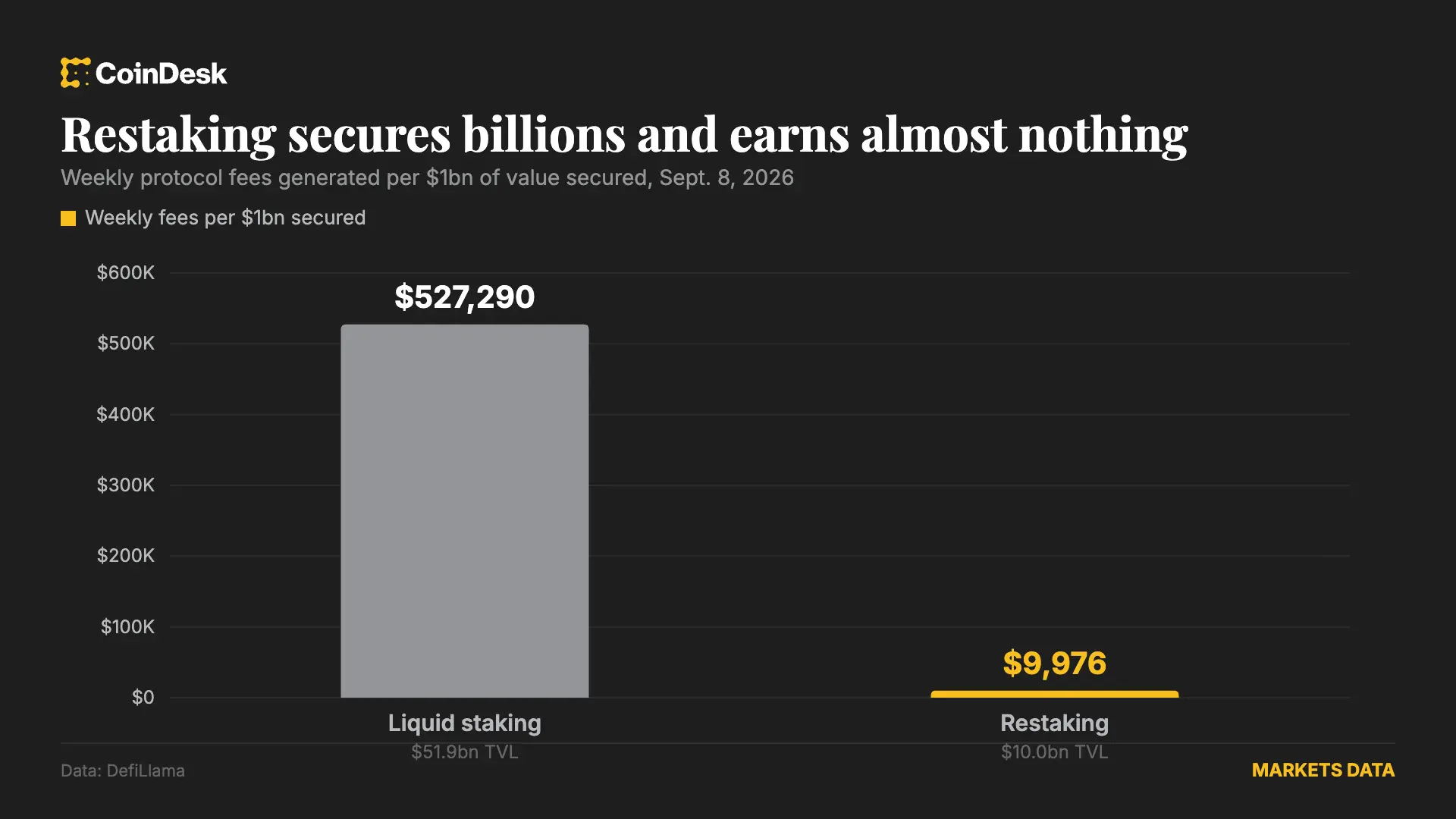
Ether.fi plans to sever its last structural tie to EigenLayer by the end of this quarter, after leaving less than 1% of its assets restaked. CEO Mike Silagadze said the decision reflected rising risk and a lack of meaningful yield. The economics have weakened across the sector: restaking secured $10.02 billion and generated $99,977 in fees over the week cited, while liquid staking secured $51.87 billion and generated $27.35 million. Per dollar secured, ordinary liquid staking earned roughly 53 times more.
Why it matters
Restaking was designed to let staked ETH secure additional services, creating a second yield on the same capital. But the services buying that security did not generate enough revenue to pay both the base staking yield and an additional premium. Points programs that had subsidized deposits wound down through 2025, and slashing went live in April 2025, adding a real penalty risk without a corresponding yield uplift.
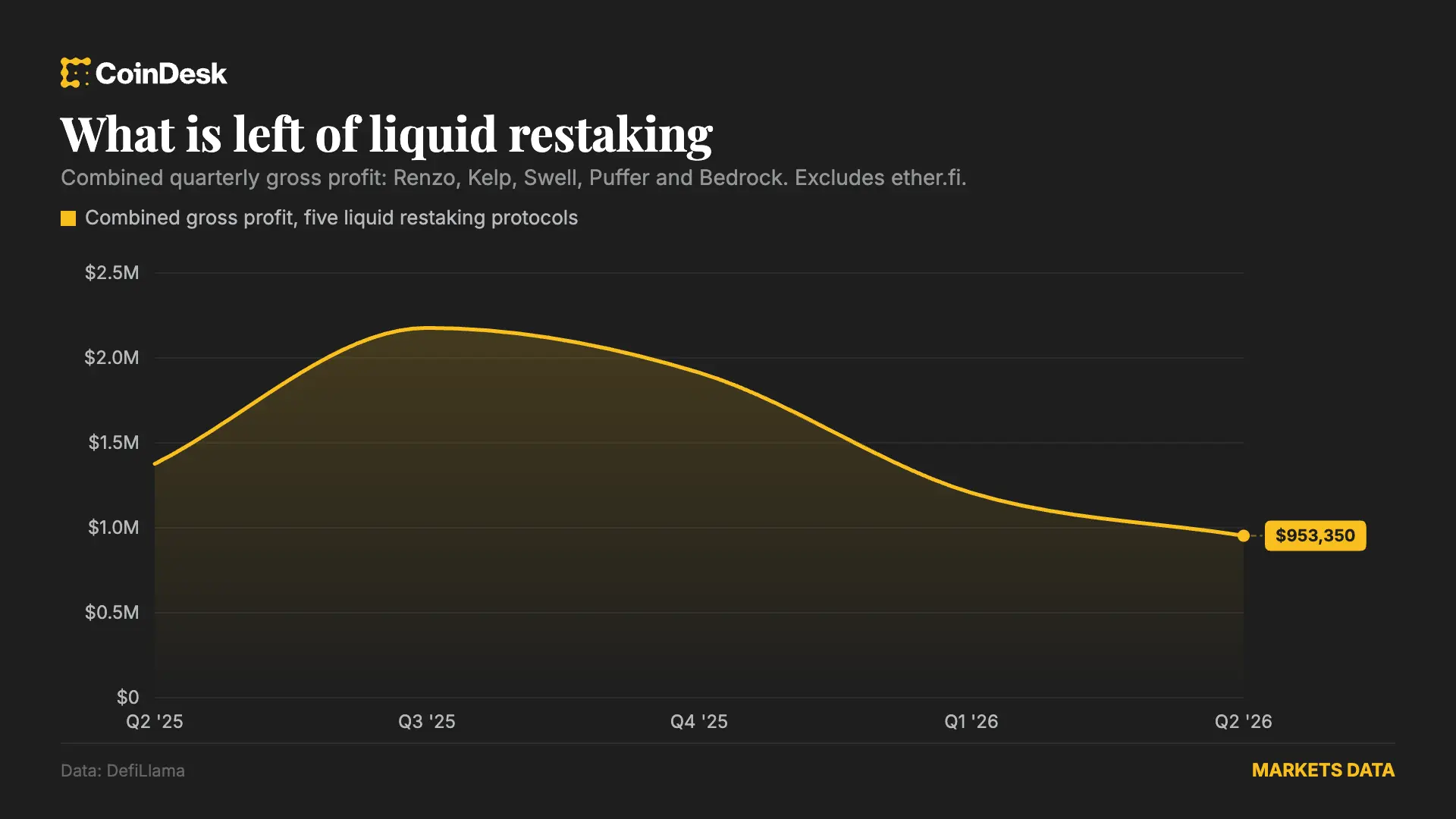
The five largest remaining liquid restaking tokens reported a combined $953,350 in gross profit in the second quarter of 2026, down from $2.18 million three quarters earlier. In some protocols, EIGEN rewards passed through to depositors as both revenue and cost, leaving no profit from those rewards. The article's figures indicate that ordinary staking fees, rather than the restaking layer, generated what profit remained.
Market impact
The Kelp bridge exploit exposed another cost of liquid restaking: wrapper risk. An attacker created 116,500 unbacked rsETH worth about $293 million, then used it as collateral on Aave. Around $6 billion left Aave in the following days, with potential bad debt estimated at $123 million to $230 million. The exploit targeted a cross-chain bridge, not EigenLayer's restaking mechanism, but it highlighted the additional software and collateral risks carried by liquid restaking tokens.
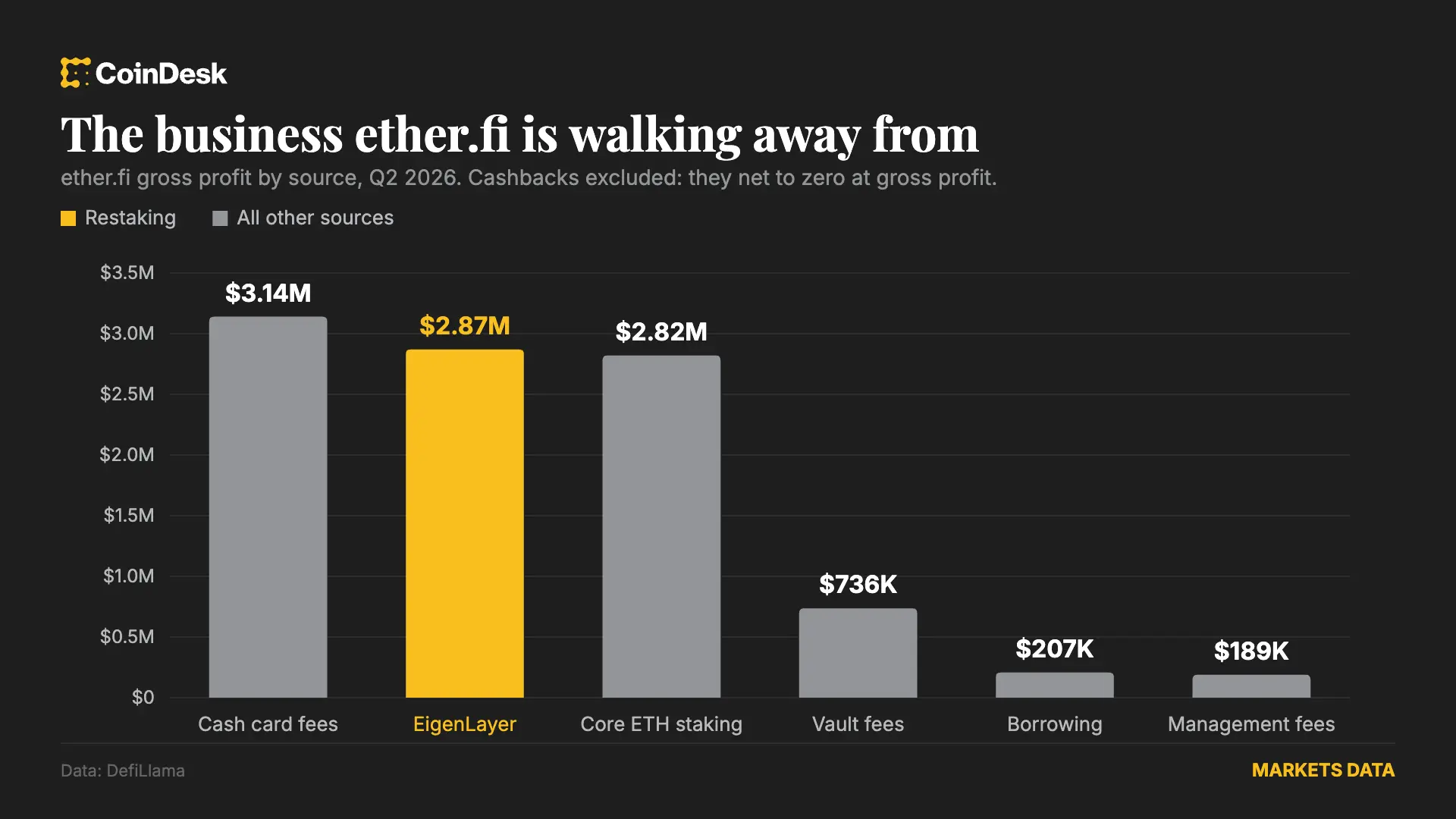
Ether.fi is shifting toward cards, borrowing, vaults and other neobank services rather than relying on restaking. Its card's share of monthly revenue rose from 17% in January to 46% in July, according to Silagadze. DefiLlama figures, however, show gross profit falling from $18.71 million in the third quarter of 2025 to $9.99 million in the second quarter of 2026. The divergence reflects different measures: the company cited revenue and a forward run rate, while DefiLlama reports trailing gross profit. The broader test for restaking is whether demand for the security it provides can support a profitable business without deposit incentives.




Frequently asked questions
-
Why is ether.fi ending its structural link to EigenLayer?
CEO Mike Silagadze said restaking offered no meaningful yield while adding perceived risk. Ether.fi plans to leave less than 1% of its assets restaked.
-
How did restaking fees compare with liquid staking fees?
Restaking secured $10.02 billion and generated $99,977 in fees over the week cited. Liquid staking secured $51.87 billion and generated $27.35 million, roughly 53 times more per dollar secured.
-
What happened in the Kelp bridge exploit?
An attacker created 116,500 unbacked rsETH, worth about $293 million, and deposited it on Aave as collateral to borrow ether. Around $6 billion left Aave in the days that followed.
-
How are liquid restaking protocols' profits changing?
The five largest remaining liquid restaking tokens made $953,350 in combined gross profit in Q2 2026, down from $2.18 million three quarters earlier.
-
How is ether.fi trying to replace restaking revenue?
Ether.fi is expanding cards, borrowing, vaults and other neobank services. Silagadze said the card's share of monthly revenue rose from 17% in January to 46% in July.
 Crypto Capital Venture
 CryptoSlate
 Lookonchain
 TheBlock
 Glassnode