








 WuBlockchain
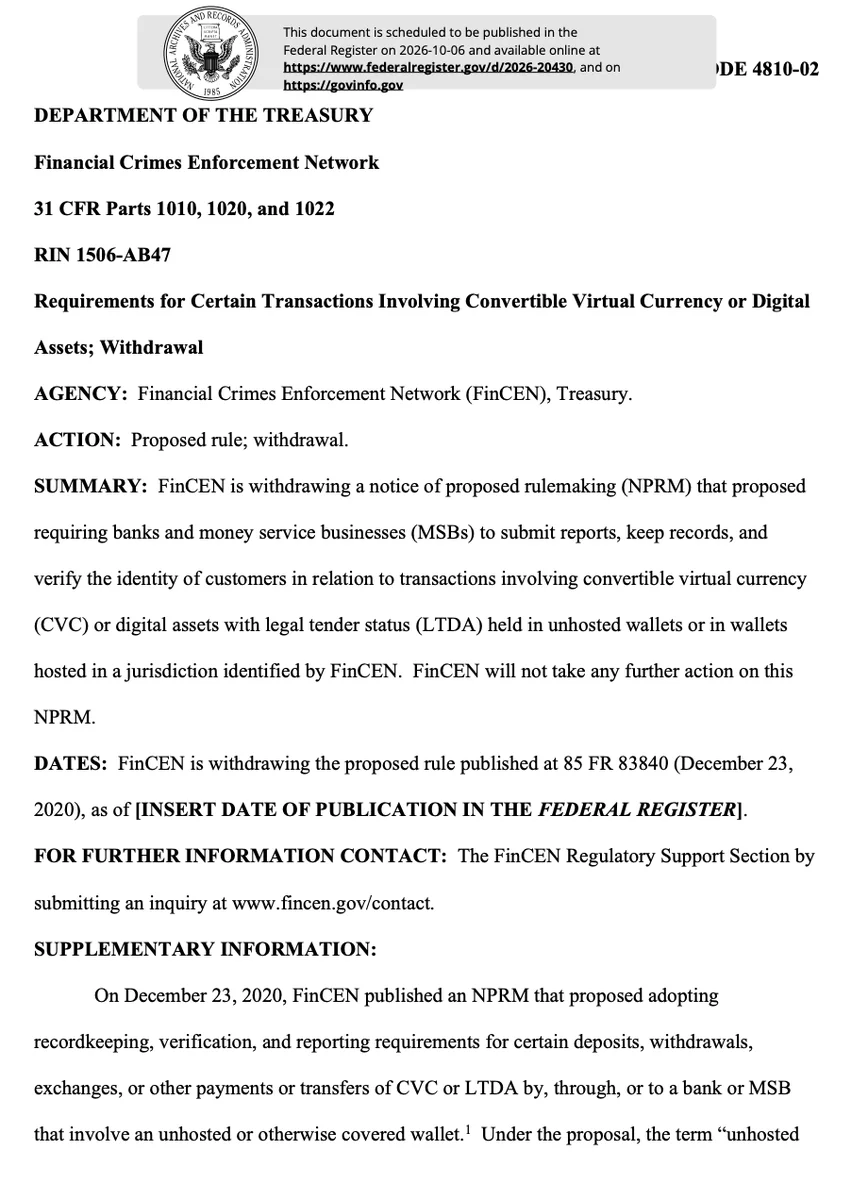

FinCEN has withdrawn its 2020 proposal to impose reporting and recordkeeping requirements on certain transactions involving unhosted crypto wallets, saying it will take no further action. The proposal would have required banks and money services businesses to report covered transactions above $10,000 and verify customer identities, with recordkeeping required above $3,000.
Why it matters
The withdrawal removes proposed obligations that would have extended financial-institution reporting rules to certain transactions involving self-custodied crypto. Treasury said the move aligns with the Trump administration’s effort to make digital-asset regulations “fit-for-purpose.”
Market impact
The decision is regulatory relief for institutions and users who could have been affected by the proposal, but it does not itself establish new rules for unhosted wallets. The shift signals a change in the US approach to digital-asset oversight; the scope of future policy remains important for self-custody and financial privacy.
Source: [source](https://public-inspection.federalregister.gov/2026-20430.pdf)
Frequently asked questions
-
What did FinCEN withdraw?
FinCEN withdrew its 2020 proposal for reporting and recordkeeping requirements on certain transactions involving unhosted crypto wallets.
-
What reporting threshold did the proposal set?
Banks and money services businesses would have had to report covered transactions above $10,000 and verify customer identities.
-
What transactions would have required recordkeeping?
The proposal would have required recordkeeping for covered transactions above $3,000.
-
Does the withdrawal create new rules for unhosted wallets?
No. FinCEN said it will take no further action on the proposal; the withdrawal does not itself establish new rules.
-
How did Treasury frame the decision?
Treasury said the withdrawal is part of the Trump administration’s effort to ensure digital-asset regulations are “fit-for-purpose.”
 WatcherGuru
 CryptoSlate
 TheBlock
 CoinDesk
 CoinTelegraph