








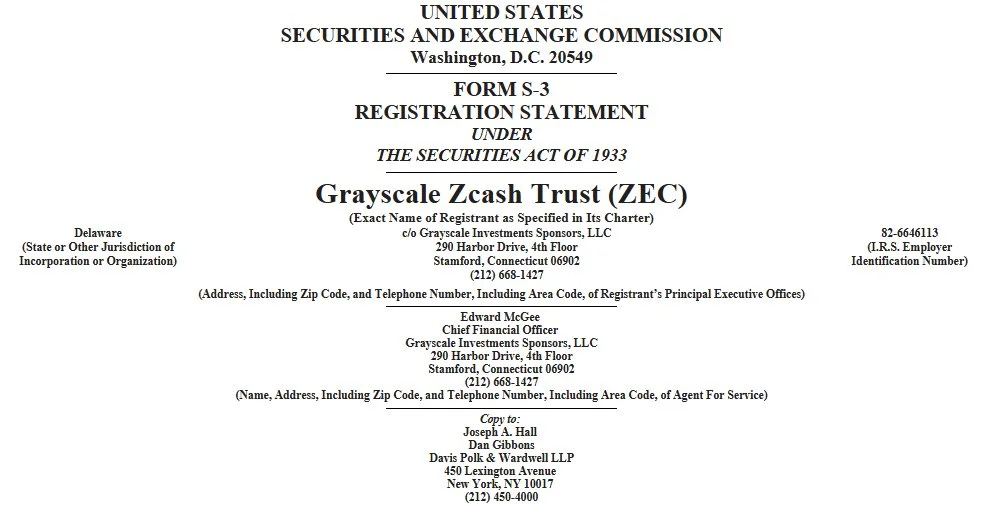

Grayscale has filed to convert its Zcash Trust into a spot ETF, a move that, if approved by the SEC, would mark the first spot ETF tied to a privacy coin. The filing lands against a backdrop of thawing U.S. regulatory posture: the SEC has reportedly ended its long-running review of privacy coins without bringing an enforcement action, removing a key overhang that had chilled institutional interest in the sector.
Why it matters
A spot Zcash ETF would give institutional allocators a regulated, compliant wrapper for a privacy-focused asset that until now could only be reached via the underlying token or through closed-end trust structures with persistent NAV discounts. Multicoin Capital co-founder Tushar Jain disclosed that the crypto hedge fund has been accumulating ZEC since February, framing the position as a macro hedge — a notable signal from a fund known for liquid alt exposure, not privacy-coin bets.
Market impact
The combination of a regulated product pathway and a respected fund's disclosed accumulation is the kind of structural catalyst that tends to move altcoin beta. ZEC's price reaction and the SEC's pace of engagement with the filing will be the next two markers to watch — the agency now has a concrete vehicle to approve, defer, or reject, rather than an abstract sector to deliberate.
Frequently asked questions
-
What did Grayscale file for?
Grayscale filed to convert its existing Zcash Trust into a spot ZEC ETF. If approved by the SEC, it would be the first spot ETF tied to a privacy coin.
-
Why is the timing significant for privacy coins?
The filing comes after the U.S. SEC reportedly ended its long-running review of privacy coins without taking enforcement action, removing a regulatory overhang that had chilled institutional interest in the sector.
-
What has Multicoin Capital disclosed about ZEC?
Multicoin Capital co-founder Tushar Jain disclosed that the fund has been building a large ZEC position since February, framing it as a macro hedge.
-
How would a spot Zcash ETF change institutional access?
It would give institutional allocators a regulated, compliant wrapper for a privacy-focused asset previously reachable only via direct token ownership or closed-end trust structures that often trade at persistent NAV discounts.
-
What should investors watch next?
Two markers: how ZEC prices react to the filing, and how quickly the SEC engages with the application — approve, defer, or reject against a concrete vehicle rather than an abstract sector review.

 CoinTelegraph
 Crypto News
 TheBlock
 WatcherGuru
 CoinDesk