








 CoinDesk
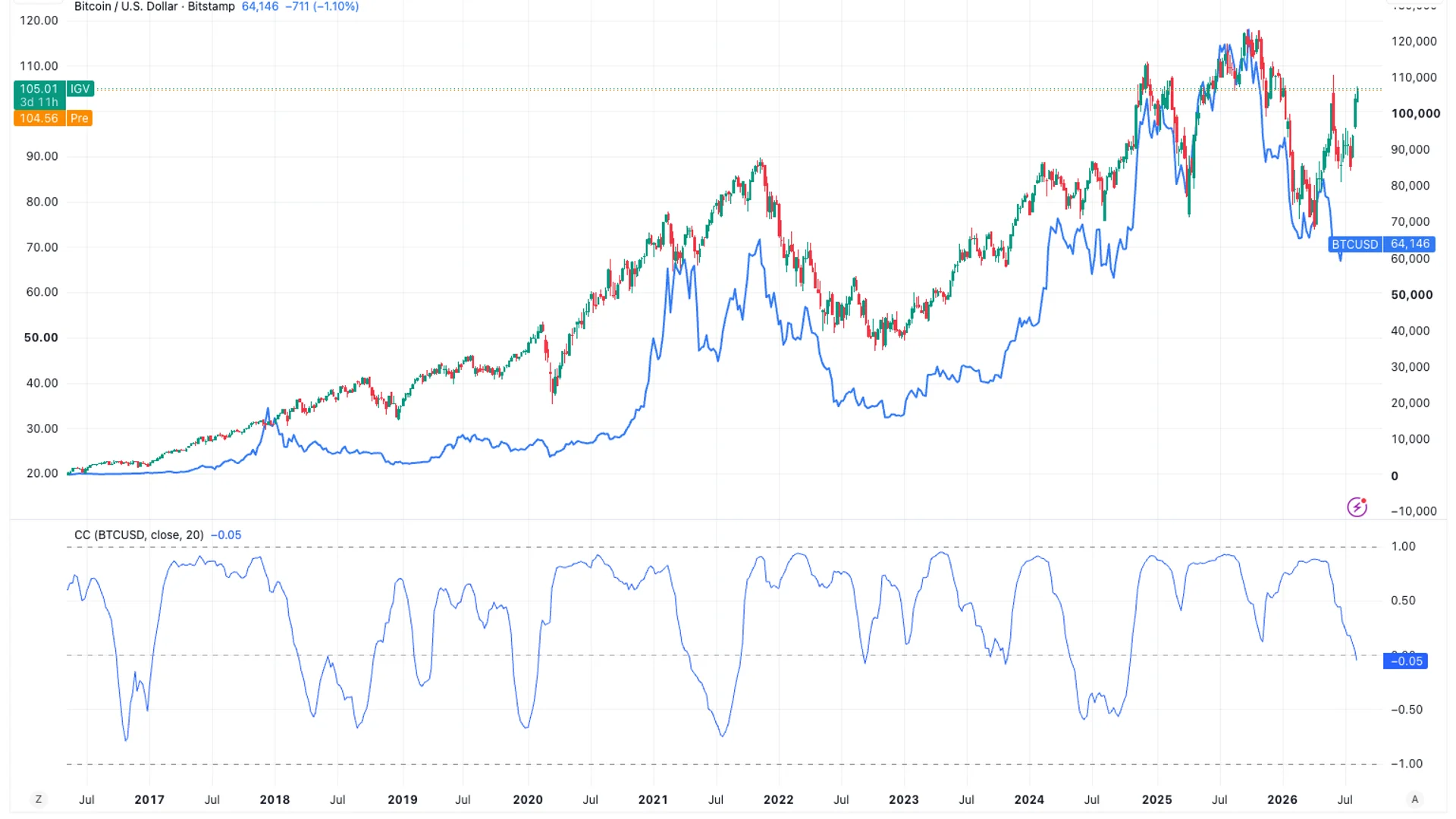



IGV’s 20-day rolling correlation with Bitcoin has turned negative for the first time since May 2024. The software ETF has rallied 40% from its April low and is down only 1% in 2026, while Bitcoin is down 29%.
IGV is now about 13% below its all-time high, while Bitcoin remains around 50% below its record. The divergence followed IGV’s 40% slide from its fourth-quarter 2025 peak, when fears of an AI-driven SaaS apocalypse swept the sector and Bitcoin was treated as a software-like risk asset.
Earlier negative-correlation episodes during Bitcoin’s 2018 bear market, the 2020 Covid shock and China’s 2021 mining ban all ended with Bitcoin catching up and correlation turning positive. The current split tests whether software is breaking away from crypto for good or whether that historical pattern will return.

Frequently asked questions
-
When did IGV’s rolling correlation with Bitcoin last turn negative?
The previous negative reading was in May 2024.
-
How much has IGV recovered from its April low?
IGV has rallied 40% from its April low and is now about 13% below its all-time high.
-
How do IGV and Bitcoin compare in 2026?
IGV is down only 1% in 2026, while Bitcoin is down 29%.
-
Which past shocks ended with Bitcoin catching up to software?
The pattern appeared during Bitcoin’s 2018 bear market, the 2020 Covid shock and China’s 2021 mining ban. Each episode ended with Bitcoin catching up and correlation turning positive.
-
Why did Bitcoin trade alongside software stocks?
Markets treated Bitcoin as a software-like risk asset, so it was pulled into the selloff after IGV fell 40% from its fourth-quarter 2025 peak.
 CoinTelegraph
 WatcherGuru
 CryptoSlate
 WuBlockchain
 Altcoin Daily
 Whale Alert
 Lookonchain