








 CoinDesk
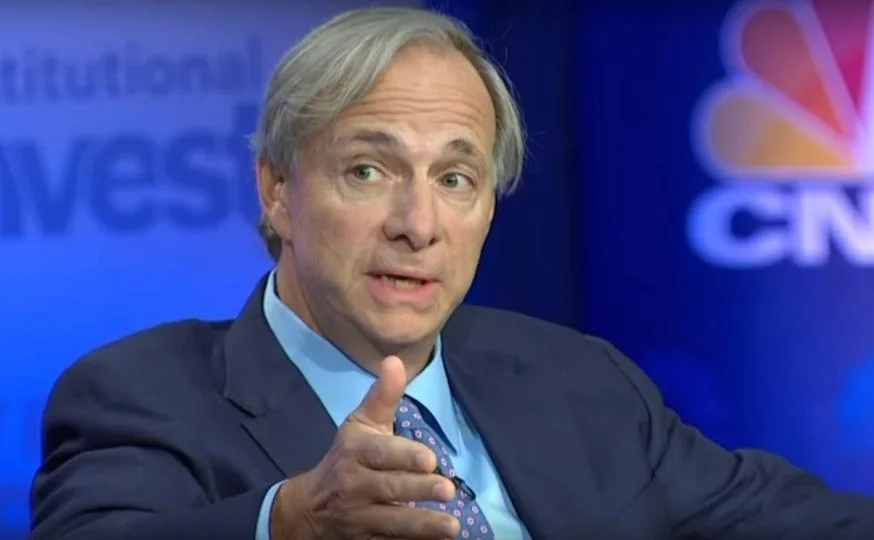

Ray Dalio said on X that Bitcoin lacks the privacy and scale central banks require in a reserve asset, pointing to its fully transparent public ledger and a 90-day correlation coefficient of 0.89 with the Nasdaq — an R² of 0.79 — as evidence that BTC trades as a risk-on proxy for tech stocks rather than an independent store of value. The billionaire Bridgewater founder, who says he keeps roughly 1% of his portfolio in bitcoin, argued the asset's traceability and modest market cap leave gold structurally better suited to reserve status.
Why it matters
Dalio's critique lands on two long-running fault lines in the institutional bitcoin debate. The privacy argument: every BTC transaction sits on a permanent public ledger, and blockchain analytics firms routinely cluster wallet addresses back to real-world entities, a level of visibility central banks have historically rejected for reserve holdings. The correlation argument: with 79% of bitcoin's 90-day price action explainable by Nasdaq moves, the diversification thesis that originally drew institutional allocators has weakened through 2025.
Market impact
Privacy-focused assets are the clearest beneficiary of this framing — zcash (ZEC) has rallied more than 800% since early 2025, while bitcoin is down over 10% on the year. Consensus Hong Kong panelists in February flagged institutional-grade privacy as a precondition for large-block adoption, a view Dalio's remarks reinforce rather than introduce. The structural read: until BTC either develops credible privacy layers at the base protocol or decouples meaningfully from US tech beta, the central-bank bid that long-term bulls model remains functionally capped.


Frequently asked questions
-
Why does Ray Dalio think central banks won't hold bitcoin?
Dalio argues Bitcoin's fully transparent public ledger lets anyone trace wallet activity in real time, a level of visibility central banks have historically rejected for reserve holdings.
-
How correlated is bitcoin with the Nasdaq right now?
The 90-day correlation coefficient between BTC and the Nasdaq stood at 0.89, translating to an R² of 0.79 — meaning roughly 79% of bitcoin's recent price action tracks tech-stock moves.
-
Does Ray Dalio own any bitcoin?
Yes. Dalio has said he allocates roughly 1% of his portfolio to bitcoin, even as he continues to favor gold as a reserve asset.
-
What is the privacy-focused alternative highlighted in the piece?
Zcash (ZEC) is cited as the clearest beneficiary of the privacy thesis, having rallied more than 800% since early 2025 while bitcoin is down over 10% on the year.
-
What would change Dalio's view on bitcoin as a reserve asset?
Dalio's critique rests on two structural factors — on-chain privacy and Nasdaq correlation. Meaningful improvement in either, particularly credible privacy layers at the base protocol, would weaken his case for gold over BTC.
 Benjamin Cowen
 CoinTelegraph
 WatcherGuru
 Crypto Capital Venture
 TheBlock
 WuBlockchain
 Lookonchain