








 WuBlockchain

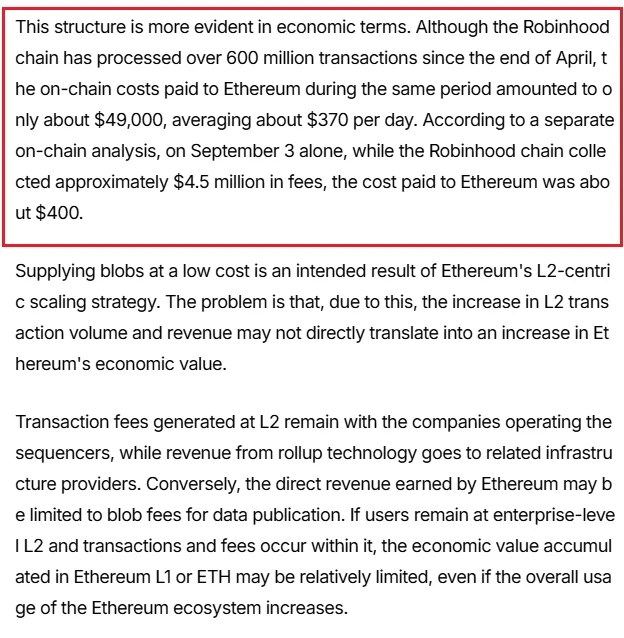
Robinhood Chain collected approximately $4.5 million in transaction fees on Sept. 3, while paying Ethereum about $398 for data posting and proof costs. The figures highlight a sharp gap between activity generated by the Layer 2 and the revenue captured by Ethereum.
Why it matters
Robinhood Chain is moving existing customers and financial products onto its own network while connecting tokenized stocks with DeFi. That model gives the chain transaction fees and sequencer revenue as it attracts assets and trading activity.
The analysis challenges a simple measure of Layer 2 success. More activity can expand Ethereum’s ecosystem without producing proportional fee revenue for Ethereum itself, because much of the economic value remains with the L2.
Market impact
For Ethereum, the issue is value capture rather than adoption. Robinhood Chain’s early traction supports the case for Ethereum-based scaling, but it also shows why investors are watching how much revenue reaches the base layer as L2 competition grows.
Source: [로빈후드체인 열풍이 이더리움 메인넷 성장으로 이어지지 않은 이유 — 디지털애셋 (Digital Asset)](https://www.digitalasset.works/news/articleView.html?idxno=43070)

Frequently asked questions
-
How much did Robinhood Chain collect in fees on Sept. 3?
Robinhood Chain collected approximately $4.5 million in transaction fees on Sept. 3.
-
How much did Robinhood Chain pay Ethereum?
It paid Ethereum about $398 for data posting and proof costs.
-
Why is the fee gap important for Ethereum?
The gap shows that Layer 2 activity can grow without producing proportional fee revenue for Ethereum, because much of the value remains within the L2.
-
How does Robinhood Chain capture economic value?
Robinhood Chain collects transaction fees and sequencer revenue while moving customers and financial products onto its network.
-
What does Robinhood Chain connect to DeFi?
The network connects tokenized stocks with DeFi as it brings assets and trading activity onto its own chain.
 CoinDesk
 Crypto Rank News
 TheBlock
 Crypto News
 CryptoSlate