








 CoinDesk
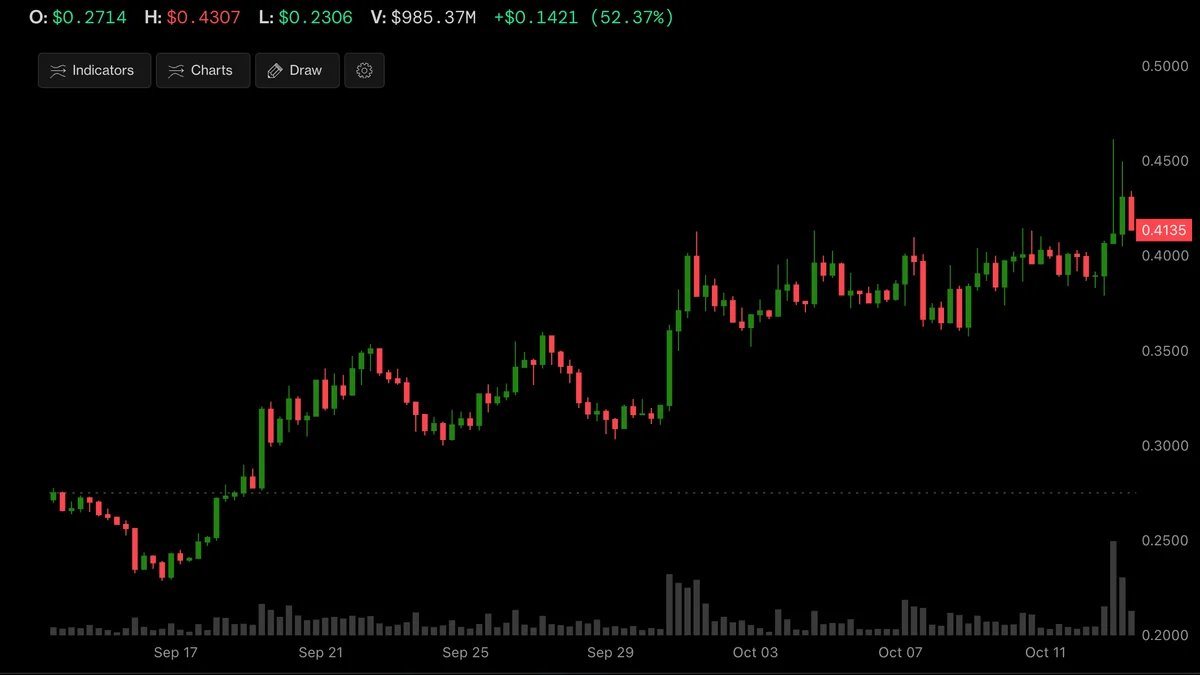


Stacks' STX gained nearly 10% in 24 hours, 14% over the past week and more than 50% in four weeks, outperforming Bitcoin as major cryptocurrencies remained choppy. The rally has put the Bitcoin layer-2 token among the market's strongest recent performers.
The move likely reflects interest in Stacks' non-custodial Bitcoin staking architecture. BTC holders can stake and earn yield while retaining control of their private keys, rather than wrapping Bitcoin into synthetic assets such as wBTC or moving it through cross-chain bridges.
Why it matters
Stacks' model links Bitcoin liquidity to demand for STX. Its bonding mechanism requires participants to lock assets to secure the network. Bonding Period 3, due in November, requires participants holding native STX to lock a specific STX ratio alongside their BTC, equal to roughly 5% of the value of the BTC being secured.
If more BTC enters the Stacks ecosystem, the mechanism can remove more STX from active circulation. That creates a supply-side tailwind for STX while giving Bitcoin holders a way to seek yield without giving up direct control of their assets. Periods 1 and 2 served as preparatory phases for the transition and initial liquidity bootstrapping.
Market impact
The rally also points to liquidity moving beyond the largest cryptocurrencies, with BDX, REDNER and PYTH each gaining about 6% over the same 24-hour period. STX's move is more closely tied to a specific protocol catalyst: the prospect of additional BTC activity and STX lockups ahead of Bonding Period 3.
The broader market remains sensitive to macro data. Wednesday's U.S. Consumer Price Index report could reshape expectations for Federal Reserve interest-rate decisions, making the CPI release an important test for whether the STX rally can extend beyond its protocol-specific catalyst.


Frequently asked questions
-
Why has STX outperformed Bitcoin over the past four weeks?
STX gained more than 50% in four weeks, likely reflecting interest in Stacks' non-custodial Bitcoin staking architecture and its potential to increase STX lockups.
-
How does Stacks' Bitcoin staking model work?
The model lets BTC holders seek yield while retaining control of their private keys. It avoids relying on wrapped BTC or cross-chain bridges for that activity.
-
What is Bonding Period 3 and when is it due?
Bonding Period 3 is due in November. It requires participants holding native STX to lock a specific STX ratio alongside BTC, equal to roughly 5% of the BTC value being secured.
-
Why could more Bitcoin entering Stacks support STX?
Stacks' bonding mechanism can remove more STX from active circulation as additional BTC enters the ecosystem, creating a supply-side tailwind for the token.
-
What macro event could affect the STX rally?
Wednesday's U.S. Consumer Price Index report could change expectations for Federal Reserve interest-rate decisions and test broader risk appetite.
 Lookonchain
 Crypto News
 Altcoin Daily
 CoinTelegraph
 Crypto Rank News