








 CoinDesk


The U.S. economy added 115,000 jobs in April, well above economist expectations of 62,000, according to Bureau of Labor Statistics data released Friday. The print was down from a revised 185,000 in March, while the unemployment rate held steady at 4.3%, in line with forecasts.
The report lands at a delicate moment for the Federal Reserve, which left its benchmark fed funds rate unchanged at 3.50%–3.75% last week as officials weigh slowing growth against persistent inflation. Kevin Warsh is expected to be confirmed by the Senate as the next Fed chair later this month, replacing Jerome Powell. Elevated oil prices — with uncertainty around the Strait of Hormuz keeping crude near recent highs — risk feeding into headline inflation while also weighing on consumer spending.
Why it matters
A beat of nearly 2x on the headline number is a hot labor print in absolute terms, even if the trend rate is decelerating. For the Fed, the combination of a still-tight 4.3% unemployment rate, sticky services inflation, and a fresh energy-price shock is the worst possible configuration: it removes the room to cut that a softening labor market would otherwise have justified. Warsh inherits a board that has been on hold for months, with markets now forced to reprice the timing of the first cut — and the cumulative path through 2026.
Market impact
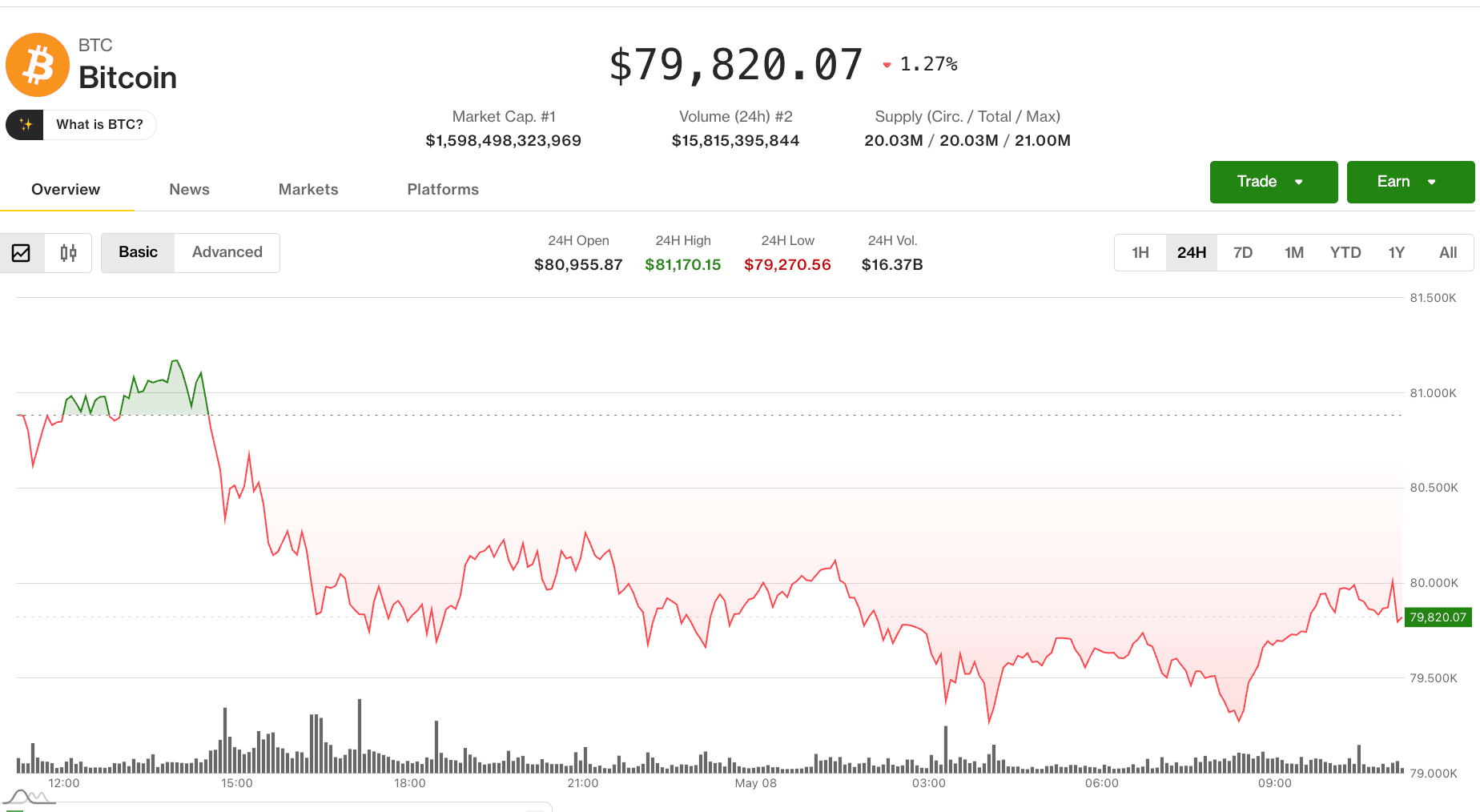
Risk assets read the print as hawkish. Bitcoin dropped below $80,000 in the prior session after U.S. airstrikes on Iran pushed oil briefly above $100, triggering roughly $300 million in crypto liquidations and a 1.5% drop in futures open interest. Options flow shifted toward protective BTC puts, and bearish positioning built into the payrolls print. With the new chair weeks from confirmation and energy markets still on edge, near-term volatility into the next CPI release is the path of least resistance.

Frequently asked questions
-
How many jobs did the U.S. economy add in April?
The Bureau of Labor Statistics reported 115,000 jobs added in April, well above economist expectations of 62,000. The March figure was revised up to 185,000 from an originally reported 178,000.
-
What is the current U.S. unemployment rate?
The unemployment rate held steady at 4.3% in April, in line with forecasts. The unchanged rate alongside a beat on payrolls suggests the labor market is cooling gradually rather than cracking.
-
How does the April jobs report affect Federal Reserve rate cut expectations?
A nearly 2x beat on payrolls removes the room to cut that a softer labor market would have justified, especially with sticky services inflation and elevated oil. Markets are now repricing the timing of the first cut and the cumulative path through year-end.
-
Who is replacing Jerome Powell as Fed chair?
Kevin Warsh is expected to be confirmed by the Senate as the next Federal Reserve chairman later this month, replacing Jerome Powell. He inherits a board on hold at 3.50%–3.75% with inflation pressures persisting.
-
How did Bitcoin and crypto markets react to the macro backdrop?
Bitcoin dropped below $80,000 last week after U.S. airstrikes on Iran pushed oil briefly above $100, triggering roughly $300 million in crypto liquidations. Futures open interest fell 1.5% and options flow shifted toward protective BTC puts, signaling a clear risk-off move.
 CoinTelegraph
 WatcherGuru
 Crypto News
 Benjamin Cowen
 TheBlock
 WuBlockchain