








 CoinDesk
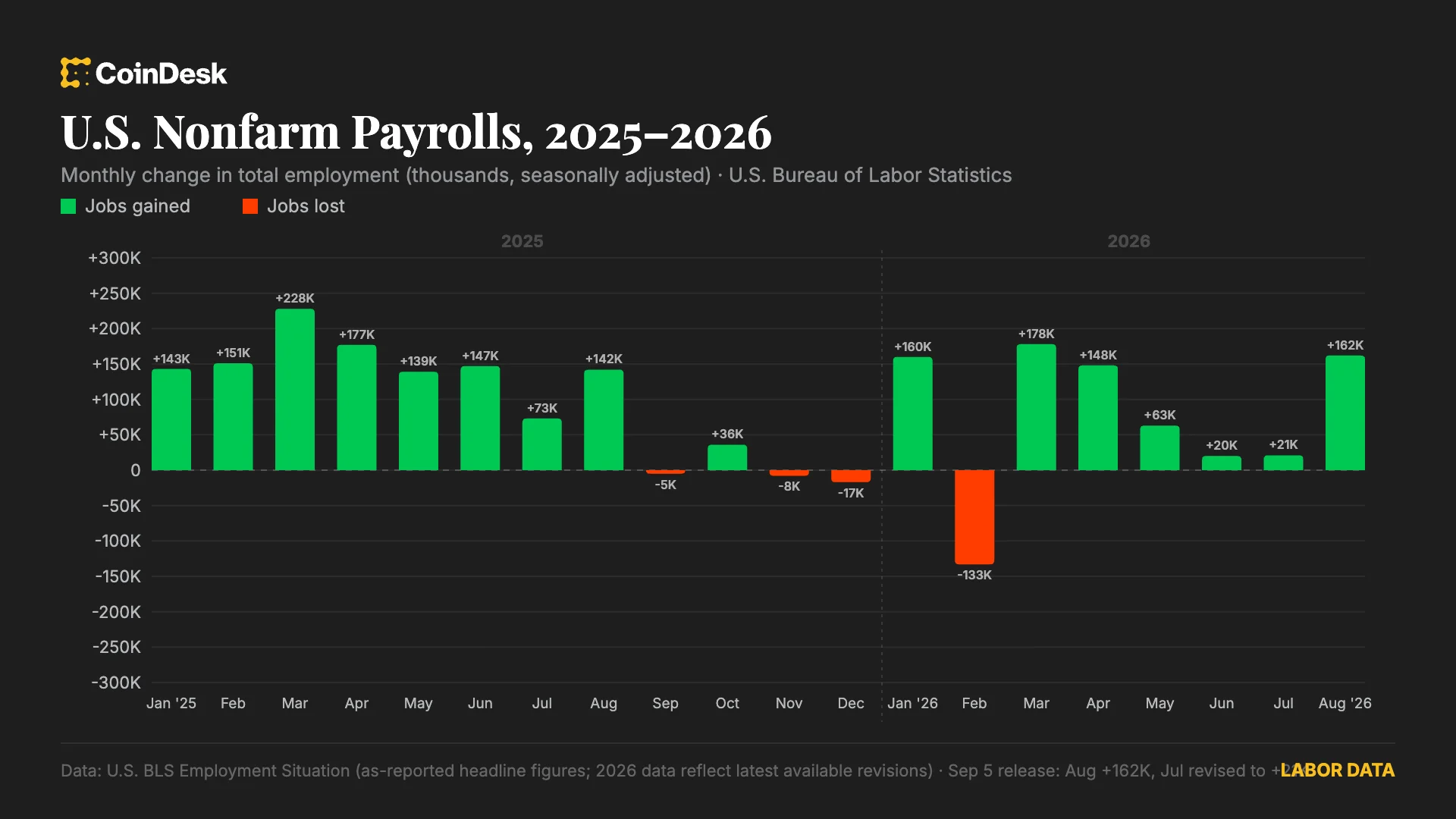



The U.S. added 29,000 jobs in September, far below the 90,000 consensus forecast and August's revised gain of 133,000. August's figure was cut from an initial 162,000. The unemployment rate rose to 4.2%, above the expected 4.1% and August's 4.1% reading.
Why it matters
The report points to a sharper loss of labor-market momentum than forecasters expected. Slower hiring and a higher unemployment rate give the Federal Reserve more room to hold interest rates at its Oct. 28 policy meeting, though elevated inflation remains a constraint.
The downward revision to August also weakens the comparison with September. Together, the two monthly figures show less hiring than the initial August estimate had suggested.
Market impact
Rate expectations had already shifted before the jobs report. Earlier in the week, short-term rate markets had nearly fully priced in a second Fed rate hike at the Oct. 28 meeting. In the 48 hours before the data, those odds fell to 23%, while buyers returned to the bond market late in the week after September's rise in yields.
The payroll miss and rise in unemployment add to the case against another hike. The next test for markets is how the Fed weighs that labor-market weakness against inflation.
Frequently asked questions
-
How far did September payrolls miss expectations?
The U.S. added 29,000 jobs, compared with a consensus forecast of 90,000.
-
How was August's jobs figure revised?
August's gain was revised down to 133,000 from an initial estimate of 162,000.
-
How did the unemployment rate compare with forecasts?
It rose to 4.2%, above the expected 4.1% and August's 4.1% reading.
-
What were rate markets pricing before the jobs report?
The odds of a second Fed rate hike at the Oct. 28 meeting had fallen to 23% in the 48 hours before the report, after being nearly fully priced earlier in the week.
-
Why does the jobs report complicate the Fed's decision?
Weaker hiring and higher unemployment give the Fed more room to hold rates, but inflation remains elevated.
 WuBlockchain
 CryptoSlate
 Crypto News
 CoinTelegraph