








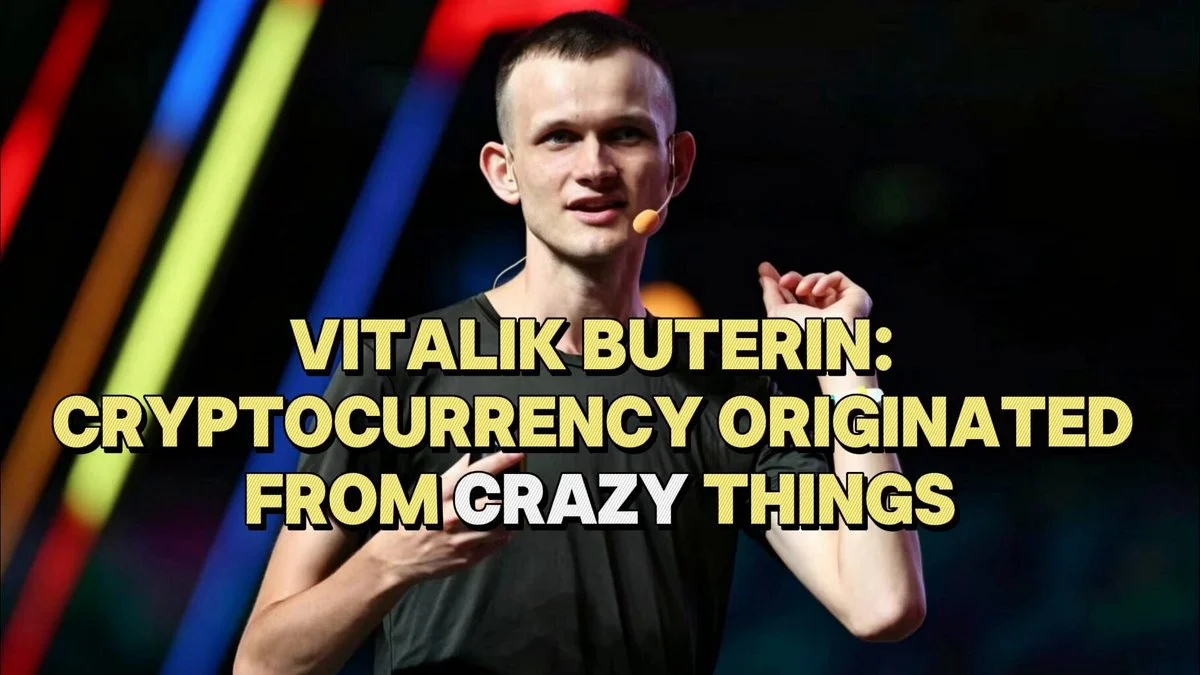

Ethereum co-founder Vitalik Buterin told EthCC on July 3 that cryptocurrency's early expansion was fuelled by the same anything-goes energy that grew the early internet, and that the historical phase was acceptable. But he drew a sharp line at the present: now that the ecosystem is widely recognised, blind expansion is no longer an automatic good.
Why it matters
Buterin's framing reframes the builder question. Instead of asking whether a project uses a blockchain, decentralisation, or tokenisation as a default, he is asking what concrete property a system needs to deliver — privacy, verifiability, sovereignty, openness — and choosing the architecture that actually delivers it. The speech lands as a quiet rebuke to chain-maximalism, the reflex inside crypto that treats "on-chain" as a virtue in itself.
Market impact
For Ethereum specifically, the message reinforces the L1-as-foundation, application-layer-flexibility posture Buterin has pushed since the Merge: stop competing on raw throughput narratives and compete on the properties decentralised applications actually need. For the broader market, it signals the founder expects the next cycle to be filtered through use cases rather than token-incentive experiments, which has implications for the kinds of L2, app-chain, and RWA projects that attract developer mindshare through 2026.
Source: [Ethereum Must Do Better — Vitalik’s Live Speech — YouTube](https://www.youtube.com/watch?v=jznCAlGknIo)

Frequently asked questions
-
What did Vitalik Buterin actually say at EthCC on July 3?
He argued that cryptocurrency's early, chaotic expansion was historically useful — comparable to how the early internet grew — but is no longer automatically good now that the ecosystem is widely recognised. He urged builders to start from the property a system needs to deliver rather than defaulting to blockchain…
-
Why is Buterin calling for a philosophical shift in crypto?
He believes the industry's reflex of treating 'on-chain' or 'decentralised' as virtues in themselves has run its course. His point is that builders should ask which concrete property — privacy, verifiability, sovereignty, openness — a system needs, and choose the architecture that actually delivers it.
-
How does this speech affect Ethereum's development direction?
It reinforces the L1-as-foundation, application-layer-flexibility posture Buterin has pushed since the Merge. The practical implication is that Ethereum stops competing on raw throughput narratives and lets the application layer pick the architecture suited to the property it needs to deliver.
-
What does this mean for L2, app-chain, and RWA projects?
Buterin's framing implies developer mindshare through 2026 will track the properties a project delivers — privacy, verifiability, sovereignty — rather than which chain the project markets itself on. Projects that can articulate a concrete property they unlock have a stronger narrative than chain-first pitches.
-
Is this a criticism of chain-maximalism?
Yes, read in context it functions as a quiet rebuke to chain-maximalism — the reflex inside crypto that treats 'on-chain' as a virtue regardless of the use case. Buterin is reframing the builder question away from which chain and toward what property the system must actually deliver.

 CoinDesk
 Glassnode
 CryptoSlate
 Crypto News
 WatcherGuru
 Benjamin Cowen