


 CoinDesk
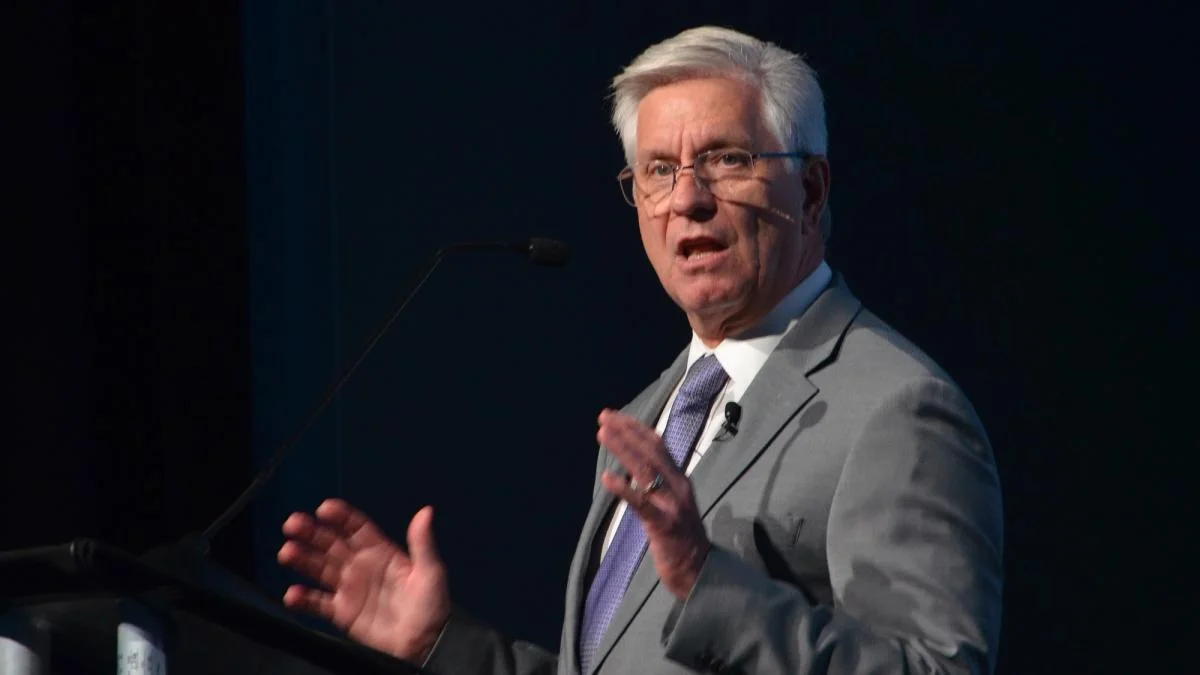


Federal Reserve Governor Christopher Waller said the central bank's traditional large-value and instant-payment rails should remain a trust backbone for tokenized markets. Speaking Tuesday in New York, Waller argued that resilient settlement systems linked to central bank money can support final settlement as tokenization develops. He also said tokenization and agentic AI could catalyze one another, raising shared questions about trust, standards and whether networks should be open or closed.
Why it matters
Waller's argument places the Federal Reserve at the infrastructure layer of tokenization rather than treating emerging payment networks as a wholesale replacement for central-bank money. His focus on cross-system connectivity points toward tokenized assets needing dependable final settlement, while his support for thinner access to Fed payment systems could extend that role to more private-sector firms.
That thread is consistent with Waller's broader push for greater private-sector access to Federal Reserve payment infrastructure. He has supported so-called "skinny" Fed master accounts that would give firms limited access without requiring them to take on the compliance burden of a full account. For tokenized markets, the proposal frames trusted settlement as a public foundation for innovation rather than a feature supplied by any single private network.
The speech also highlights an unresolved policy debate. While Waller presented tokenization and AI as mutually reinforcing technologies, fellow governor Michael Barr warned that AI agents could trigger high-speed bank runs and threaten U.S. financial stability.
Market impact
For tokenization, Waller's comments provide a constructive institutional signal that central-bank connectivity remains compatible with asset tokenization and new forms of commerce. The emphasis on resilient rails and limited-access accounts supports the case for tokenized assets to scale within, rather than outside, the broader payments system.
The immediate read is institutional rather than token-specific.
Frequently asked questions
-
How does Waller think tokenization and AI could reinforce each other?
Waller said tokenization and AI could catalyze one another. Both also face shared questions involving trust, standards and the choice between open and closed networks.
-
What are the "skinny" Fed master accounts Waller has supported?
They would grant limited access to Federal Reserve payment systems for firms seeking connectivity without taking on the compliance requirements of a full account.
-
Why does Waller consider traditional payment rails reliable?
He said large-value and instant-payment rails have proven resilient during market events and often provide access to the safest forms of dollars through links to central bank money.
-
What financial-stability risk did Michael Barr associate with AI agents?
Barr warned that AI agents could trigger high-speed bank runs and pose a threat to U.S. financial stability.
-
How does Waller's position connect tokenization with private-sector access?
Waller linked tokenization to trusted final settlement and advocated cross-system connectivity, including limited-access Fed accounts for private firms that do not want a full account.
 CoinTelegraph
 WatcherGuru
 Crypto News