








 CryptoSlate


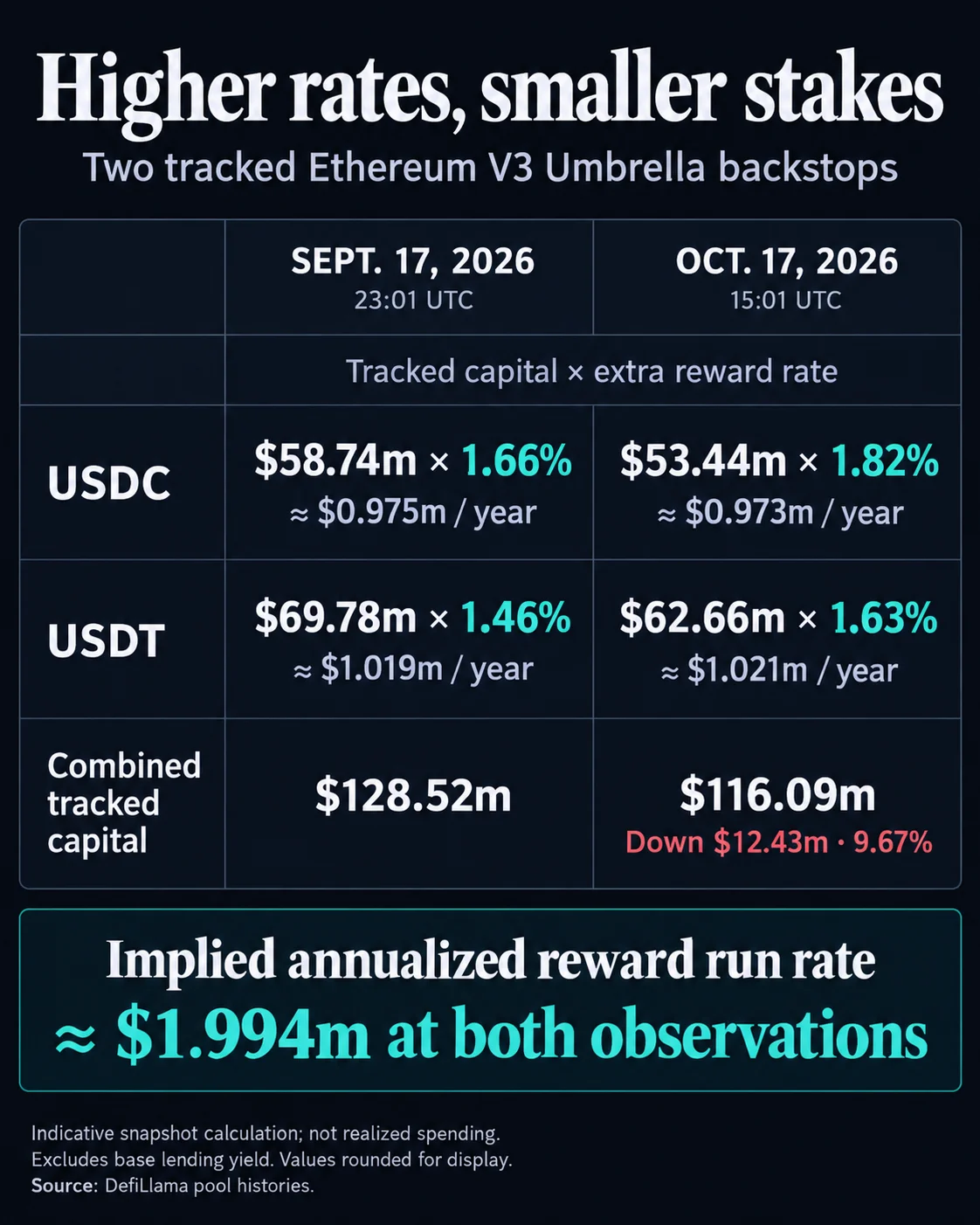

Aave's two tracked Ethereum V3 Umbrella stablecoin backstops shrank by $12.43 million between Sept. 17 and Oct. 17, falling 9.67% to $116.09 million from $128.52 million. DefiLlama histories show the USDC position (stkwaEthUSDC.v1) dropped from $58.74 million to $53.44 million and the USDT position (stkwaEthUSDT.v1) fell from $69.78 million to $62.66 million. The dollar-valued figures include asset valuation as well as deposit changes, so the decline alone cannot separate withdrawals from price effects.
Why it matters
Umbrella is Aave's system for using staked assets to absorb lending deficits, with each stake confined to its own asset and network and a DAO-funded offset taking first losses before stakers do. Thinner USDC and USDT stacks mean a smaller buffer per stablecoin reserve.
The odd part is that extra reward rates rose over the same window. USDC's additional component climbed from 1.66% to 1.82% and USDT's from 1.46% to 1.63%. Yet multiplying each stake by its displayed rate implies roughly $1.994 million annualized at both endpoints, essentially unchanged. Umbrella's emission curve offers one explanation: above the target staking level, aggregate emissions plateau, so a smaller denominator can share the same reward stream at a higher rate. Whether that mechanism applied to these pools at both observations is unresolved from the histories alone.
Market impact
Stakers weighing the richer rate face a 20-day cooldown plus a two-day withdrawal window, and remain slash-exposed while waiting. A Sept. 25 TokenLogic proposal would renew the reward allowances while leaving emission rates, target liquidity and the Dec. 2, 2026 distribution end unchanged, though its figures bundle unclaimed past obligations with future emissions. The incentive offer and the capital behind it are now moving in opposite directions; whether the higher percentage pulls capital back in is the thing to watch.



Frequently asked questions
-
What is Aave's Umbrella system?
Umbrella uses staked assets on Aave to absorb lending deficits in their own asset and network. A DAO-funded offset serves as a first-loss layer before stakers' capital is slashed to cover a realized reserve deficit.
-
Why did Umbrella reward rates rise while staked capital fell?
Umbrella's emission curve ties aggregate rewards to staked amounts relative to a target. In the plateau region above target, fewer stakes can share the same reward stream, which raises the rate per unit of capital. Whether that mechanism applied to these pools is unresolved from the histories alone.
-
How much did the USDC and USDT Umbrella stakes decline?
Between Sept. 17 and Oct. 17, the USDC stake fell from $58.74 million to $53.44 million and the USDT stake from $69.78 million to $62.66 million, a combined drop of $12.43 million, or 9.67%, to $116.09 million.
-
How long does it take to exit an Umbrella stake?
Aave documents a 20-day cooldown followed by a two-day withdrawal window. Rewards keep accruing during cooldown, and the stake remains exposed to slashing while the holder waits.
-
What did TokenLogic's Sept. 25 proposal change for Umbrella rewards?
It sought to renew the allowances used to pay Umbrella rewards while leaving emission rates, target liquidity, cooldown parameters, deficit offsets and the Dec. 2, 2026 distribution end unchanged. Its amounts bundle unclaimed past obligations with future emissions.
 WuBlockchain
 CoinDesk
 CoinTelegraph