


 CryptoSlate
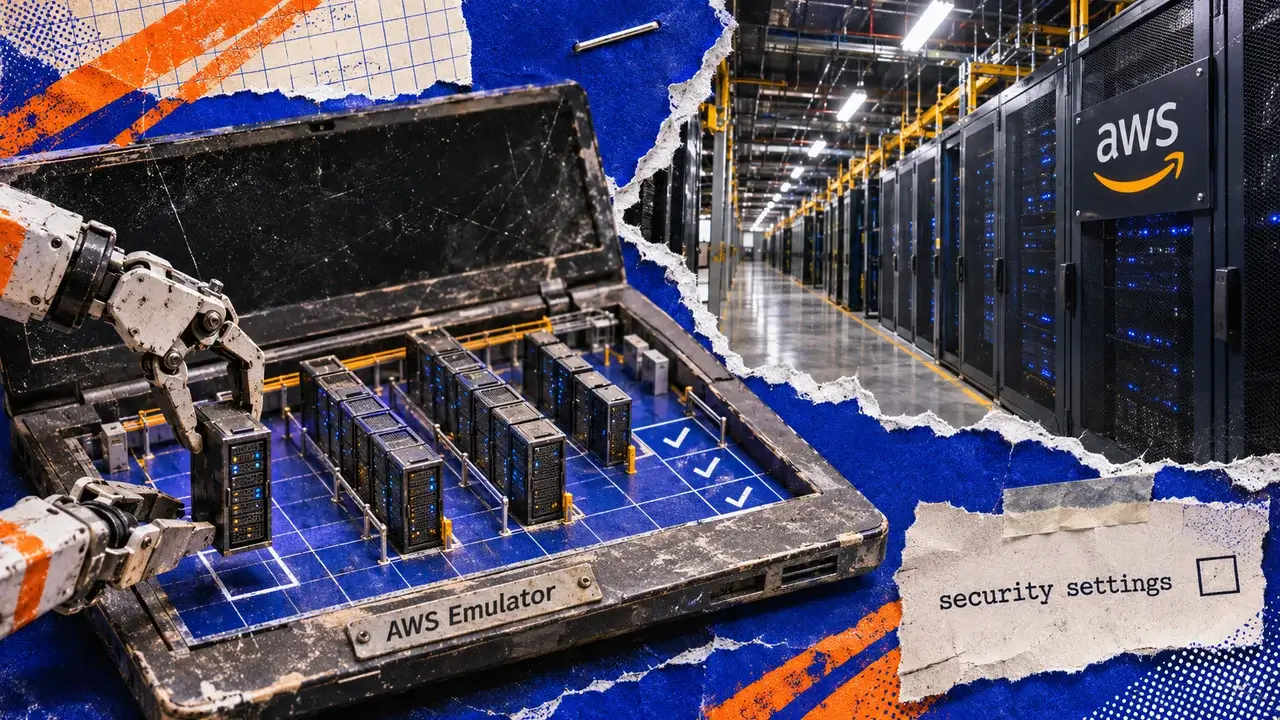

Amazon released AWS Emulator on Nov. 11, a local tool that imitates AWS services so developers can test cloud applications on their own machines. The company says autonomous AI agents wrote and reviewed the entire implementation. Engineer Matthew Goldberg, writing on Amazon's engineering account, says his team neither wrote nor reviewed the emulator code; humans built the guardrails and release checks that decide which changes can ship.
Amazon runs three teams of agents: one manages fidelity tests, another finds differences between the emulator and real AWS, and a third fixes individual issues. Every change faces checks for compilation, coding standards, security and regressions before merging, and the public evaluation suite confirms every fidelity test was verified against at least two sandboxed AWS accounts.
Why it matters
This is a major cloud vendor shipping product code authored and reviewed end-to-end by autonomous agents, with humans relegated to building the acceptance pipeline. The lesson Amazon draws is structural: for agent-written software, the release process matters as much as authorship. The boundary is coverage. Behavior without a fidelity test is explicitly unverified, and passing a scenario proves a match only for that scenario.
Market impact
The limits are as instructive as the milestone. The emulator does not check AWS KMS key policies or S3 bucket policies, and a request denied by AWS may succeed locally. AWS instructs developers to test full application security on real AWS before production. For builders betting on AI agents in developer tooling, the release sets a template: audit which behaviors are checked, what sits outside coverage, and where human testing against the live service remains mandatory.
Frequently asked questions
-
What is AWS Emulator and what does it do?
AWS Emulator is a local tool Amazon released on Nov. 11 that imitates AWS services so developers can test cloud applications on their own machines instead of the live cloud.
-
Did human engineers write any of the AWS Emulator code?
According to Amazon engineer Matthew Goldberg, his team neither wrote nor reviewed the emulator code. Humans built the guardrails and release checks that determine which agent-made changes can ship.
-
How do the AI agents work together on AWS Emulator?
Amazon describes three agent teams: one manages fidelity tests, another finds differences between the emulator and real AWS, and a third fixes individual issues. Every change must pass compilation, coding-standard, security and regression checks before merging.
-
What does a passing fidelity test actually establish?
It establishes that the emulator matches AWS for every call in that specific workflow, including status codes, side effects and errors. Behavior without a fidelity test is explicitly unverified.
-
Can AWS Emulator be used to test application security?
No. AWS warns against it: the emulator does not check KMS key policies or S3 bucket policies, and a request denied by AWS may succeed locally. Developers must test full application security on real AWS before production.
 CoinTelegraph
 WatcherGuru
 TheBlock
 CoinDesk
 Altcoin Daily
 Crypto News