








 CoinDesk
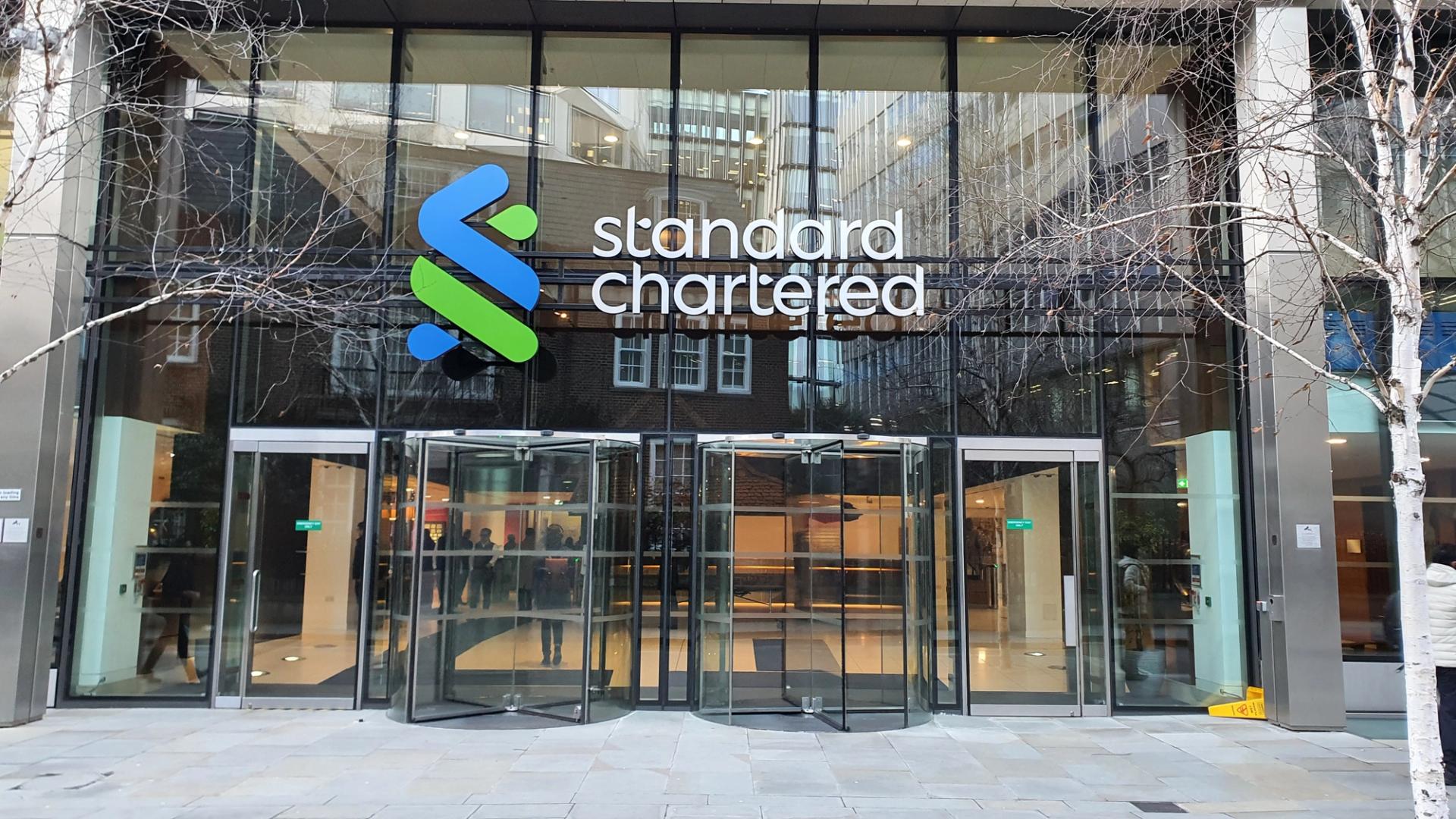


Standard Chartered's digital assets research team started covering Arbitrum's ARB token on Tuesday with a year-end 2030 price target of $10, roughly 70 times its current level near 14 cents. The call, led by global head of digital assets research Geoffrey Kendrick, leans on revenue Arbitrum earns from networks built on its stack, most prominently Robinhood Chain, which has lifted the L2's monthly revenue run rate toward $5 million.
The bank expects $4 trillion of traditional assets to be tokenized by the end of 2028 and sees Arbitrum capturing a growing share of the infrastructure layer behind that migration. Kendrick called the Robinhood chain launch evidence that Arbitrum is on track to become "the number 1 choice for TradFi when bringing assets on-chain."
Why it matters
ARB has gained nearly 7% in the last 24 hours even as the broader crypto market dipped, a divergence Standard Chartered's note frames as the bid pricing in the longer-term TradFi thesis. Robinhood Chain alone paid about $360,000 in licensing fees in July, representing 35% of Arbitrum DAO income that month, and was generating $3.75 million in user fees by September 1, sending roughly $370,000 to Arbitrum over 24 hours. CoinDesk reported earlier this month that Robinhood Chain routes 10% of its net protocol revenue into the Arbitrum ecosystem, with 8% going to the DAO treasury and 2% to a developer fund. None of it flows directly to ARB holders today, a gap Kendrick himself flagged as a central risk to the call.
Market impact
Kendrick's glidepath has ARB at 50 cents by year-end, $1.50 in 2027, $3.50 in 2028, $6.50 in 2029 and $10 in 2030. The thesis still depends on a shift in who actually uses Robinhood Chain, since memecoin launchpads and trading apps have driven most of its early activity rather than the tokenized-stock and traditional-asset users the bank's longer-term forecast assumes. The bank separately flagged slower tokenization adoption and rival blockchains as additional risks. Robinhood's 90-day gas-fee subsidy for users trading on the official wallet is also due to expire around the end of September, and another 92.6 million ARB is scheduled to unlock on September 16.

Frequently asked questions
-
What did Standard Chartered actually forecast for ARB?
Global head of digital assets research Geoffrey Kendrick initiated coverage with a year-end 2030 price target of $10 for ARB, roughly 70x its level near 14 cents at the time of the note.
-
Why does Standard Chartered think ARB can hit $10?
The call rests on Arbitrum capturing infrastructure revenue from networks built on its stack, especially Robinhood Chain, and on the bank's forecast of $4T in tokenized traditional assets by end-2028.
-
Do ARB holders get any of the Robinhood Chain revenue?
Not directly. CoinDesk reported Robinhood Chain routes 10% of net protocol revenue into the Arbitrum ecosystem, with 8% to the DAO treasury and 2% to a developer fund, none to token holders today.
-
What glidepath did Standard Chartered lay out for ARB?
Kendrick's path has ARB at about $0.50 by year-end, $1.50 in 2027, $3.50 in 2028, $6.50 in 2029 and $10 in 2030.
-
What risks did Standard Chartered flag on the ARB call?
The bank highlighted three: ARB holders currently have no direct claim on network revenue, tokenization adoption could be slower than expected, and rival blockchains could win institutional tokenization flow.
 CoinTelegraph
 Crypto Rank News
 Crypto News
 WuBlockchain
 CryptoSlate
 TheBlock