








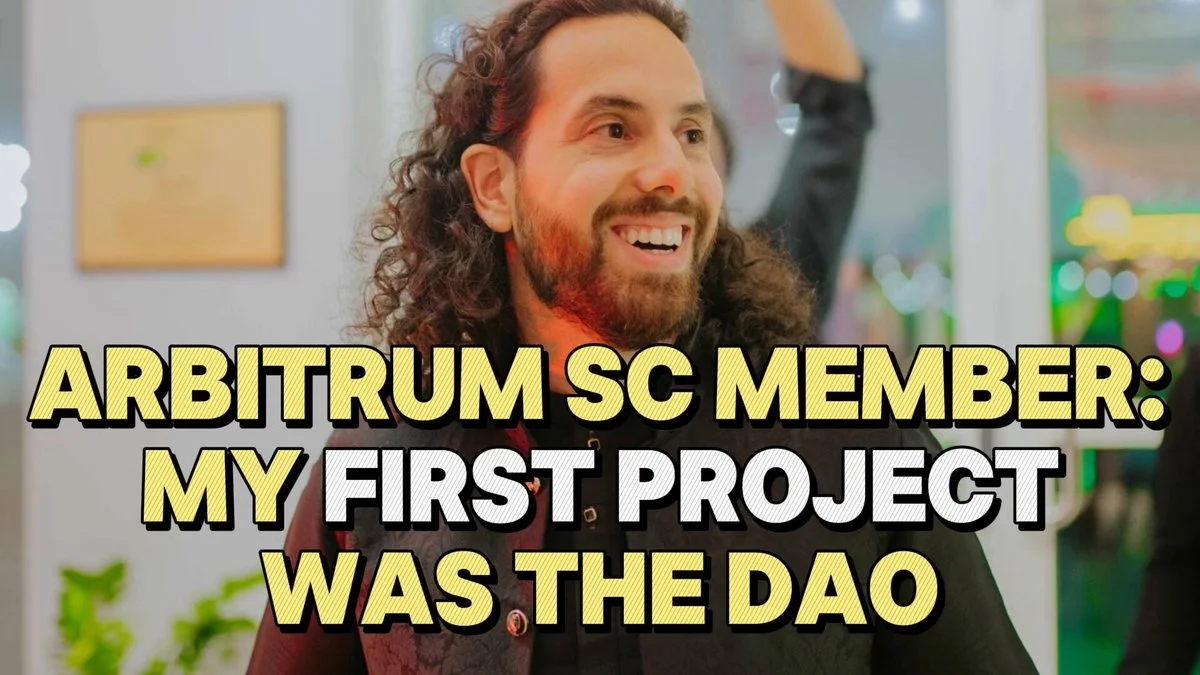

Griff Green, a member of Arbitrum's Security Council, used his experience with The DAO to reframe a popular misconception about blockchains: that they are entirely immutable. Drawing on the 2016 fork that rescued investors from The DAO's reentrancy hack, he argued that any chain's rules can be altered when its community reaches consensus — social consensus, not just code, is the ultimate backstop.
Green tied the lesson directly to Arbitrum's recent crisis response, when the council used a multi-sig to freeze funds after a bridge-related exploit. He framed it as the first time a major L2 has proactively frozen user assets — a precedent that will draw attention from every other rollup team now drawing up their own emergency-playbooks.
Why it matters
Green's framing matters because it puts a name to a feature the industry has long danced around: governance, not cryptography, is what ultimately protects users when code fails. For L2s specifically, the question is no longer whether social consensus will fire — Arbitrum just answered that — but whether the mechanism will be fast, transparent, and accountable enough to keep doing so without eroding the credible-neutrality story users signed up for.
Market impact
The immediate price reaction was muted, but the precedent is the story: every other L2 emergency runbook is now quietly being reread against the Arbitrum template, and token-holders will increasingly ask who holds the multi-sig keys and under what threshold they can be used.
Frequently asked questions
-
How did the market react to the Arbitrum freeze?
The immediate price reaction was muted. The longer-term signal is governance-driven: investors are now paying closer attention to who controls L2 multi-sigs and under what conditions those keys can be used.

 Crypto Capital Venture
 WatcherGuru
 CoinTelegraph
 CoinDesk
 Benjamin Cowen
 Crypto Rank News