








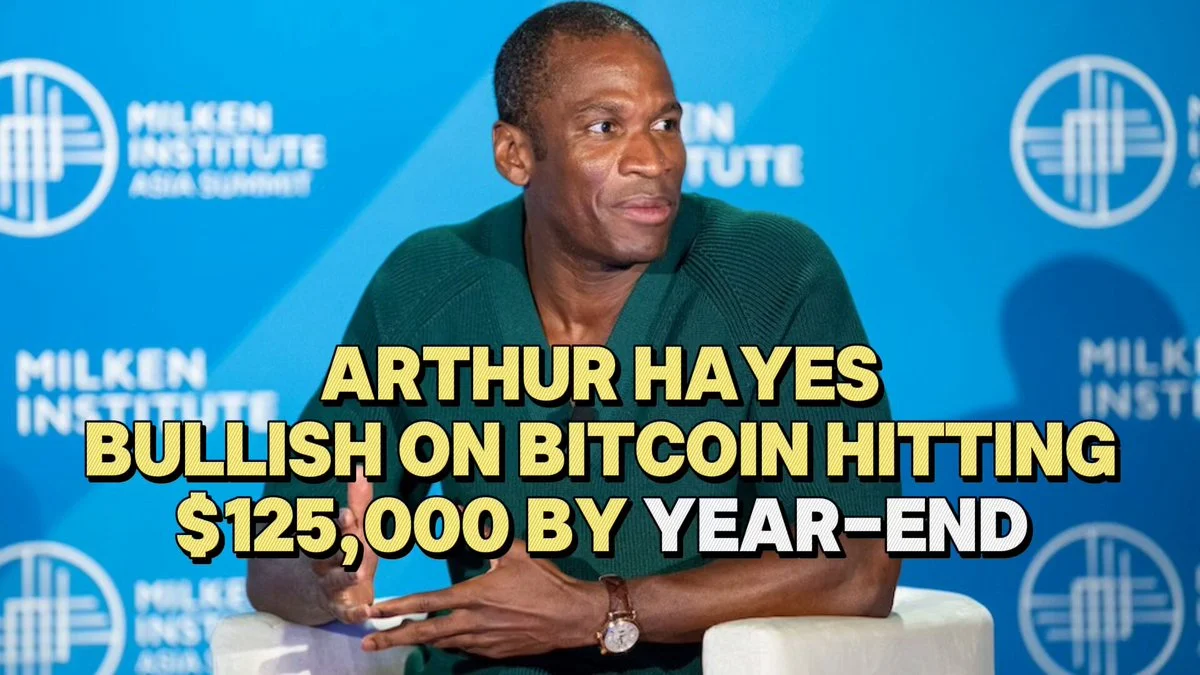
Arthur Hayes is doubling in on a year-end $125,000 Bitcoin call, arguing that new US banking leverage rules plus a wave of state-level military and AI capital spending will unleash roughly $4 trillion of credit creation. In his view, that expansion will swamp any demand destruction AI automation inflicts on the labor market.
Why it matters
Hayes is anchoring the thesis to a liquidity indicator he says has already bottomed in lockstep with Bitcoin's price. The read is structurally bullish: if regulators are easing bank leverage constraints while the state is borrowing and spending at scale, the credit impulse turns positive on a multi-quarter horizon — exactly the regime in which hard-capped assets like BTC historically reprice.
Market impact
The framing matters because it explicitly dismisses the AI-unemployment-as-deflation thesis that has weighed on rate-cut expectations into late 2025. A $4T credit impulse would imply steeper nominal growth, weaker dollar liquidity at the margin, and a tailwind for any asset priced off global M2 — with Hayes pointing to $125K as the year's magnet rather than a stretch target.

Frequently asked questions
-
What is Arthur Hayes's $125,000 Bitcoin prediction based on?
Hayes ties the year-end target to roughly $4 trillion of credit creation he expects from new US banking leverage rules plus state-level military and AI capital spending, arguing the impulse outweighs any AI-driven labor demand destruction.
-
What liquidity indicator is Hayes pointing to?
Hayes references a preferred liquidity indicator that he says has already bottomed in lockstep with Bitcoin's price, which he treats as confirmation that the macro pivot is structural rather than a one-off.
-
How does Hayes counter the AI-displacement narrative?
He argues that a $4 trillion credit impulse driven by regulatory and fiscal channels will swamp any demand destruction caused by AI automation, leaving nominal growth and dollar liquidity as net positives for hard-capped assets.
-
Why does Hayes frame $125K as a magnet rather than a stretch?
He positions the figure as the level the macro setup pulls BTC toward rather than an aspirational target, with the credit impulse and the already-bottomed liquidity indicator doing the work.
-
What would invalidate Hayes's credit-boom thesis?
A reversal in US banking leverage rules, a sharp pullback in state-level military or AI capex, or the liquidity indicator failing to confirm the bottom would undercut the $4T credit creation case and by extension the $125K year-end call.

 TheBlock
 CryptoSlate
 CoinDesk
 Crypto Rank News
 Lookonchain
 CoinTelegraph
 Crypto News
 WatcherGuru