








 CryptoSlate
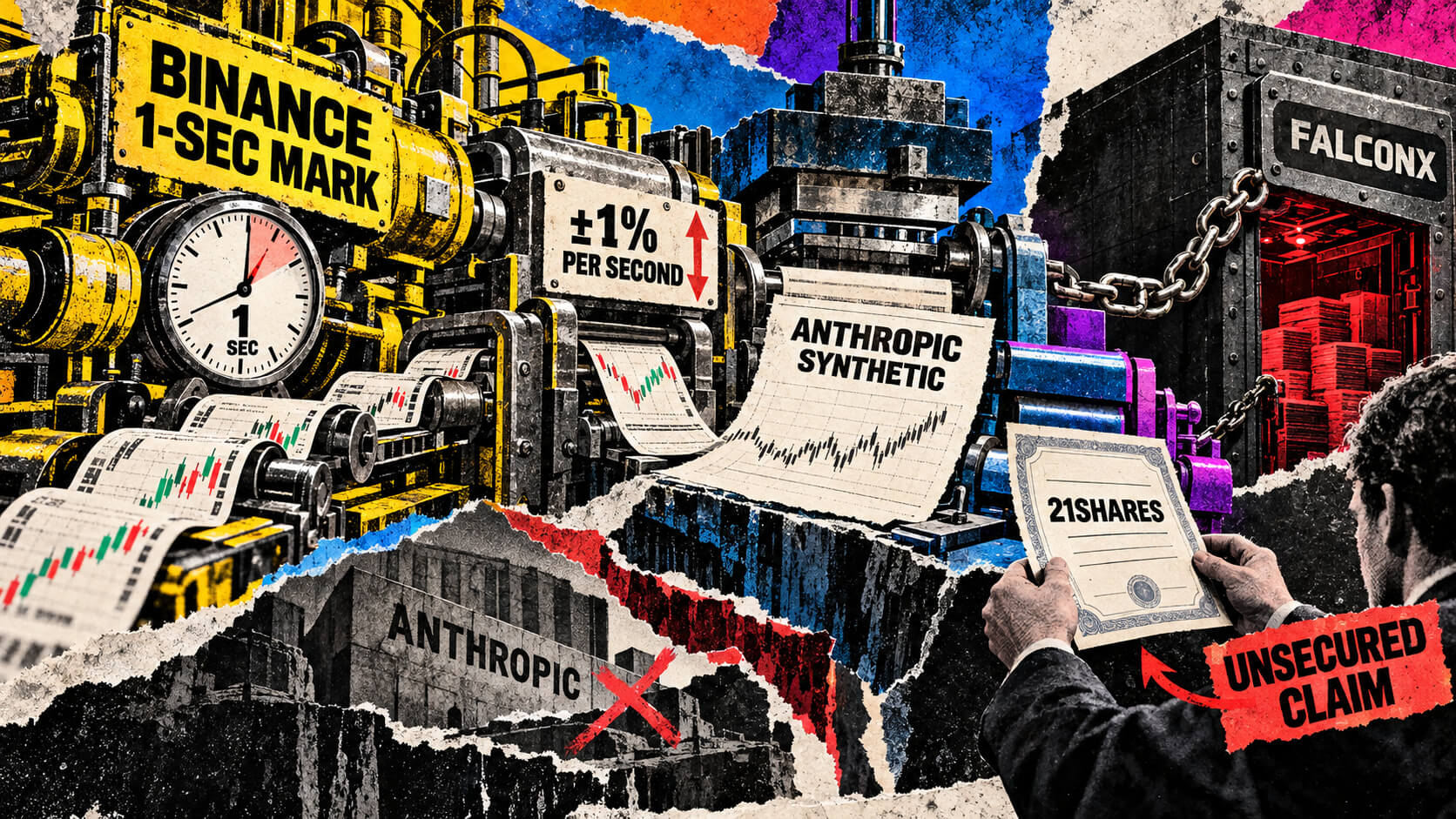


Binance updates its Anthropic-linked perpetual mark every second using executed trades over a rolling 10-to-100-second window, according to exchange executive Shunyet Jan. The method caps each second’s move at 1% in either direction and uses a trailing 100-trade fallback when activity slows. The pricing explanation accompanied the Oct. 13 issue of 21Shares’ Anthropic Synthetic ETP, a listed certificate offering synthetic exposure to the private company.
Why it matters
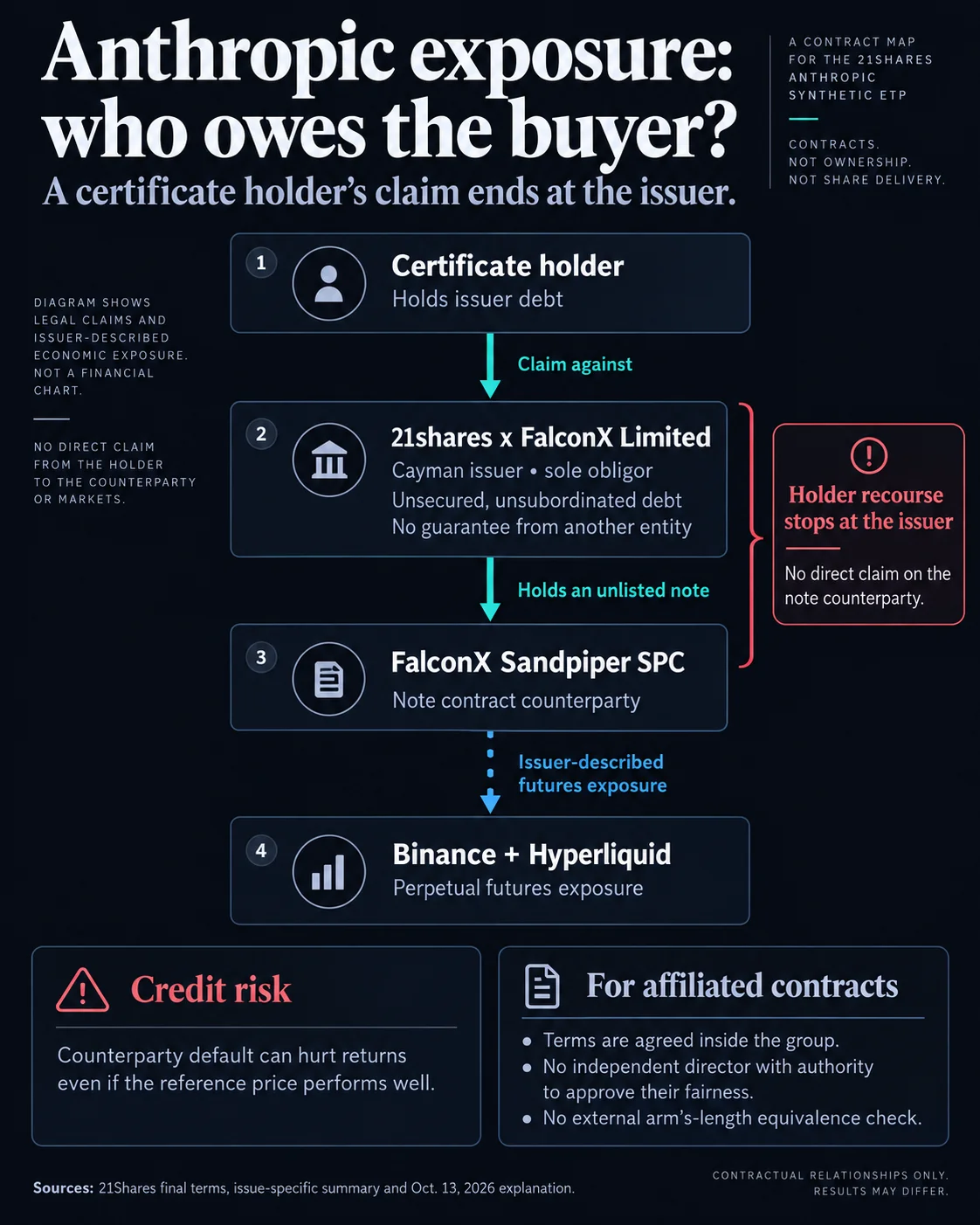
The certificate is unsecured debt issued by 21shares x FalconX Limited, a Cayman Islands company. Holders have recourse to that issuer alone, not directly to the note counterparty managing the exposure. If the counterparty defaults or becomes insolvent, the issuer may recover substantially less than the note’s calculated value, or nothing, even if Anthropic-linked prices have risen.
The issuer and counterparty are within the same corporate group. The legal summary says no independent director is empowered to approve the fairness of their negotiated terms, and no external party verifies that those terms match an arm’s-length deal. It also says this limitation does not establish that any term is unfair or that misconduct occurred.
Market impact
Binance’s mark is only one part of the valuation chain. The final terms also name the Kaiko Anthropic USD Reference Rate and Binance’s ANTHROPICUSDT funding rate as inputs. The note’s value feeds into NAV, while a holder selling through a broker receives the available secondary-market price. These layers can produce a gap between the reference price’s performance and the certificate’s return.
The product lists a 1% annual investor fee, financing charges of up to 3% annually, indicative trading costs of 50 basis points, and perpetual funding quoted at 0.005% per period at inception. These figures are not a fixed all-in annual fee: financing is a ceiling, trading costs are indicative, and funding varies. The final terms also set a 2% redemption fee, with possible additional charges. An eventual Anthropic IPO could change the pricing reference, but would not remove the issuer, counterparty, or ongoing synthetic-exposure risks.
Frequently asked questions
-
How does Binance calculate the Anthropic perpetual mark?
The mark updates each second using executed trades over a rolling 10-to-100-second window. Each second’s move is capped at 1% in either direction, with a trailing 100-trade fallback when activity slows.
-
What claim does a certificate holder have if the counterparty fails?
Holders have an unsecured claim against the Cayman issuer alone, with no direct recourse to the note counterparty. If that counterparty defaults, the issuer could recover substantially less than the calculated note value, or nothing.
-
What does the legal summary say about affiliated contract terms?
It says the issuer and counterparty are affiliated, no independent director can approve the terms’ fairness, and no external party checks whether they match an arm’s-length deal. It does not establish that any term is unfair or that misconduct occurred.
-
Are the disclosed product costs a fixed annual all-in fee?
No. The 1% investor fee is annual, financing is capped at up to 3% annually, trading costs are indicative, and perpetual funding varies. The 0.005% funding figure is quoted at inception, not established as a constant future rate.
-
Would an Anthropic IPO eliminate the certificate’s structural risks?
No. A public listing could change the pricing reference, but the holder would still depend on the issuer’s payment obligation, the note counterparty’s performance, and the costs of maintaining synthetic exposure.
 WuBlockchain
 Lookonchain
 Crypto News
 CoinTelegraph
 TheBlock
 CoinDesk