








 CoinDesk
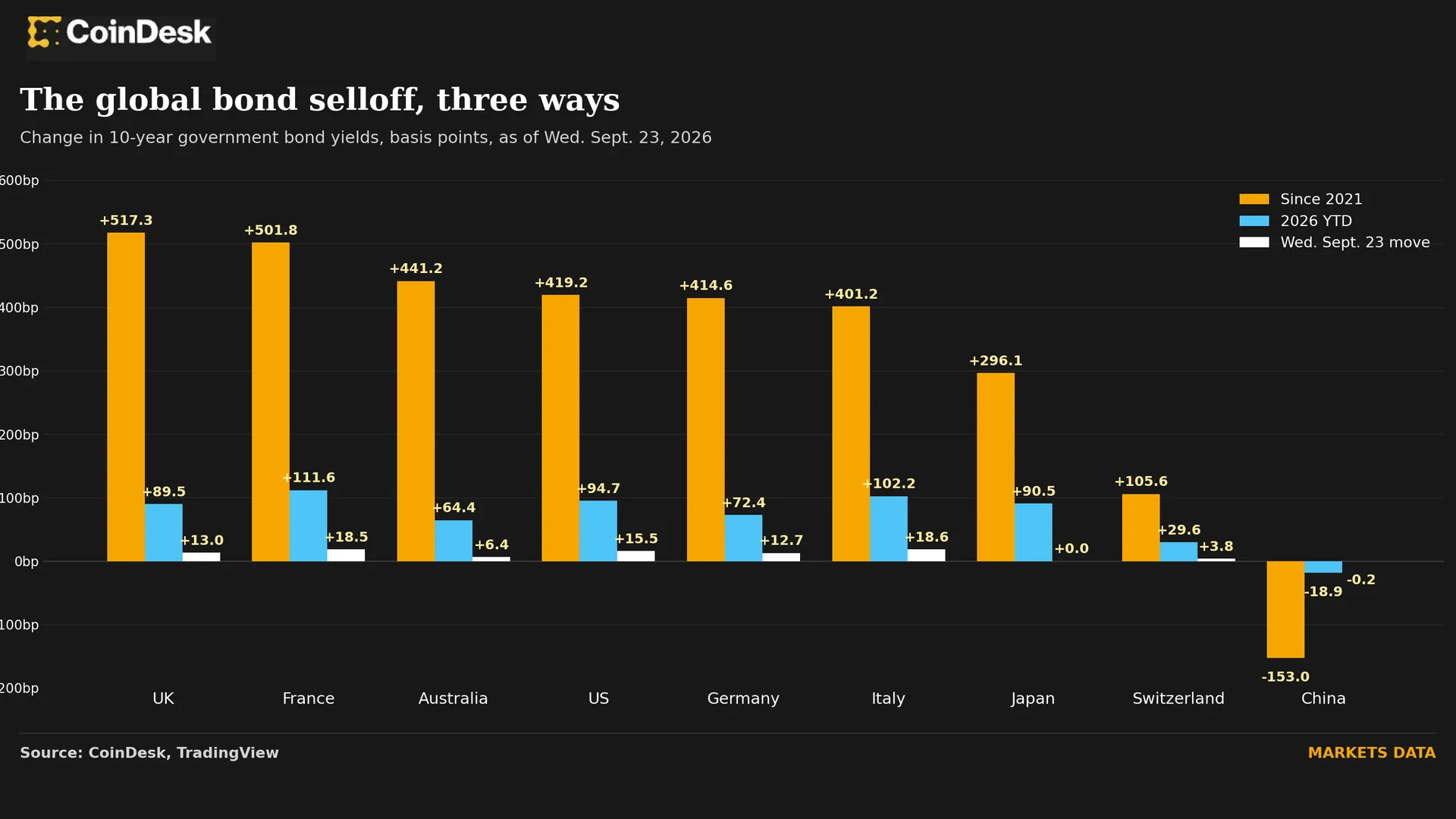


Bitcoin has shown little consistent relationship with government bond yields over time, even as the U.S. 10-year yield climbed 15 basis points above 5.13%, its highest level since 2007. The 90-day correlation between Bitcoin's daily returns and 10-year yield moves was -0.18, compared with -0.06 over 180 days and -0.03 over one year.
Why it matters
The weak correlation challenges the standard view that higher yields automatically make Bitcoin less attractive by raising the opportunity cost of holding a non-yielding asset. Bitcoin has gained 191% since 2021 and reached $126,000 last October, while 10-year yields rose by more than 500 basis points in the U.K. and France and more than 400 basis points in the U.S., Australia, Germany and Italy.
That relative independence can support Bitcoin's role as a portfolio diversifier. Bitget Wallet research lead Lacie Zhang described Bitcoin's near-zero correlation with Treasury yields as a portfolio advantage because BTC is not simply trading as a rates or duration asset.
Market impact
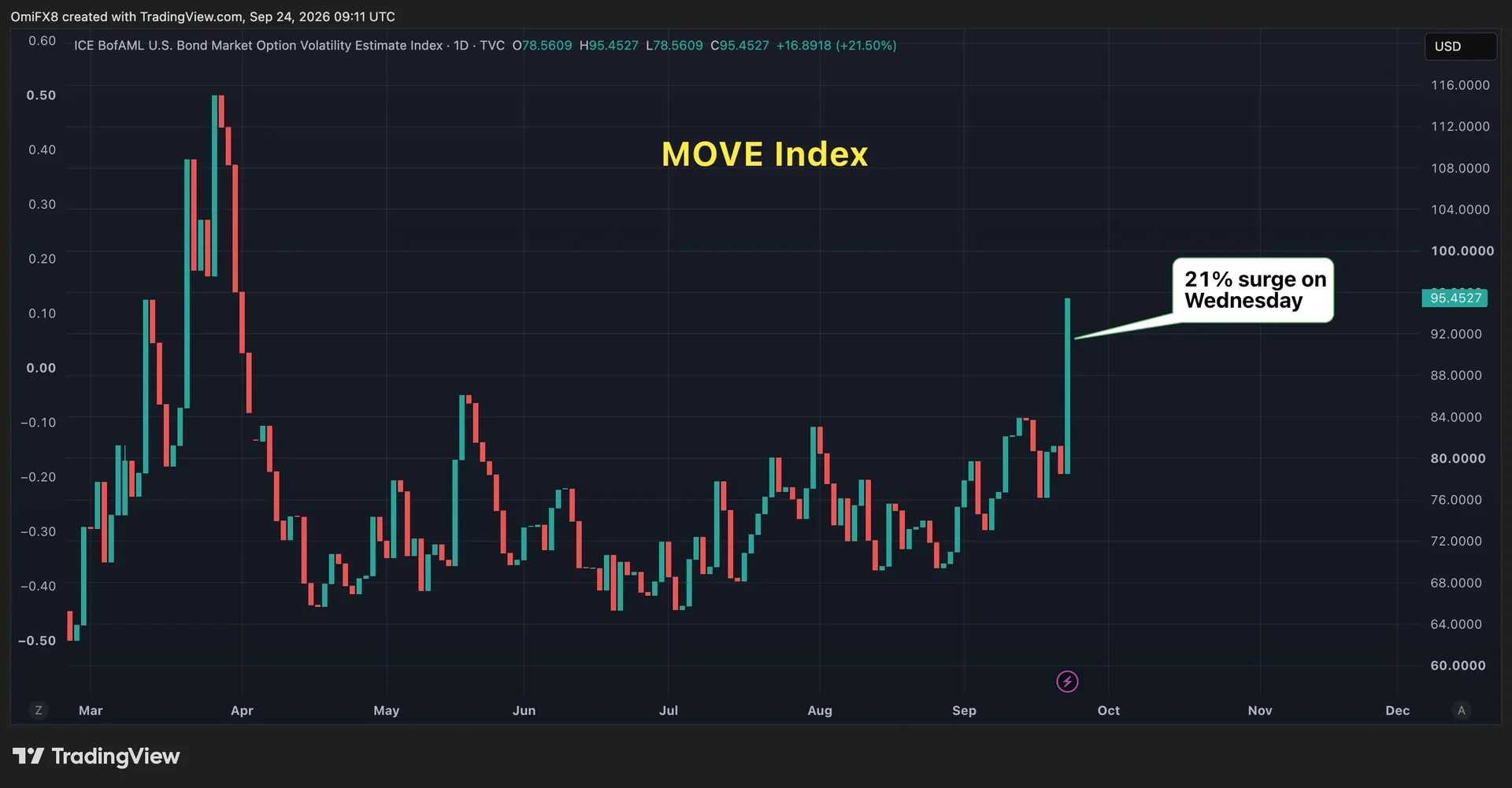
Yield levels are not the same as bond-market stress. The MOVE Index, which tracks expected Treasury volatility, surged 21% to 95 on Wednesday. Bitcoin fell from $87,200 to $83,500 during the move, showing that a sharp rise in financial-market turbulence can pressure BTC even when long-term yield correlation remains weak.
The yield jump followed strong U.S. economic data, including a flash Composite PMI reading of 58.4, up from 56.0. If Treasury volatility persists or rises further, risk aversion and tighter financial conditions could trigger additional Bitcoin weakness. The key variable is bond-market stability, not simply the direction of yields.

Frequently asked questions
-
What is Bitcoin's reported correlation with U.S. 10-year yields?
The 90-day correlation between Bitcoin's daily returns and U.S. 10-year yield moves was -0.18. It was -0.06 over 180 days and -0.03 over one year.
-
Why can Bitcoin fall when long-term yield correlation is weak?
Bond-market volatility can tighten financial conditions and trigger broader risk aversion. That short-term stress can pressure Bitcoin even when yield levels have little consistent long-term relationship with BTC.
-
What happened to the MOVE Index during the bond-market shock?
The MOVE Index, which tracks expected Treasury volatility, surged 21% to 95. The increase coincided with a drop in Bitcoin from $87,200 to $83,500.
-
What economic data pushed U.S. yields higher?
The flash U.S. Composite PMI rose to 58.4 from 56.0, marking the strongest business-activity expansion in more than five years and increasing pressure on yields.
-
What should Bitcoin investors watch next?
Investors should watch whether Treasury volatility persists or rises further. Continued turbulence could tighten financial conditions and create additional near-term pressure on BTC.
 CryptoSlate
 Crypto Rank News
 CoinTelegraph
 WatcherGuru
 TheBlock