


 CryptoSlate

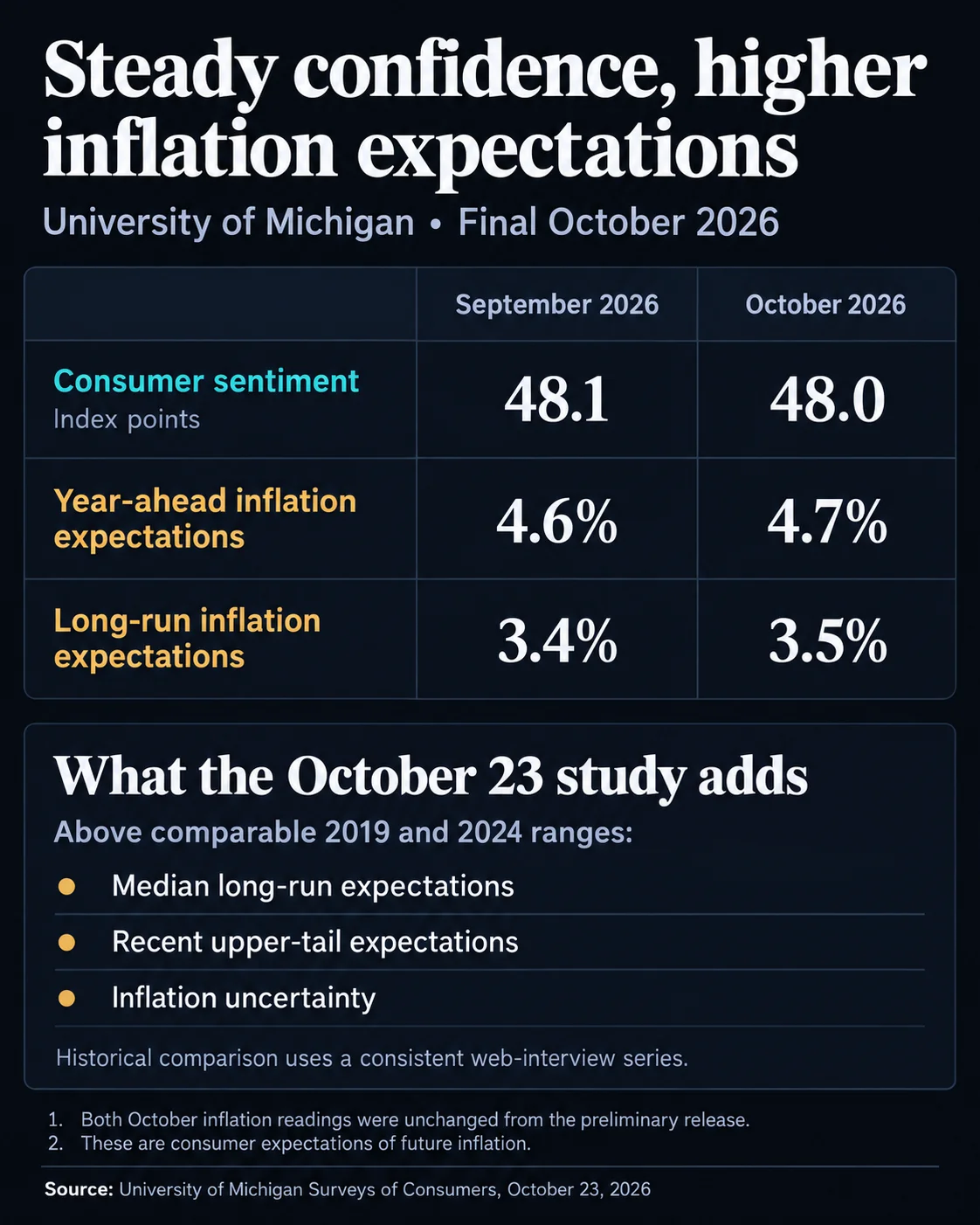

A University of Michigan study published Oct. 23 finds Americans' long-run inflation expectations remain above comparable 2019 and 2024 readings, a persistence that could complicate easier financing conditions for Bitcoin even as headline consumer sentiment barely moves. The final October survey put sentiment at 48, versus 48.1 in September. Year-ahead inflation expectations rose to 4.7% from 4.6%, and long-run expectations climbed to 3.5% from 3.4%, both matching preliminary October figures.
Why it matters
Survey director Joanne Hsu points to the 2025 tariff escalation and the energy shock tied to the 2026 Iran conflict as successive influences on expectations. Consumers who expect further price increases may bring purchases forward, and that precautionary spending could reinforce inflation across households, she warns. Her current contribution remains unmeasured, but entrenched expectations remain avoidable.
The mechanism that reaches Bitcoin runs through policy. The Fed's framework says anchored expectations help inflation return to 2% and support moderate long-term rates, so persistently elevated readings could constrain monetary easing. Fed participants judged medium- and longer-term expectations consistent with the 2% objective at their September 15-16 meeting, though some worried prolonged above-target inflation could seep into wage- and price-setting. Those judgments predate Michigan's October study.
Market impact
A 2023 IMF working paper found US monetary tightening depresses a shared component of crypto prices by reducing investors' willingness to take risk, an effect resembling its impact on equities. That historical result supports a possible route from stubborn inflation to weaker demand for Bitcoin and other risk assets. The counterweight is that Fed officials still view expectations as anchored, so the market signal only turns negative if future surveys confirm the drift Hsu's data suggests.

Frequently asked questions
-
What did the University of Michigan October survey find?
The final October survey put consumer sentiment at 48, versus 48.1 in September. Year-ahead inflation expectations rose to 4.7% and long-run expectations to 3.5%, both up from September and above comparable 2019 and 2024 ranges.
-
How could elevated inflation expectations affect Bitcoin?
Persistently elevated expectations could constrain Fed monetary easing. A 2023 IMF working paper found US tightening depresses crypto prices by reducing investors' willingness to take risk, similar to its effect on equities.
-
What did the Fed say about inflation expectations in September?
At the September 15-16 meeting, participants judged medium- and longer-term inflation expectations consistent with the 2% objective, though some worried prolonged above-target inflation could affect expectations and wage- and price-setting.
-
Why are consumers expecting higher inflation, per the survey?
Survey director Joanne Hsu cites the 2025 tariff escalation and the energy shock associated with the 2026 Iran conflict as successive influences. Consumers expecting further price increases may bring purchases forward, which could reinforce inflation.
-
Is elevated consumer inflation expectation certain to hurt crypto?
No. Hsu notes the precautionary spending risk's current contribution remains unmeasured and entrenched expectations remain avoidable. The negative path for Bitcoin only materializes if the Fed's easing room actually narrows.
 WatcherGuru
 CoinTelegraph
 CoinDesk
 Crypto Capital Venture
 Crypto News