


 CryptoSlate


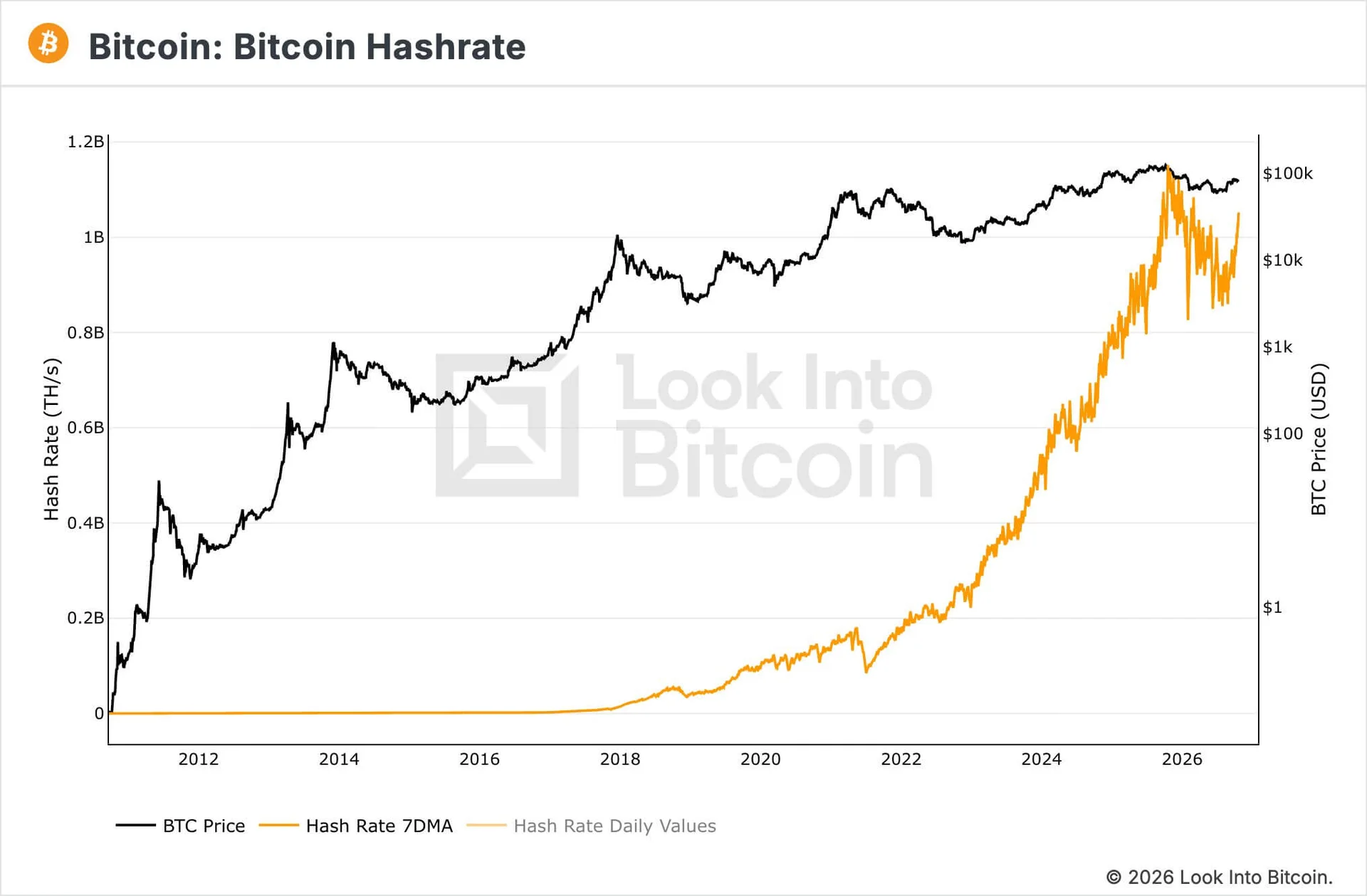

Bitcoin mining difficulty rose 5.54% on Oct. 29 to 148.36 trillion, following a 5.92% increase on Oct. 16. The recovery in computing power is accelerating competition for block rewards as miner revenue falls toward $33 per petahash per second per day, its lowest level since August.
Bitcoin’s hashrate has climbed 21% since July 17, adding about 185 EH/s and recovering to within 6% of its prior record, according to Real Vision analyst Jamie Coutts. The network’s 14-day average had fallen 23% between its October 2025 peak and February 2026, amid severe winter weather and concerns that miners were moving capacity into AI infrastructure.
Why it matters
More hashrate raises the cost of attacking Bitcoin and points to continued investment in mining despite pressure from AI data-center opportunities. Difficulty adjusts every 2,016 blocks, roughly every two weeks, to keep block production near one block per 10 minutes. As computing power returns, that adjustment makes each unit of hashrate less likely to earn the same amount of BTC.
The latest difficulty increase alone cuts expected Bitcoin earnings per unchanged unit of computing power by about 5.24%, assuming fees and other conditions stay constant. Across the two October adjustments, the estimated reduction is about 10.5%.
Market impact
Hashprice, a measure of expected daily mining revenue per petahash per second, has fallen to about $33, versus a September average of $40. At a gross hashprice of $33.35, a 25 J/TH machine would bring in about $32.68 per day per PH/s after a 2% pool fee. At electricity costing $0.06 per kWh, its daily power bill would be $36, leaving a $3.32 shortfall before other expenses.
A more efficient 20 J/TH machine would spend $28.80 on power under the same conditions, leaving a modest surplus before other costs. The figures show how recovering network strength can improve Bitcoin security while squeezing less efficient miners and increasing the value of cheap power and newer equipment.

Frequently asked questions
-
How much has Bitcoin’s hashrate recovered since July?
It has climbed 21% since July 17, adding about 185 EH/s and recovering to within 6% of its previous record.
-
Why does rising Bitcoin difficulty pressure miners’ earnings?
More computing power increases competition for block rewards. The latest difficulty adjustment cuts expected earnings per unchanged unit of computing power by about 5.24%, assuming fees and other conditions remain constant.
-
How low has Bitcoin mining revenue fallen?
Hashprice has dropped toward $33 per PH/s per day, its weakest level since August, compared with a September average of $40.
-
What happens to a 25 J/TH machine at $0.06 per kWh?
At a gross hashprice of $33.35, it would generate about $32.68 daily per PH/s after a 2% pool fee, while its daily electricity bill would be $36.
-
How does more hashrate affect Bitcoin network security?
Additional computing power raises the cost of attacking the Bitcoin network, though it also intensifies miners’ competition for block rewards.
 Lookonchain
 CoinTelegraph
 WatcherGuru
 TheBlock
 CoinDesk