


 WuBlockchain
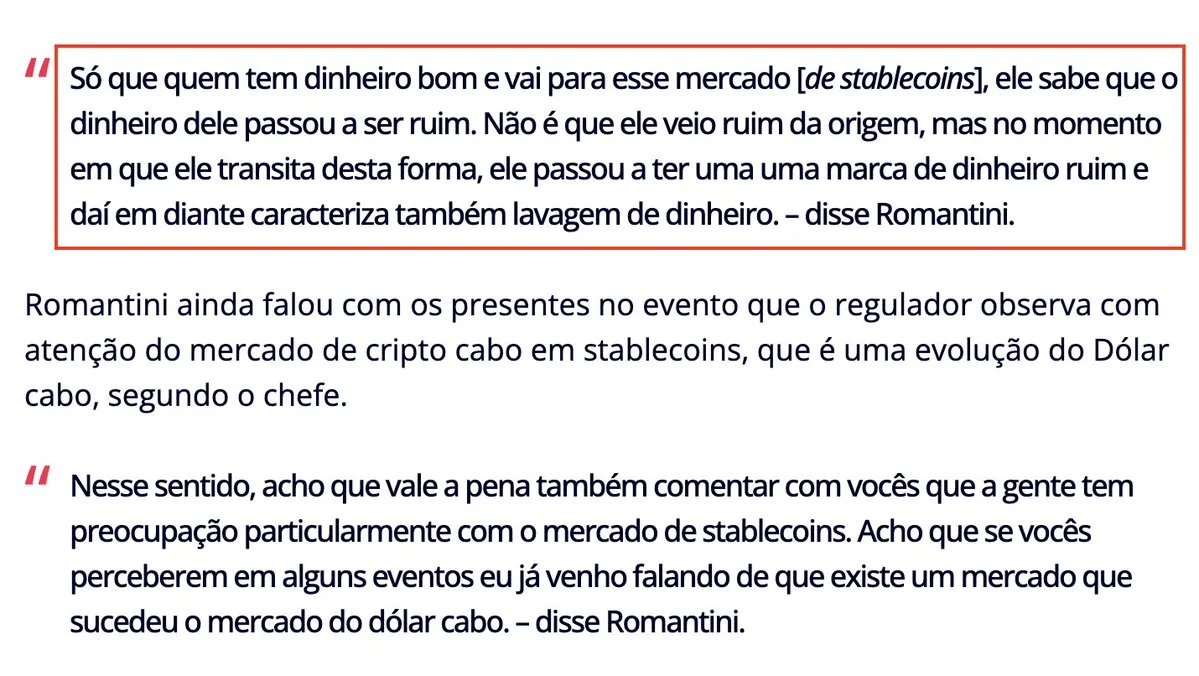
Gerson Romantini, head of the Central Bank of Brazil’s foreign exchange division, said legitimate funds acquire a "dirty money" label when converted into stablecoins and that the practice constitutes money laundering. He singled out remittances and said fintechs that receive reais, convert them into stablecoins, and transfer them overseas for payments or family support are prohibited under Resolution No. 561/2026.
Why it matters
The resolution makes the described workflow prohibited, while Romantini's comments frame it as a money-laundering risk rather than a neutral conversion service. That creates a direct compliance issue for fintechs using stablecoins to bridge Brazilian and overseas payment systems.
Market impact
The policy is bearish for stablecoin-based remittance activity in Brazil because it limits a core use case and raises the cost of staying compliant. The story is sector-wide rather than tied to a specific token, making enforcement clarity, banking partnerships and the future structure of cross-border payment rails more important than a single coin trade.
Source: [Banco Central afirma em reunião fechada que o uso de stablecoins caracteriza lavagem de dinheiro: “dinheiro bom se torna ruim” — Livecoins](https://livecoins.com.br/banco-central-afirma-em-reuniao-fechada-que-o-uso-de-stablecoins-caracteriza-lavagem-de-dinheiro-dinheiro-bom-se-torna-ruim/)
Frequently asked questions
-
What fintech workflow does Resolution No. 561/2026 prohibit?
It prohibits fintechs from receiving reais, converting them into stablecoins and transferring the proceeds overseas for payments or family remittances.
-
How did Gerson Romantini describe funds converted into stablecoins?
He said legitimate funds acquire a "dirty money" label after conversion and that the practice constitutes money laundering.
-
Why is remittance use a central focus for Brazil's central bank?
Remittances involve cross-border transfers that can route Brazilian reais through stablecoins before reaching overseas recipients, raising compliance concerns.
-
What is the market implication for stablecoin-based payments?
The restriction raises compliance costs and weakens the regulatory case for stablecoins used in Brazilian remittance and cross-border payment workflows.
-
From what date did Brazil's stablecoin restriction take effect?
Resolution No. 561/2026 took effect on Oct. 1, according to the central bank official's comments.
 WatcherGuru
 TheBlock
 CryptoSlate
 CoinDesk
 Lookonchain
 CoinTelegraph
 Crypto News