








 CoinDesk
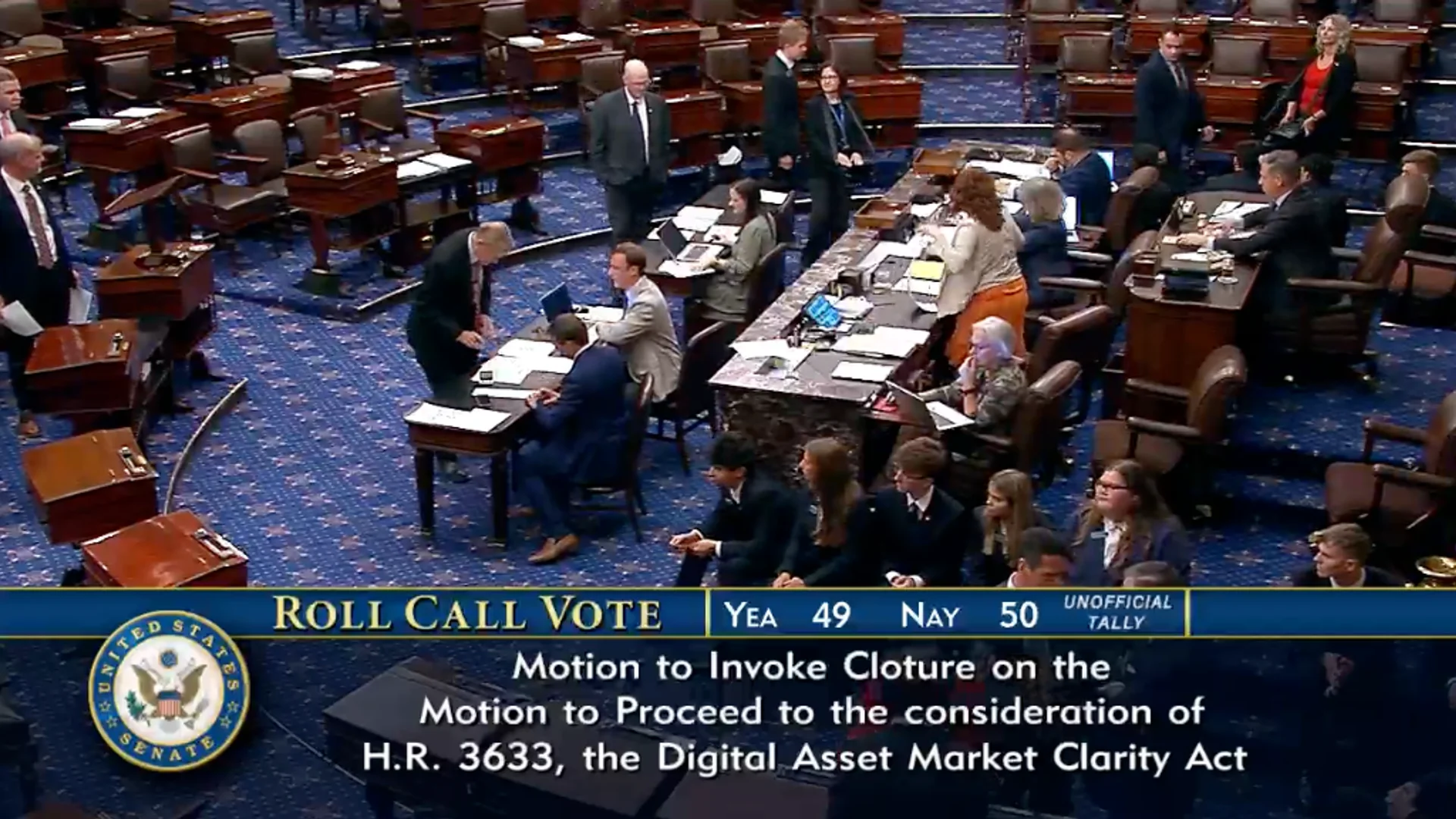



The U.S. Senate rejected the Digital Asset Market Clarity Act after it drew 49 yes votes, 11 short of the 60 needed to advance. The defeat followed last-minute disputes over ethics restrictions on President Donald Trump's crypto holdings and stablecoin rewards, with both parties blaming the other for ending talks.
Why it matters
The bill was the crypto industry's leading bid for a U.S. market-structure framework. Democrats said it failed to prevent conflicts involving Trump's crypto interests, while Republicans said Democrats kept adding demands. Senator Mark Warner said he wanted to vote yes but demanded ethics rules preventing officials from profiting from policies they oversee.
The measure had already cleared the House, but its Senate path was slowed after Coinbase CEO Brian Armstrong opposed its treatment of stablecoin rewards. It reached a floor vote as the election reduced the time available for bipartisan work.
Market impact
The failure leaves digital-asset businesses and investors without the statutory certainty the bill promised. House committee chairs said regulators can use existing authority to issue rules and guidance while Congress remains stalled.
A revival is possible in the roughly four-week lame-duck session after the election, although Senator John Kennedy described it as a difficult, long-odds effort. The key watchpoints are renewed Senate negotiations and whether regulators move ahead without a market-structure law. The bipartisan GENIUS Act passed last year, but Clarity's Senate momentum is now broken.
Frequently asked questions
-
Why did the Clarity Act fail to advance in the Senate?
Supporters secured 49 votes, 11 short of the 60 needed to advance. Final talks also broke down over ethics restrictions tied to President Donald Trump's crypto holdings and stablecoin rewards.
-
What ethics dispute blocked a bipartisan agreement?
Democrats wanted rules preventing officials from profiting from policies they oversee and said the bill did not resolve conflicts involving Trump's crypto interests. Republicans said Democrats kept adding demands.
-
How did stablecoin rewards affect the bill's progress?
Opposition to the bill's treatment of stablecoin rewards slowed its path, including Coinbase CEO Brian Armstrong's objections, which helped stall earlier committee action.
-
Can lawmakers revive the Clarity Act during the lame-duck session?
A revival is possible during the roughly four-week session after the election, but the effort faces long odds. Senator John Kennedy said the bill could return.
-
What happens to digital-asset regulation after the Senate defeat?
House committee chairs said regulators can use existing authority to issue rules and guidance while Congress remains stalled. The failure leaves the industry without the bill's statutory market-structure certainty.
 WatcherGuru
 CoinTelegraph
 TheBlock
 Altcoin Daily
 WuBlockchain
 Crypto News