








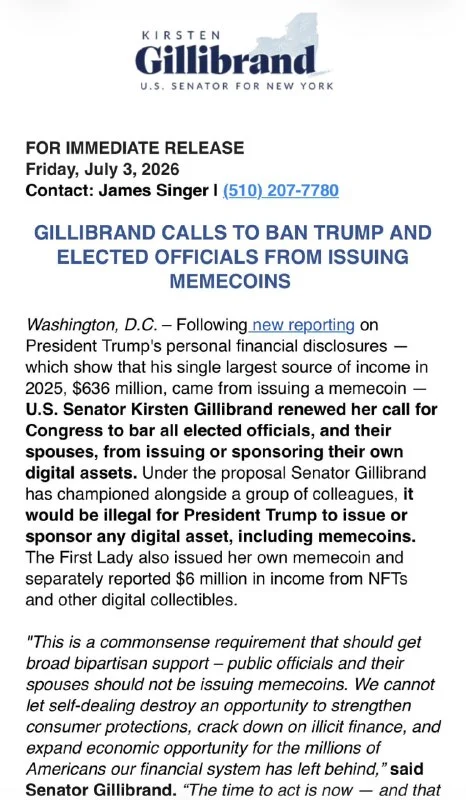
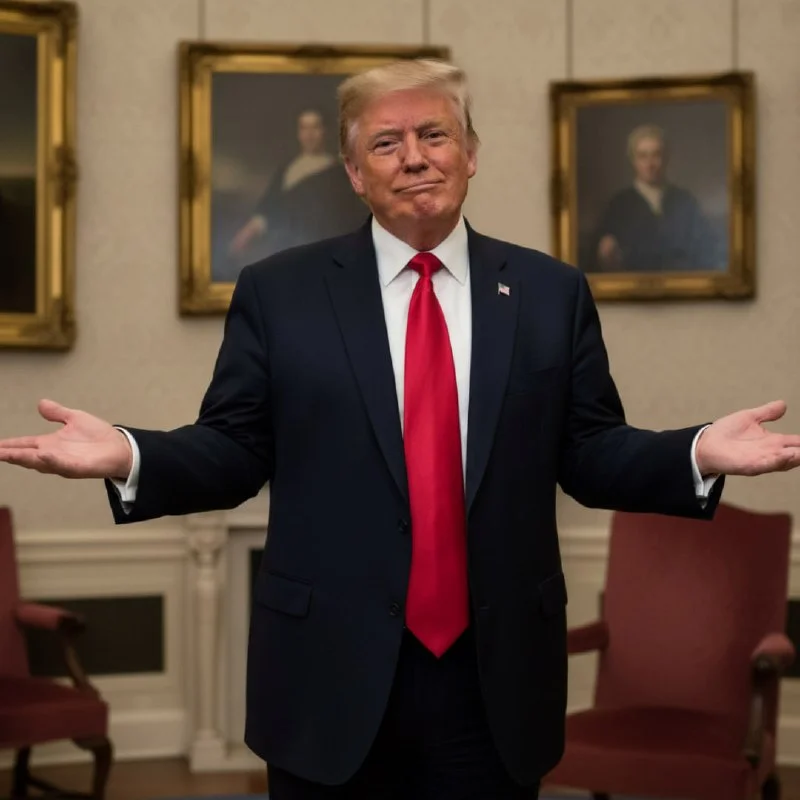
Sen. Kirsten Gillibrand is renewing calls for ethics reform targeting political figures' crypto holdings, days after disclosure forms showed Donald Trump reported more than $600 million in income tied to the $TRUMP memecoin.
Why it matters
The $600M+ figure turned the memecoin from a curiosity into a documented financial interest for a sitting officeholder. Gillibrand's bill, per crypto journalist Eleanor Terrett, is the first formal legislative hook tying memecoin-linked income to federal ethics rules covering presidents, members of Congress, and senior executive-branch officials.
Market impact
Memecoins issued by or closely tied to public figures have sat in a regulatory grey zone: no securities registration, no insider-trading guardrails, no disclosure requirements. A disclosure-led reform push reframes the category from free-expression to financial-interest reporting, the first step toward either campaign-finance-style limits or a memecoin-specific carve-out.
Frequently asked questions
-
What did Trump disclose in the $TRUMP filing?
Disclosure forms reported more than $600 million in income tied to the $TRUMP memecoin, per crypto journalist Eleanor Terrett.
-
What is Sen. Gillibrand proposing?
She is renewing calls for crypto ethics reform that would tie memecoin-linked income to existing federal disclosure rules for officeholders.
-
Why is the $600M figure significant?
It moved the memecoin from a speculative curiosity into a documented financial interest for a sitting officeholder, giving a reform push a concrete starting point.
-
How would the bill affect other crypto holders?
The scope depends on how broadly the bill defines "crypto-linked income": a narrow reading captures only memecoins, a broad reading could sweep in BTC and ETH holdings.
-
What regulatory category would $TRUMP fall under?
Currently it sits in a grey zone with no securities registration, insider-trading guardrails, or disclosure requirements. Reform would likely force it into one of those buckets.

 Benjamin Cowen
 WuBlockchain
 CryptoSlate
 WatcherGuru
 Altcoin Daily
 TheBlock