


 CryptoSlate
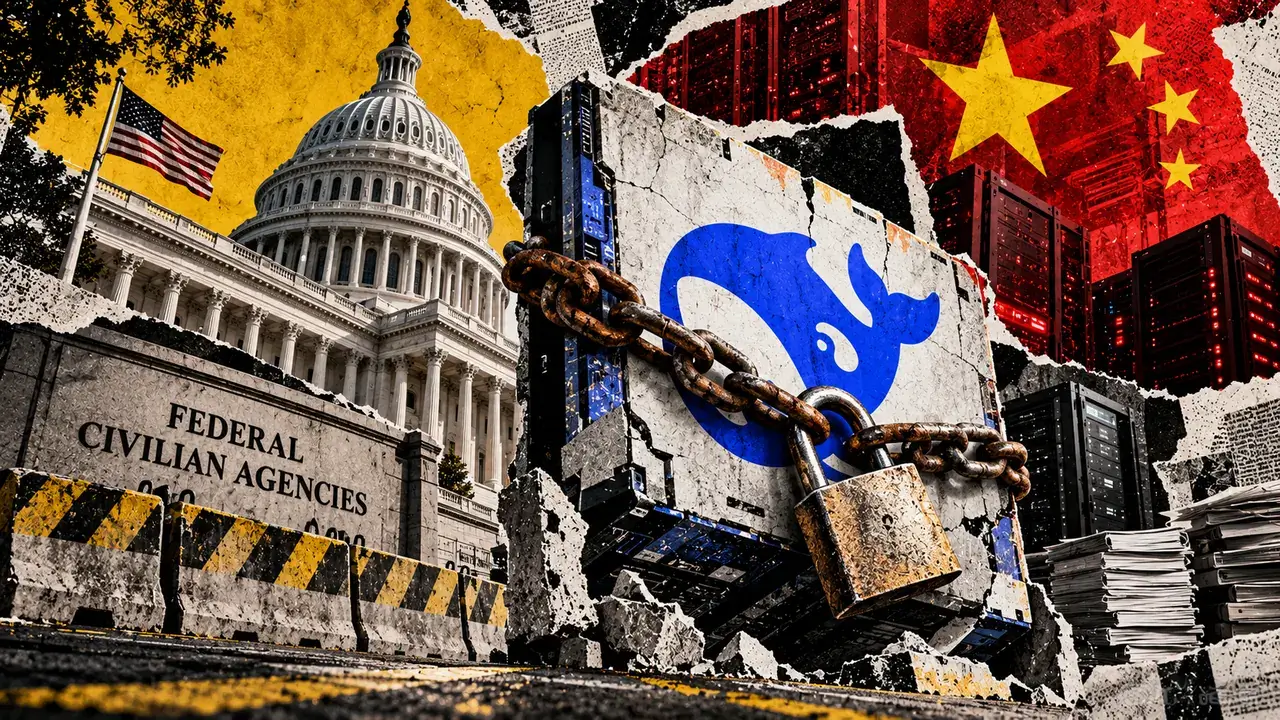



On Oct. 20, the Department of Homeland Security directed federal civilian agencies to remove DeepSeek technology from their systems and barred future purchases. The order also covers third-party software and services built using DeepSeek models. That same day, DeepSeek open-sourced DeepInfer, the inference framework it uses to run its AI services, along with software tools for model deployment.
Why it matters
DHS cited national security concerns, including the risk that sensitive information entered by government employees could be transmitted to servers in China. It also warned of potential security vulnerabilities and intelligence risks. The directive, signed by Homeland Security Secretary Markwayne Mullin on July 24 under the Federal Acquisition Supply Chain Security Act of 2018, requires agencies to begin complying immediately and allows 60 days to request exceptions.
The scope reaches beyond DeepSeek’s own products. Federal suppliers must assess whether their offerings incorporate its technology and may need to replace those components or seek exemptions. Hosting a DeepSeek model on private infrastructure does not automatically exempt a product from the order.
Market impact
DeepInfer includes optimized computing kernels, distributed inference and speculative decoding, with tools intended to improve throughput and reduce computing needs. DeepSeek also released deepseek-recipe, which handles token encoding, prompt formatting and API requests. Both are available under the Apache 2.0 license, allowing commercial modification and redistribution.
The framework supports DeepSeek-V4.1-Flash, a 552-billion-parameter model introduced in September, and Nvidia SM100 and Huawei Ascend 950 processors. The release offers businesses and cloud providers outside the federal market a way to run and adapt DeepSeek models on their own infrastructure. Its open-source reach may expand even as US restrictions complicate adoption among federal contractors and suppliers.
Frequently asked questions
-
Which products does the US order require federal agencies to remove?
The directive covers DeepSeek technology in federal civilian agency systems, as well as third-party software and services built using DeepSeek models.
-
Why did DHS restrict DeepSeek in federal systems?
DHS cited concerns that sensitive information could be transmitted to servers in China, along with potential security vulnerabilities and intelligence risks.
-
Can federal suppliers use DeepSeek if they host it on private infrastructure?
Not necessarily. The order covers third-party implementations, and private hosting does not automatically exempt a product from the restrictions.
-
What did DeepSeek release under the Apache 2.0 license?
DeepSeek open-sourced DeepInfer, its inference framework, and deepseek-recipe, a set of tools for token encoding, prompt formatting and API requests.
-
Which model and processors does DeepInfer support?
The release supports DeepSeek-V4.1-Flash, a 552-billion-parameter model, as well as Nvidia SM100 graphics processors and Huawei Ascend 950 chips.
 CoinDesk
 WatcherGuru
 CoinTelegraph
 TheBlock
 WuBlockchain