








 CoinDesk
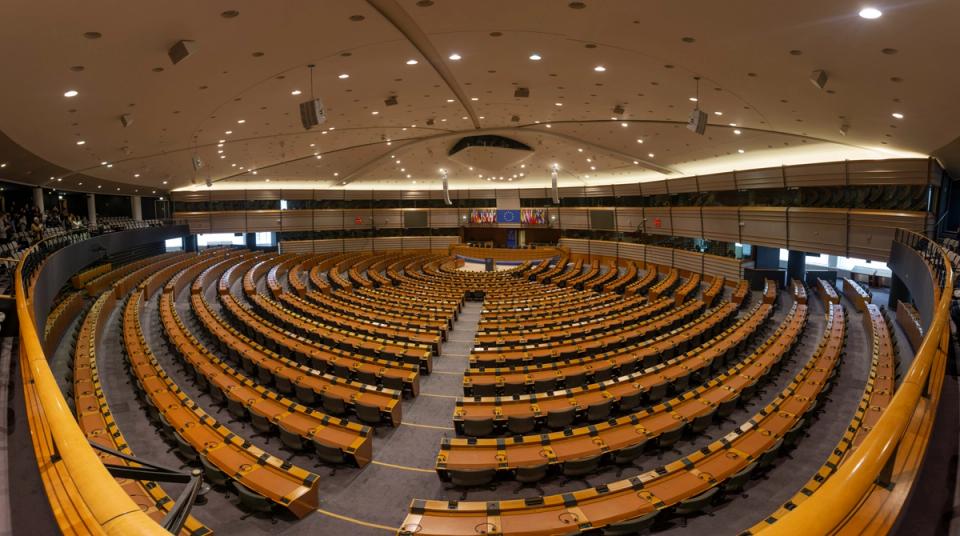



The European Parliament's Economic and Monetary Affairs Committee on Tuesday approved the legal framework for a digital euro and ordered immediate trilogue talks to finalise the law, clearing the path for a 2029 rollout of Europe's central bank digital currency. The vote ends three years of clashes between central bankers and commercial lenders, who had pushed back hard against deposit flight into central bank wallets.
Why it matters
ECB President Christine Lagarde has framed the digital euro as a sovereignty play, not just a payments upgrade. Roughly two-thirds of eurozone card transactions are processed by non-European firms, mainly Visa and Mastercard, and USDC and USDT now circulate freely inside the bloc. ECON committee member Markus Ferber called payment resilience "a geopolitical necessity," language that signals the framework is as much about reducing dependence on US infrastructure as about modernising settlement.
Market impact
The rules allow both online and offline versions, with the offline variant enabling peer-to-peer phone-to-phone transfers and cash-like privacy that shields purchases from ECB surveillance. Commercial banks won strict holding limits on individual digital wallets to prevent a bank-run dynamic in a crisis, a concession that limits direct competition with retail deposits. A 12-month pilot with select merchants and payment providers will now test the infrastructure before the 2029 target, leaving stablecoin issuers and card incumbents a multi-year window to reposition.
Frequently asked questions
-
What did the European Parliament's ECON committee actually vote on?
The committee approved the legal framework for a digital euro and ordered immediate trilogue talks between the Parliament and EU member states to finalise the law, ending three years of disputes between the ECB and commercial banks.
-
When will the digital euro launch?
The framework targets a 2029 rollout of both online and offline versions, with a 12-month pilot using a beta version of the infrastructure to test it with select merchants and payment providers beforehand.
-
Why does the ECB want a digital euro?
ECB President Christine Lagarde has framed it as a sovereignty project: roughly two-thirds of eurozone card transactions are processed by non-European firms, and USDC and USDT already circulate in the bloc, which the ECB sees as exposure to foreign-controlled payment rails.
-
How will privacy work on the digital euro?
The offline version lets users transfer digital euros directly from phone to phone without an internet connection, giving cash-like privacy that prevents the ECB from seeing individual purchases. Lagarde has stressed that physical cash will continue to circulate alongside it.
-
What did commercial banks win in the final framework?
Banks secured strict per-wallet holding limits to prevent mass withdrawals from traditional accounts into central bank wallets during a crisis, addressing their main concern about losing deposit revenue to a state-issued digital currency.
 CoinTelegraph
 WatcherGuru
 CryptoSlate
 WuBlockchain
 Crypto News