








 CoinDesk
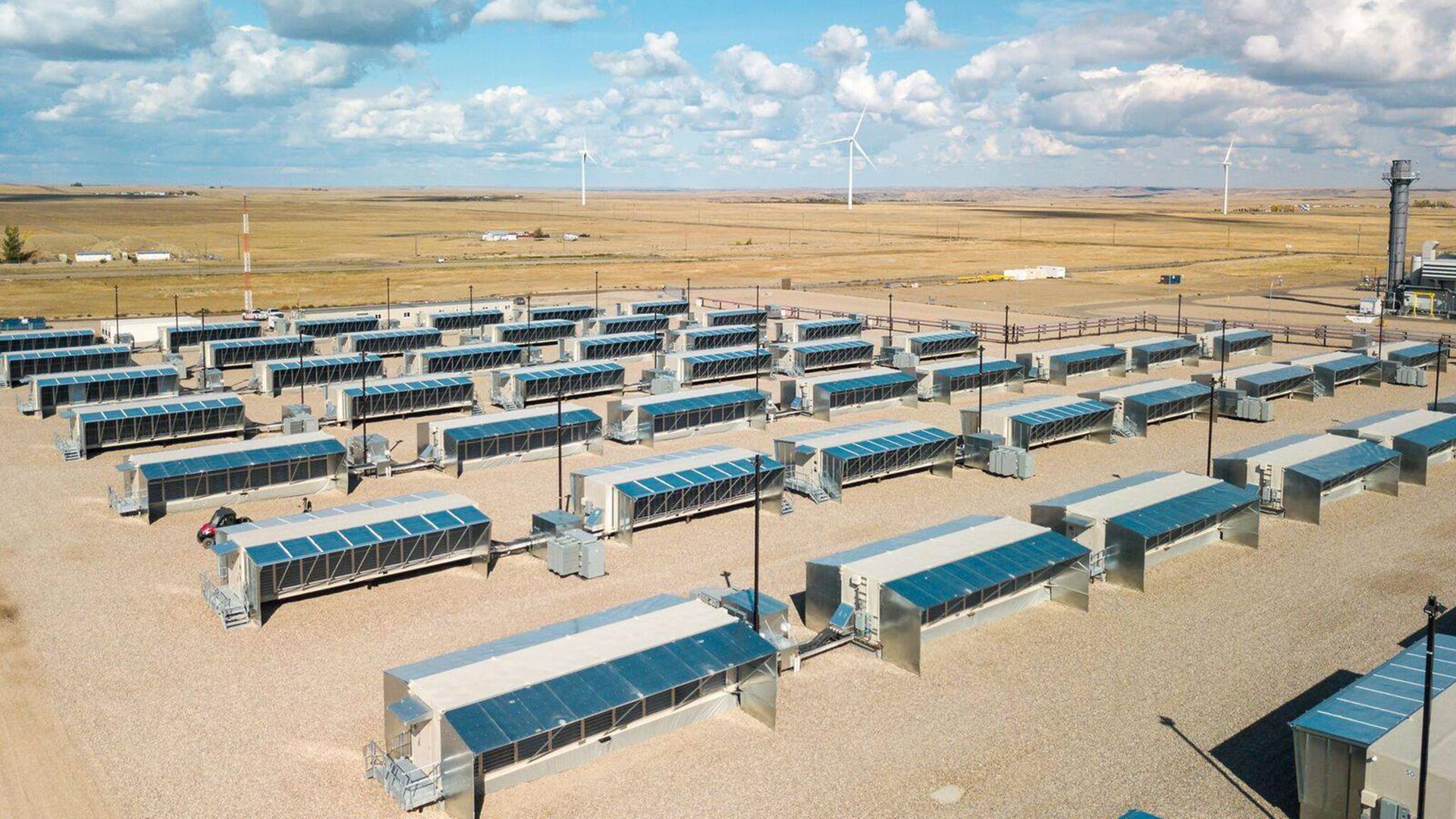


Anthropic agreed to spend $35 billion on computing capacity from Lambda, an Nvidia-backed AI cloud provider, and some of that compute will run through Hut 8's Beacon Point campus in Nueces County, Texas. Nvidia holds the lease on the facility, Lambda runs Nvidia chips there, and Anthropic buys the resulting compute power. The structure pulls a publicly traded bitcoin miner deeper into the AI infrastructure buildout that has been redrawing the sector's economics for the past year.
Why it matters
Hut 8 had previously disclosed two 15-year leases at Beacon Point covering 704 megawatts of IT capacity without naming the tenant. The leases carry $19.6 billion of contracted value over their initial terms, more than 260 times the company's $74.93M quarterly revenue from June. The campus covers 525 acres with access to up to 1 gigawatt of power and an existing grid connection, the kind of power-dense footprint AI developers cannot easily build from scratch.
The deal extends a pattern. TeraWulf signed a long-term agreement in July to provide Anthropic with 401 megawatts at a former industrial site in Kentucky. Bitdeer signed a 16-year, $4.7 billion agreement in August to lease 121 megawatts of its Tydal campus in Norway for Nvidia-powered compute. Microsoft signed a five-year, $9.7 billion deal last year for AI capacity from IREN's Texas data centers. Public miners have already signed more than $70 billion of AI and high-performance computing contracts as weak bitcoin-mining economics push capital toward data centers.
Market impact
HUT initially spiked when the news hit late Monday before fading back to marginally higher in pre-market trading, suggesting the market is treating the confirmation as an extension of an already-known thesis rather than a fresh re-rating catalyst. The bigger read is structural: bitcoin miners with established power and grid assets are now pricing as AI infrastructure companies, with Beacon Point alone expected to generate $1.31 billion in average annual operating income once fully operational.

Frequently asked questions
-
What is Hut 8's Beacon Point campus being used for in the Anthropic deal?
Beacon Point, a 525-acre site in Nueces County, Texas, hosts Hut 8's two 15-year leases covering 704 megawatts of IT capacity. Some of that capacity will run Nvidia chips for Lambda, which Anthropic will buy compute from under its $35 billion Lambda agreement.
-
How much is Hut 8's Beacon Point capacity worth on paper?
The two Beacon Point leases carry $19.6 billion in contracted value across their initial 15-year terms, against Hut 8's $74.93M quarterly revenue from June. The company has not confirmed how much of the 704 MW is tied specifically to Lambda and Anthropic.
-
Why are bitcoin miners like Hut 8 pivoting into AI infrastructure?
AI companies need hundreds of megawatts of power and grid connections that can take years to build from scratch, while bitcoin miners already operate large power-dense sites with cheap electricity. TeraWulf, Bitdeer and IREN have all signed major AI compute deals alongside Hut 8.
-
What other AI compute deals have public bitcoin miners signed?
Public miners have signed more than $70 billion of AI and high-performance computing contracts. TeraWulf is delivering 401 MW to Anthropic in Kentucky, Bitdeer leased 121 MW in Norway to Nvidia-powered compute for $4.7 billion over 16 years, and Microsoft signed a five-year, $9.7 billion deal with IREN's Texas data…
-
How did Hut 8's stock react to the Anthropic Lambda news?
HUT initially spiked late Monday when the WSJ reported the deal, then faded back to only marginally higher in pre-market trading on Tuesday. The market appeared to read the confirmation as an extension of an already-known thesis rather than a fresh re-rating catalyst.
 TheBlock
 CryptoSlate
 CoinTelegraph
 WatcherGuru
 Crypto News