








 WatcherGuru

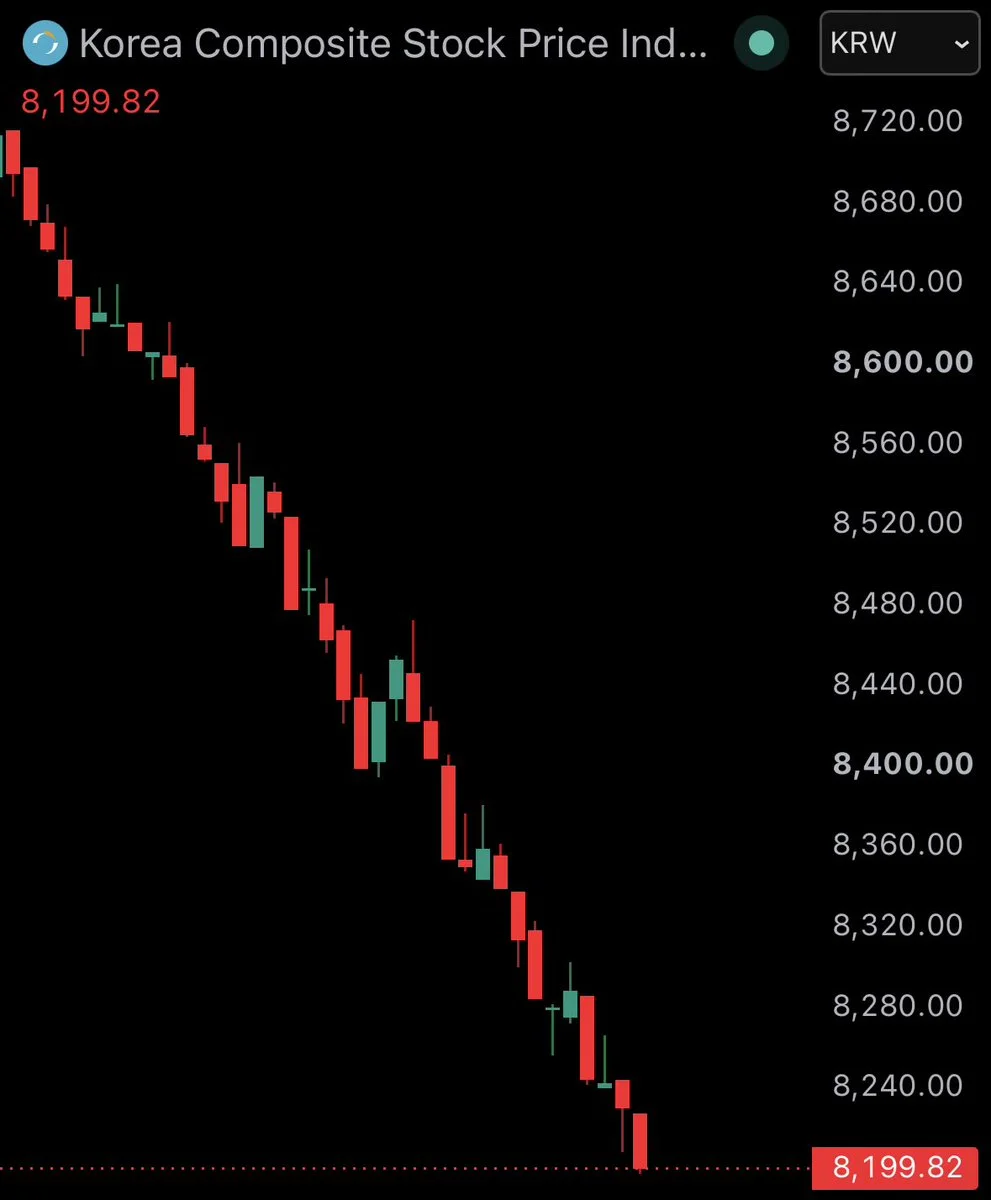
South Korea's benchmark KOSPI index plunged roughly 8% before trading was halted by circuit breakers, marking the steepest single-session suspension since the March 2020 COVID shock.
Why it matters
KOSPI circuit breakers rarely fire; an 8% move in a single session is an extreme reading even for a market that has historically been more volatile than US benchmarks. The halt lands as risk-off sentiment accelerates across Asia, with the won weakening and Korean exporters leading the slide.
Market impact
An 8% KOSPI rout drags regional sentiment and pressures US-listed Korean equities on the reopen. Crypto markets typically see elevated volatility on these sessions: BTC and ETH liquidity thins, spreads widen, and capital flows lean defensive until Asian markets stabilise.
Frequently asked questions
-
Why did KOSPI trigger a circuit breaker today?
The benchmark fell roughly 8% in a single session, breaching the threshold that automatically halts trading. The trigger fires on the scale of the move, not its underlying cause.
-
When was the last time KOSPI halted trading?
The March 2020 COVID crash is the most recent comparable suspension. KOSPI circuit breakers fire infrequently, and an 8% move is an extreme reading even by Korean standards.
-
How does an Asian equity crash affect crypto markets?
Regional risk-off events typically thin crypto liquidity and widen spreads. BTC and ETH downside volatility tends to follow until Asian markets stabilise and forced selling is absorbed.
-
What sectors led the KOSPI selloff?
Korean exporters led the decline as the won weakened. Heavyweight tech and shipping names carry the index, so weakness there pulls the benchmark disproportionately.
-
What should traders watch after the halt lifts?
The reopen is the key signal. A sharp rebound suggests forced selling is being absorbed, while a continuation lower extends regional contagion into European and US sessions.
 Crypto News
 Benjamin Cowen
 CoinTelegraph
 Crypto Capital Venture
 TheBlock
 Altcoin Daily
 CoinDesk