








 CoinDesk
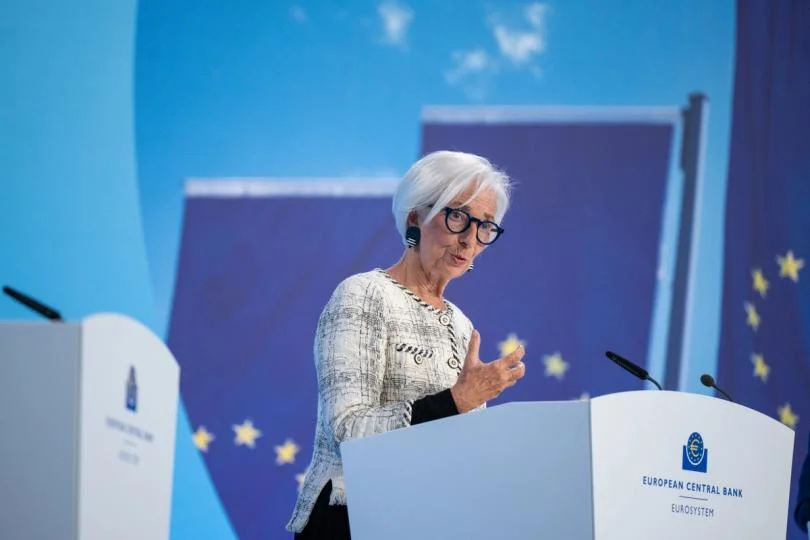

European Central Bank President Christine Lagarde used a Friday speech in Madrid to argue that Europe should anchor its tokenised settlement infrastructure in central bank money rather than promote privately issued euro-pegged stablecoins, warning that the existing stablecoin model — dominated by U.S. issuers — carries financial-stability risks Europe should not import.
The market she is pushing back against is now roughly $310 billion in circulation, up from $10 billion six years ago, and about 90% of that sits with two issuers: Tether and Circle. Lagarde framed that concentration as the core problem, noting that the par-redemption promise of a stablecoin depends on the very market confidence that evaporates when conditions deteriorate.
Why it matters
Lagarde's intervention lands directly on a live European debate. Qivalis, a consortium of twelve of Europe's largest banks — including ING, BBVA, BNP Paribas, Danske Bank and UniCredit — announced plans this year to launch a privately issued digital euro later in 2025, explicitly framed as a defence against digital dollarisation. Qivalis CEO Jan-Oliver Sell told CoinDesk that without a deep, onchain euro, "the only alternative is the U.S. dollar."
The ECB president is effectively asking EU lawmakers to back the central bank version over the bank consortium version. She pointed to the March 2023 USDC de-peg — when Circle disclosed $3.3 billion of its reserves sat at Silicon Valley Bank — as the template for the kind of feedback loop she wants to avoid: a mass redemption accelerating the very market stress that breaks the peg.
Market impact
The ECB is targeting a digital euro rollout by 2029, conditional on EU co-legislators adopting the necessary regulation by 2026, with pilot exercises and initial transactions potentially starting mid-2027. Until then, the policy fight is over which rails Europe builds first — and who controls them. For euro-area banks, the message is that tokenisation is coming, but the ECB wants the settlement layer public, not private, even if that means slowing euro stablecoin issuance relative to the dollar.

Frequently asked questions
-
What did Christine Lagarde say about stablecoins?
At the Bank of Spain's LatAm Economic Forum in Madrid, Lagarde argued Europe should build tokenised settlement on central bank money rather than promote privately issued euro-pegged stablecoins, calling the case for them "far weaker than it appears."
-
How big is the stablecoin market and who dominates it?
Stablecoin circulation has grown from about $10 billion six years ago to roughly $310 billion, with around 90% of that market held by two issuers — Tether and Circle, according to Lagarde's remarks.
-
What is Qivalis and how does it differ from the ECB's digital euro?
Qivalis is a consortium of twelve major European banks, including ING, BBVA, BNP Paribas, Danske Bank and UniCredit, planning to launch a privately issued digital euro later in 2025 to counter digital dollarisation. The ECB's digital euro, by contrast, would be a central bank-issued CBDC targeted for 2029.
-
What stablecoin risk did Lagarde illustrate with the USDC de-peg?
She pointed to the March 2023 collapse of Silicon Valley Bank, when Circle disclosed $3.3 billion of USDC reserves sat at the bank and the token briefly lost its peg, as an example of how mass redemptions can accelerate the very market stress that breaks the peg.
-
When could the ECB's digital euro launch?
The ECB is targeting a potential digital euro rollout by 2029, assuming EU co-legislators adopt the necessary regulation by 2026. Pilot exercises and initial transactions could begin as early as mid-2027.
 CoinTelegraph
 WatcherGuru
 CryptoSlate
 WuBlockchain
 Crypto Capital Venture