








 CoinDesk

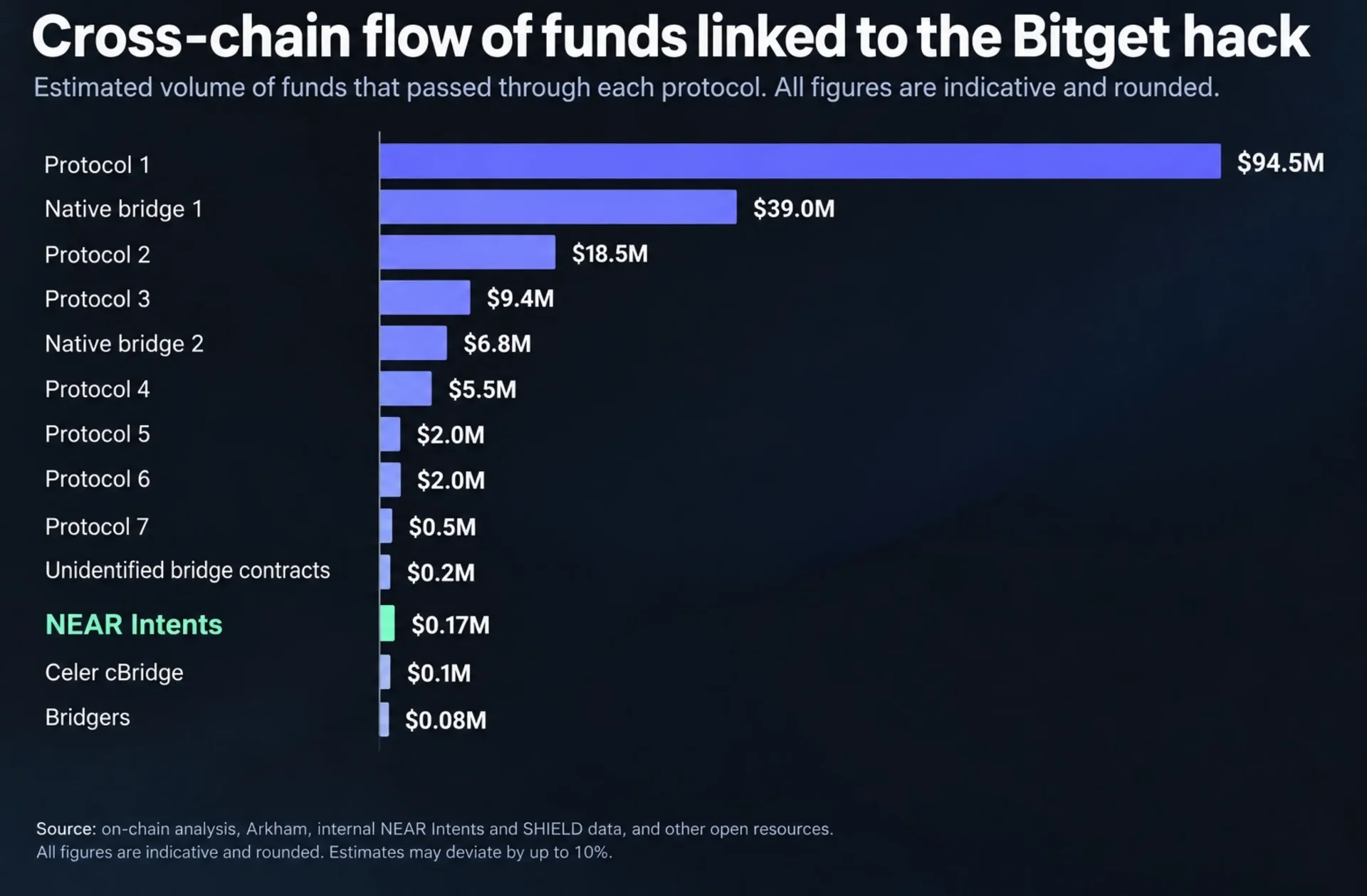


NEAR Intents blocked about $503,000 linked to Bitget’s $388 million hack during attempted swaps, while about $166,000 passed through its service. More than $50 million in attempted transfers were identified, but that figure is not money recovered: most rejected funds later moved through other providers.
Why it matters
NEAR Intents’ SHIELD system checks swap requests against hack reports and other intelligence, and can delay suspicious transactions. The intervention has reopened debate over whether a service that can hold funds is genuinely permissionless. NEAR co-founder Illia Polosukhin argues that permissionless access to own and transfer assets on the NEAR blockchain does not require every application or liquidity provider to process every transaction. Critics counter that selective restrictions challenge the principle of neutrality.
The contrast with THORChain, which has refused to block the attacker’s addresses, highlights a broader design choice: whether swap services should intervene when suspected stolen funds pass through them. NEAR Intents says the held funds will remain restricted pending legal and recovery proceedings, but has not specified who can authorize release or how wrongly flagged users can appeal.
Market impact
NEAR Intents said duplicate attempts were removed from its tally and estimated the figures could differ from actual amounts by roughly 10%. It also said the intercepted funds were a negligible share of its usual cross-chain trading volume, which it described as more than $100 million per day.
The case concerns the swap service, not blanket control over NEAR wallets: its checks apply when users make swaps. Bitget says it fixed the vulnerability, published attacker addresses and offered bounties for eligible recovery efforts. Circle and Tether have also frozen about $320,000 in linked USDC and USDT. The unresolved release and appeal process will test how these safeguards work in practice.





Frequently asked questions
-
How much linked to the Bitget hack did NEAR Intents stop?
NEAR Intents said it blocked about $503,000 during swaps. About $166,000 passed through its service.
-
Does the $50 million figure mean NEAR Intents recovered that amount?
No. It refers to attempted transfers identified by the service. Most rejected funds subsequently moved through other providers.
-
How does NEAR Intents screen suspicious swaps?
Its SHIELD system checks swap requests against hack reports and intelligence from multiple providers and industry participants, and can delay suspicious transactions.
-
Why has the intervention raised questions about permissionless access?
Critics say the ability to restrict transactions challenges neutrality. NEAR co-founder Illia Polosukhin says permissionless ownership and transfers on NEAR do not oblige every application to process every transaction.
-
How can users seek release of held funds or challenge a false flag?
NEAR Intents says the funds are held pending legal and recovery proceedings, but has not specified who can authorize their release or how wrongly flagged users can appeal.
 WuBlockchain
 CoinTelegraph
 CryptoSlate
 TheBlock