








 WatcherGuru
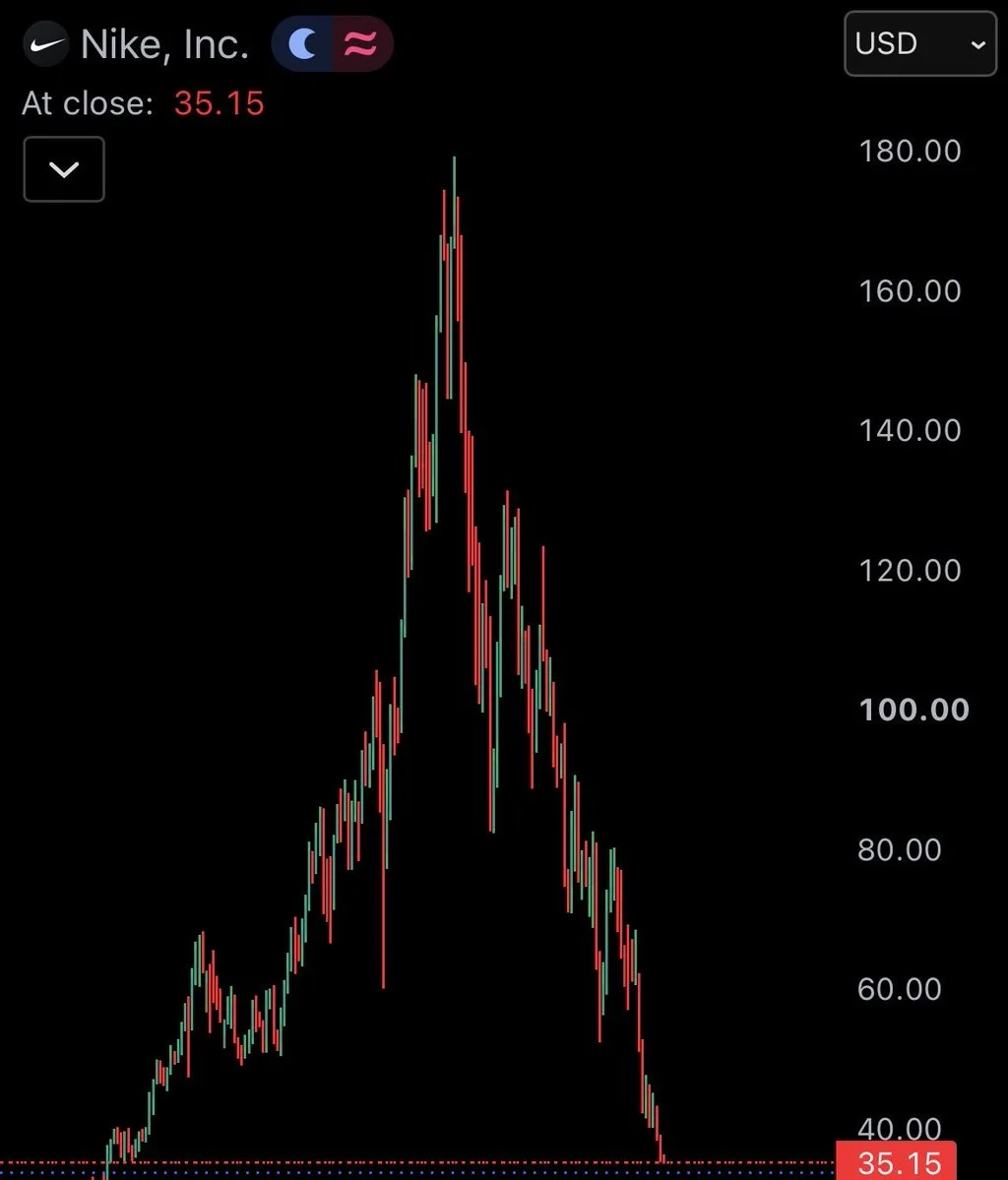
Nike shares tumbled to their lowest level in a decade after the company reported quarterly results that missed Wall Street expectations. The slide extends a brutal stretch under CEO Elliott Hill's turnaround, which has struggled to restore pricing power against premium challengers like On Holding and Hoka and value players undercutting on price.
Why it matters
Nike is a Dow Jones component and one of the most-watched consumer discretionary names on Wall Street. A 10-year low in the stock is more than a single-name story: it tells the market that the US consumer's pullback is now hitting the brands that depend on aspirational spending. The decade timeframe matters. This is not a quarter or even a year of pain, it is a structural repricing of Nike's earnings power under the new leadership team.
Market impact
The reaction reads as risk-off for the entire consumer discretionary cohort. Lululemon, On Holding, and Deckers now face sympathy selling pressure, and the broader XLY sector ETF is in the crosshairs. Nike's miss also feeds the macro narrative of softening US consumer health into year-end, which keeps pressure on rate-cut expectations and risk assets broadly. Watch tomorrow's tape and upcoming peer prints to determine whether this is a Nike-specific reset or a sector-wide downgrade.
Frequently asked questions
-
Why did Nike stock fall to a 10-year low?
Nike shares hit decade lows after the company reported quarterly earnings that missed Wall Street expectations. The slide extends a prolonged decline under CEO Elliott Hill's turnaround plan, which has yet to restore pricing power.
-
How does Nike's earnings miss affect the broader market?
Nike is a Dow component and a bellwether for US consumer discretionary spending. Its decade low signals that the consumer pullback is hitting aspirational brands, putting pressure on the broader XLY sector ETF and risk assets.
-
Which stocks are most exposed to Nike's slide?
Premium sneaker and apparel peers face the most sympathy selling risk. Lululemon, On Holding, and Deckers (Hoka) trade in the same consumer discretionary cohort and are likely to see follow-through weakness.
-
Is Nike's miss a company-specific or macro story?
Both. Nike-specific factors include brand share loss to On Holding and Hoka and a struggling turnaround under new leadership. The macro read is a softening US consumer hitting discretionary spending broadly.
-
What should investors watch after Nike's earnings miss?
Watch the after-hours tape and upcoming prints from Lululemon, On Holding, and Deckers. If peers confirm the weakness, the read shifts from a Nike-specific reset to a sector-wide consumer downgrade.
 CoinTelegraph
 CryptoSlate
 WuBlockchain
 TheBlock
 Crypto Capital Venture
 CoinDesk