








 CoinDesk

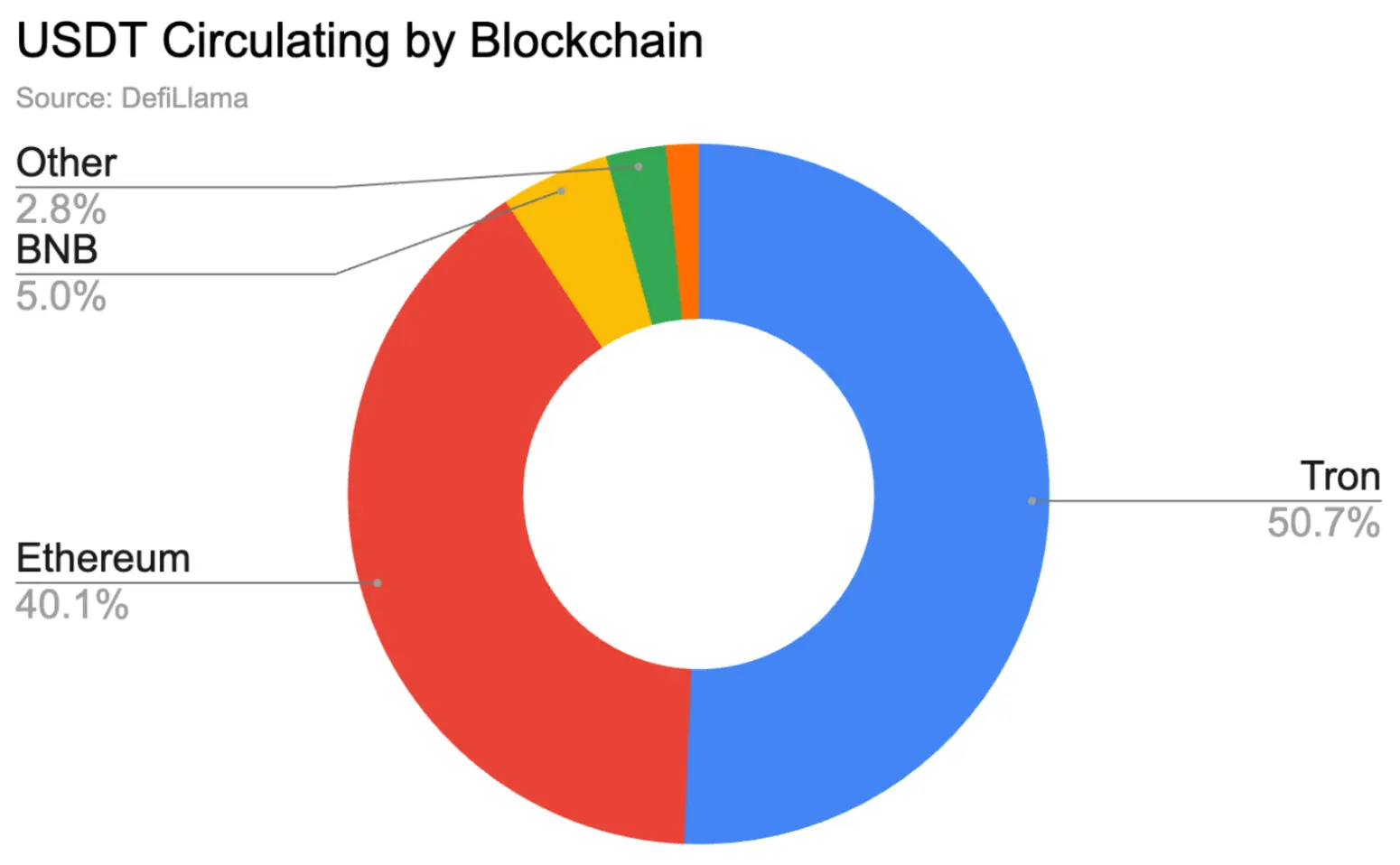
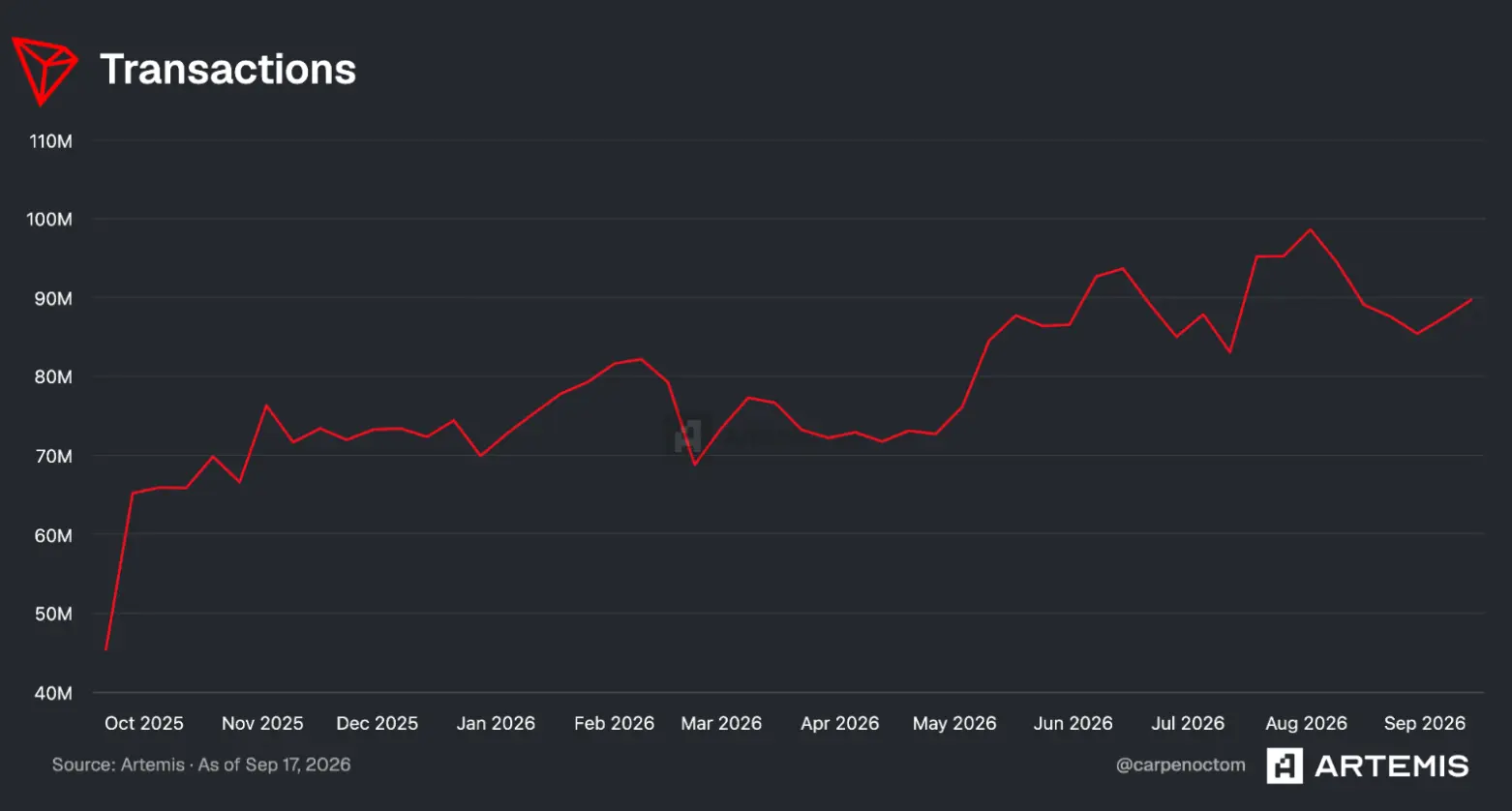
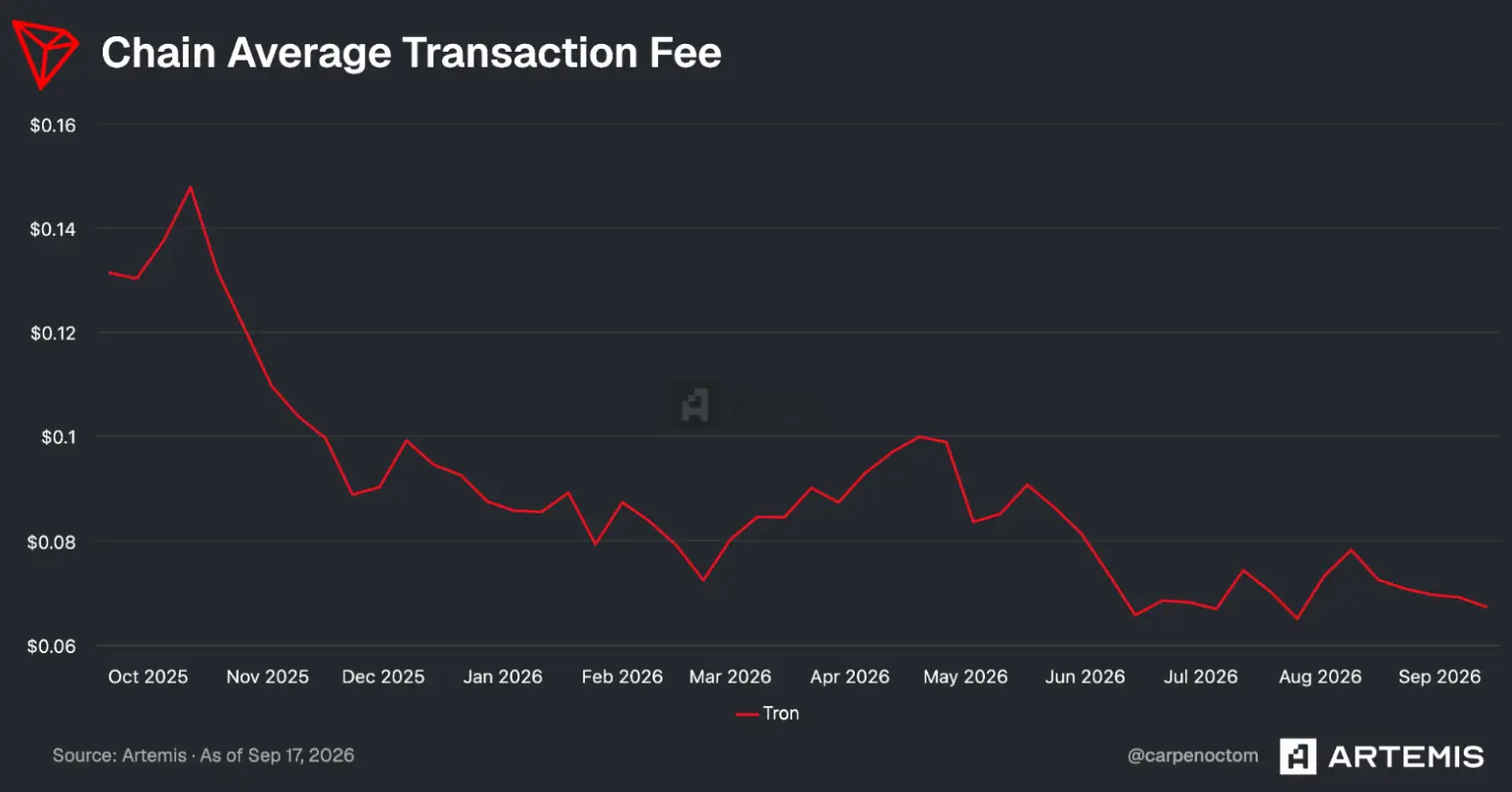
Tron now processes roughly $150 billion to $190 billion in stablecoin transfers every week, anchoring a USDT settlement role that has reshaped the network's investment thesis since its 2018 launch as a content-distribution project. Weekly transactions on the chain have climbed toward record highs near 100 million, even as the average on-chain fee has dropped to about seven cents, a multiyear low. The shift positions Tron less as a DeFi competitor to Ethereum and more as payment infrastructure for the dollar in emerging markets where cheap, fast settlement matters more than cutting-edge programmability.
Why it matters
The structural read is that Tron has become plumbing rather than platform. With 27 Super Representatives running delegated proof-of-stake, the chain stays cheap and confirms quickly, while the bulk of its economic activity is now USDT moving between wallets rather than smart-contract execution. TRX demand is tied directly to that throughput: users either burn TRX per transaction or stake it to claim daily allowances of bandwidth and energy, so rising stablecoin settlement mechanically supports staking, burning, and governance participation.
Regulatory clarity under the GENIUS Act, enacted in July 2025, has reinforced that role by giving payment stablecoins a federal framework covering issuers, reserves, and supervision. The SEC and CFTC's joint interpretive release in March 2026, classifying assets like TRX as "digital commodities," adds another layer of legitimacy. But the same rules could cut the other way: depending on how issuer and permitted-stablecoin restrictions shake out, Tron could face a headwind if USDT access narrows.
Market impact
The headline number is the $150B-$190B weekly stablecoin throughput, but the more durable signal is fee compression toward seven cents per transaction at record volume. That combination, high throughput and low fees, is exactly what a payments rail needs, and it explains why Tron's weekly active addresses have been climbing toward record levels rather than stagnating at a narrow user base. Canary Capital's Josh Olszewicz frames the investment case around that infrastructure, betting on continued institutionalization of stablecoins as a settlement medium rather than on application-layer innovation.
What to watch next is whether the GENIUS Act's issuer-permission rules force any reshuffling of which stablecoins can settle on Tron, and how the proposed Clarity Act, which would split SEC and CFTC oversight, lands in its final form.


Frequently asked questions
-
How much stablecoin volume does Tron process weekly?
Tron settles roughly $150 billion to $190 billion in stablecoin transfers per week, with the bulk of that flow denominated in USDT.
-
How does Tron generate revenue from stablecoin settlement?
Every Tron transaction consumes bandwidth and energy, which users can pay for by burning TRX or by staking TRX to claim daily allowances, so rising settlement volume mechanically supports staking and token burning.
-
What consensus model does Tron use?
Tron runs delegated proof-of-stake with 27 elected Super Representatives producing blocks, which lets the chain keep confirmation times fast and fees low relative to broader-distribution networks.
-
How does the GENIUS Act affect Tron's stablecoin business?
The GENIUS Act, enacted in July 2025, established a federal framework for payment stablecoins covering issuers, reserves, and supervision, which legitimizes settlement demand on Tron but could also restrict which stablecoins are permitted to operate on the network.
-
Why is Tron's investment thesis different from other layer-1s?
Canary Capital's Josh Olszewicz argues Tron is best understood as payment infrastructure for the dollar rather than a DeFi or consumer-app competitor, so the TRX thesis is tied to stablecoin institutionalization and transaction throughput rather than application-layer innovation.
 Crypto News
 Lookonchain
 CryptoSlate
 Crypto Rank News
 TheBlock
 Crypto Capital Venture