








 Lookonchain
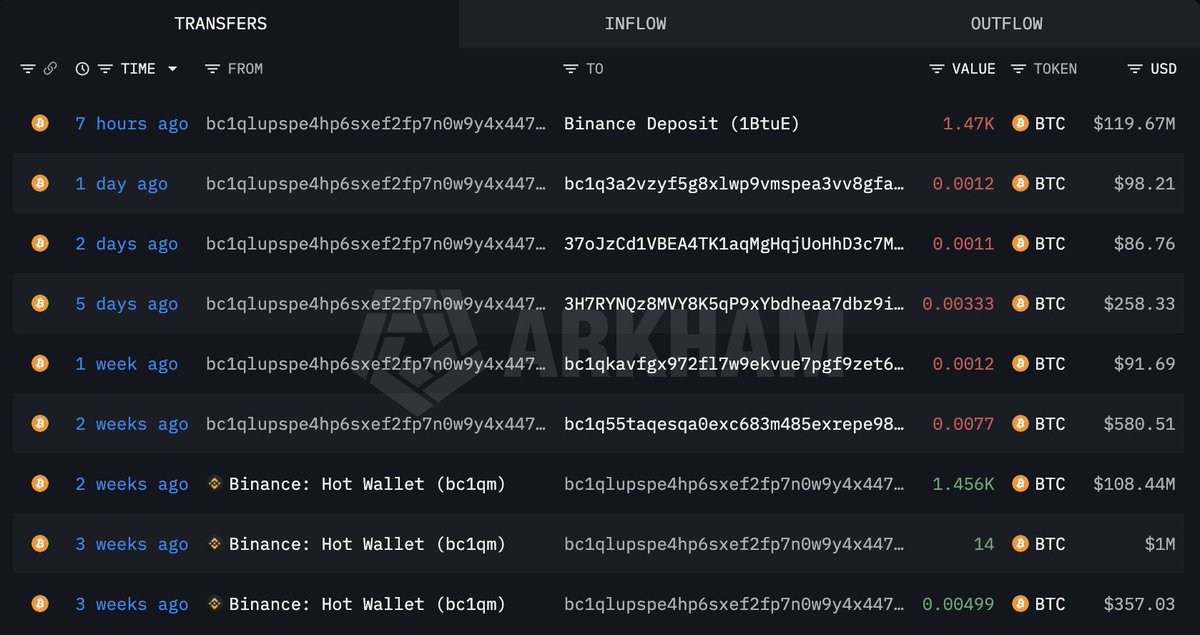

Two large wallets sold a combined 2,521 $BTC worth roughly $205.26 million seven hours ago, locking in profits after holding periods of just days to weeks.
The larger sale came from bc1qlu, which bought 1,470 $BTC for $109.44 million around three weeks ago at an average of $74,448 and exited for a $10.23 million gain. The second wallet, bc1qyh, acquired 1,051 $BTC for $82.35 million five days ago at $78,325 and walked away with a $3.24 million profit.
Why it matters
The entry-price spread is the more telling number than the headline $205 million in selling pressure. bc1qlu was buying in the $74K range, well below current levels, and banked a roughly 9% return in three weeks — disciplined profit-taking by a holder who caught a meaningful discount. bc1qyh, by contrast, bought near $78,325 only five days ago and is exiting with a paper-thin margin, suggesting a tactical de-risk rather than a conviction sell.
Market impact
Aggregated whale exits of this size tend to amplify short-term selling pressure, but the asymmetric entry prices argue against a coordinated top signal. One wallet is harvesting a multi-week carry; the other is trimming exposure with minimal gain. The next watch point is whether these addresses rotate proceeds into stablecoins or recycle capital back into $BTC or $ETH at lower levels.

Frequently asked questions
-
How much Bitcoin did the two whales sell?
The two wallets sold a combined 2,521 $BTC worth approximately $205.26 million in a single coordinated move seven hours before the report.
-
What profits did each whale lock in?
Wallet bc1qlu booked a $10.23M gain on 1,470 $BTC acquired three weeks ago at $74,448. Wallet bc1qyh realized $3.24M on 1,051 $BTC bought five days earlier at $78,325.
-
Does this whale selling signal a BTC top?
The asymmetric entry prices argue against a uniform top-signal. One whale is harvesting a multi-week carry from the $74K level, while the other is exiting a five-day position with only a thin margin — a tactical de-risk rather than a conviction sell.
-
Why do the entry prices matter for reading the signal?
The spread between the two entry prices ($74,448 vs $78,325) shows the sellers were not all positioned the same way. A whale exiting near breakeven after a short hold is cutting exposure, not capitulating on a high-conviction long.
-
What should traders watch next after the whale sales?
The key follow-through is where the proceeds rotate — parking capital in stablecoins would extend selling pressure, while redeployment into $ETH or back into $BTC at lower levels would mark these exits as rotation rather than distribution.
 WuBlockchain
 Whale Alert
 TheBlock
 CryptoSlate
 CoinDesk
 Crypto Capital Venture