








 CoinDesk

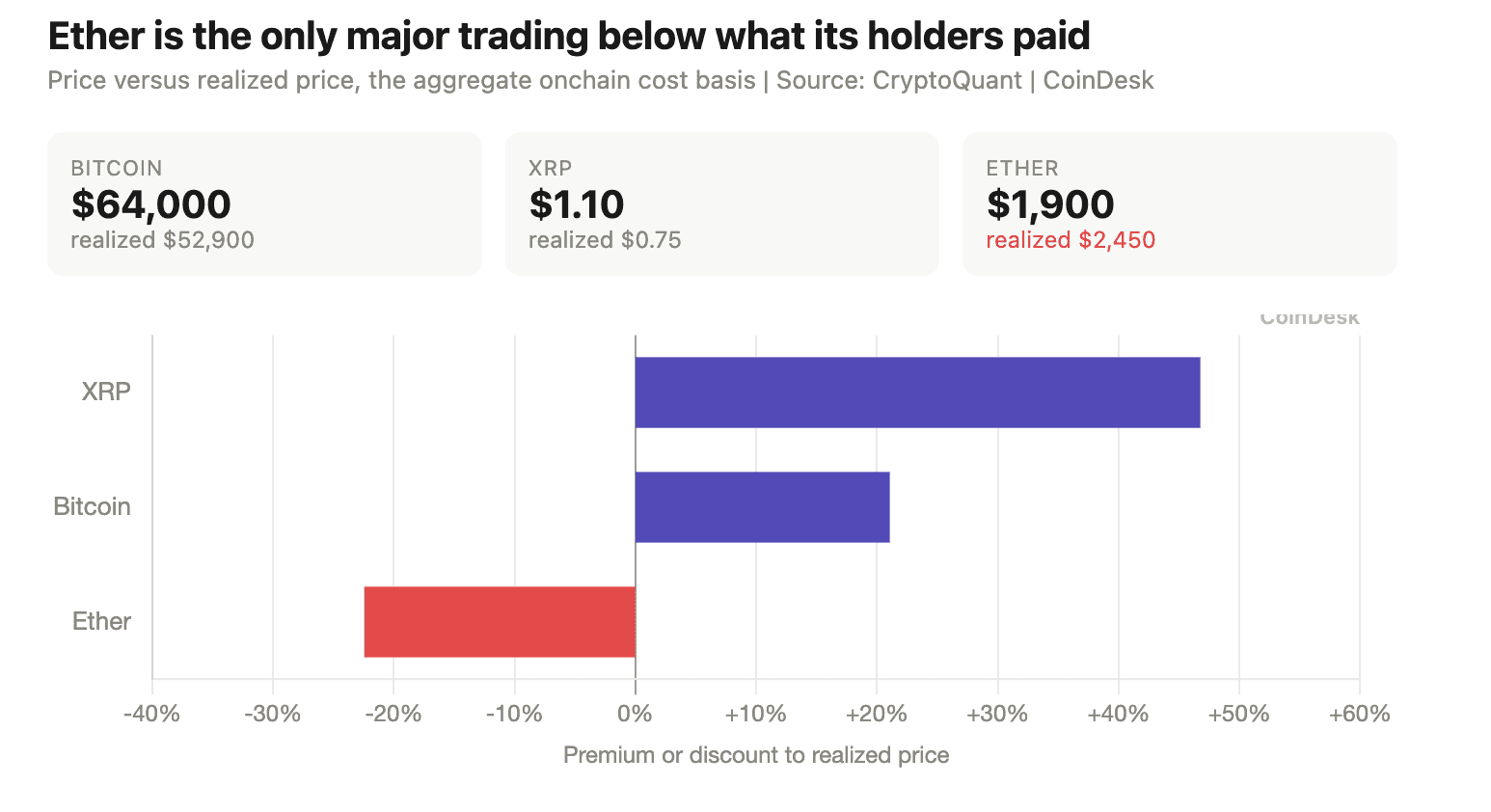


CryptoQuant puts ETH near $1,900 versus a realized price of about $2,450, making it the only one of BTC, ETH and XRP below its aggregate holder cost basis. BTC is roughly 17% above its $52,900 realized price, while XRP is near $1.10 versus about $0.75.
Large XRP holders kept accumulating through a slide from about $2.40 in January to the $1.00 to $1.20 range. Average spot orders remain in big-whale territory, but 90-day taker volume delta has turned neutral after a buyer-dominant start, a pattern CryptoQuant calls quiet absorption rather than a breakout.
The 10,000 to 100,000 ETH cohort has grown to about 19.6 million ETH, while the 1,000 to 10,000 cohort fell to about 12.9 million. CryptoQuant warns that one more leg lower remains possible, leaving ETH's below-cost trading as the key metric.



Frequently asked questions
-
Why is ETH's realized-price gap important in this comparison?
ETH is near $1,900 while its realized price is about $2,450, so the aggregate holder cost basis remains above the market price. It is the only one of BTC, ETH and XRP in that position.
-
What does XRP whale accumulation indicate about the current phase?
Large XRP holders kept accumulating as price fell from about $2.40 in January to the $1.00 to $1.20 range. CryptoQuant describes the activity as quiet absorption and a basing range, not a confirmed breakout.
-
How has XRP's trading pressure changed during the slide?
Average XRP spot order sizes remain in big-whale territory, while 90-day taker volume delta has drifted from buyer dominance to neutral.
-
How are the ETH holder cohorts moving in different directions?
Wallets holding 10,000 to 100,000 ETH have grown to about 19.6 million ETH. The 1,000 to 10,000 cohort moved the other way, falling to about 12.9 million.
-
What does CryptoQuant see before a durable market floor?
CryptoQuant says the market may still face one more leg lower before a durable floor is established. It identifies ETH trading below cost basis as the key metric to watch.
 CoinTelegraph
 WatcherGuru
 Whale Alert
 TheBlock
 WuBlockchain