What people mean when they say AI token
In early 2024, the phrase AI token usually meant a project like FET or TAO that used a blockchain to coordinate machine learning. By late 2024 and into 2025, the same label started to cover a much messier set of assets. Some of them route payments between autonomous software agents. Some of them market themselves as compute marketplaces. A few are simply meme coins that bolted an AI logo onto a dog picture and called it infrastructure. Investors who lump them together end up confused about why one AI token is up 50x and another is flat for two years, because they are not actually competing in the same race.
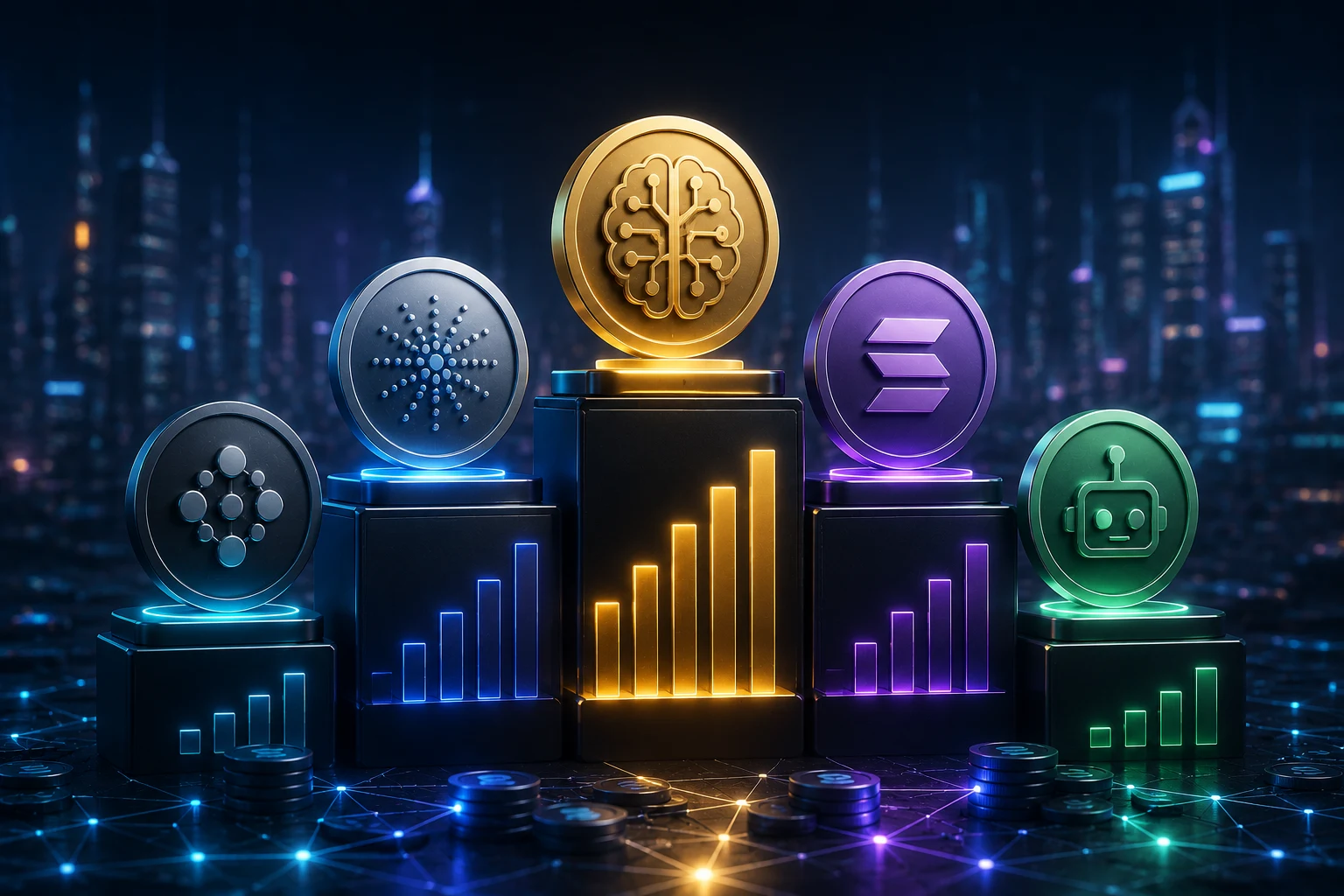
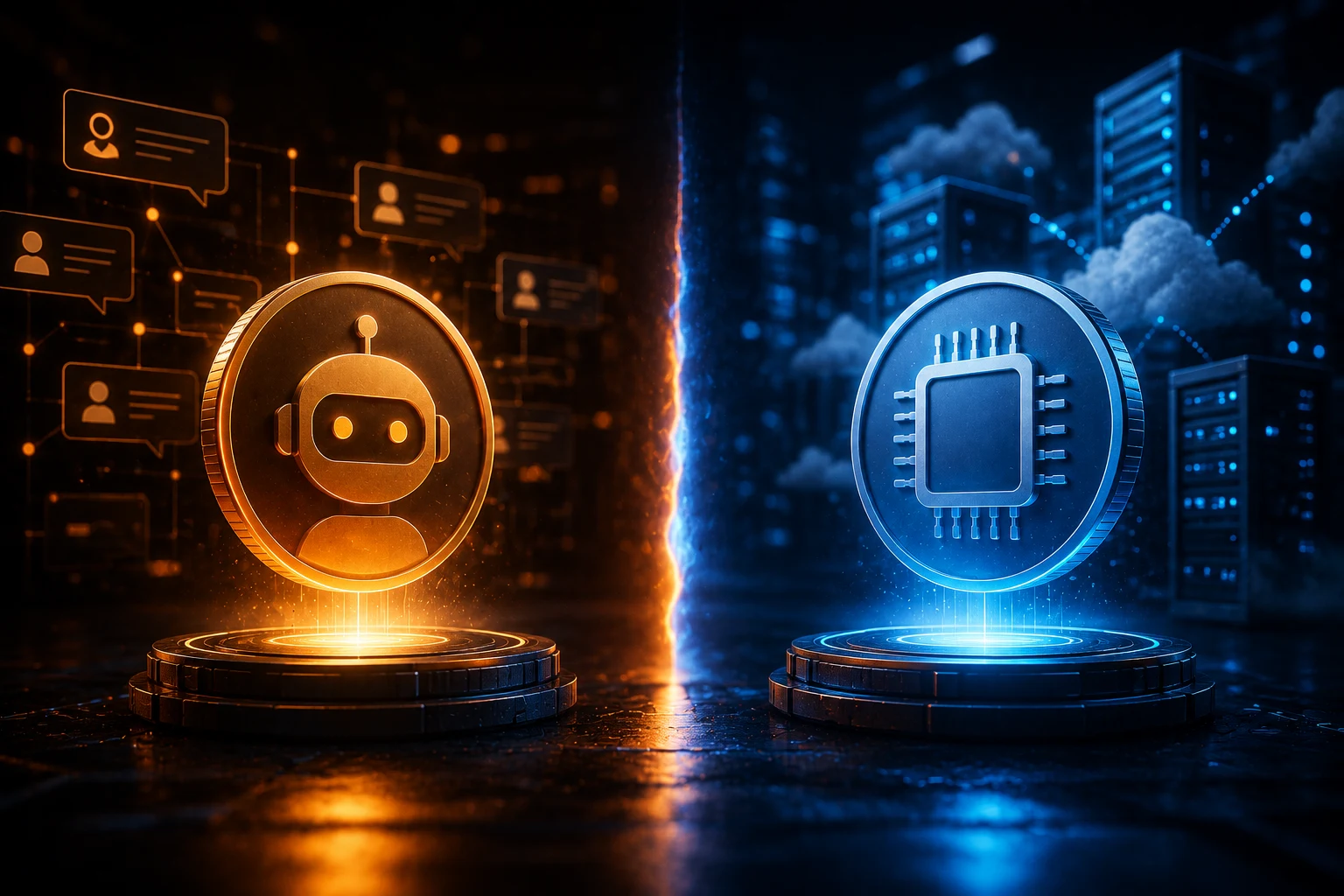
The honest starting point is that there are at least three distinct theses under the AI token umbrella, and only some of them have working products. The three theses are: agent coordination, decentralized training, and decentralized compute. Each one has a different revenue model, a different dilution profile, and a different way the token is supposed to capture value. If a token cannot clearly answer which of those three buckets it falls into, that itself is a red flag.
Real risks before you chase an AI token narrative
Most of the tokens that have pumped the hardest under the AI agent label share a few uncomfortable traits. They launched in 2024 or 2025, their market caps went from a few million to several hundred million in weeks, and their public documentation describes a product that does not yet exist or that barely anyone uses. The risk profile looks less like investing in a software company and more like investing in a brand name that may or may not ever ship. That distinction matters because the difference between a 50x pump and a 90 percent drawdown is mostly whether real users and real revenue show up.
Specific failure modes to keep in mind. First, agent-launchpad revenue can collapse quickly if the launchpad stops hosting new agents, which is exactly what happened to several Solana-based launches in early 2025. Second, subnet emissions on TAO mean that even if the network works, the token you bought may be diluted faster than the network's revenue grows. Third, compute networks face a brutal pricing problem: a centralized cloud provider like AWS can always undercut a decentralized network on price if the network cannot prove a quality or privacy advantage. Finally, several well-known AI agent tokens have been linked to insider wallet clusters, meaning a small number of wallets control a large share of supply and can move price with low effort. None of this means the theses are wrong. It means the gap between narrative and product is wide, and that is where most of the money gets lost.
The three theses, and what each token is actually backing
Thesis one is agent coordination. The idea is that autonomous software agents, which are programs that can take actions on their own, need a way to find each other, pay each other, and coordinate work. Tokens in this bucket are meant to be the unit of account and the fee rail for that coordination layer. FET and VIRTUAL both pitch versions of this story, and the Virtuals ecosystem runs an agent launchpad that charges fees for new agent deployments.
Thesis two is decentralized training. Here, the token is meant to pay people who contribute GPU power or data to train machine learning models, and to give holders a claim on the resulting network. TAO is the main example. The Bittensor network runs dozens of so-called subnets, each one a small market where miners compete to produce the best output for a specific task, and TAO emissions are the reward for that work. Thesis three is decentralized compute. RENDER is the clearest example, positioning itself as a marketplace where people with idle GPUs can rent capacity to people who need to render graphics or run AI inference, which is the process of running a trained model on new inputs to get a result.
Why the split matters. If you buy an agent-coordination token, you are betting that agent-to-agent commerce becomes a real economy. If you buy a training token, you are betting that decentralized training can beat or complement centralized labs. If you buy a compute token, you are betting that GPU owners prefer a token-based marketplace to a traditional cloud contract. Those are three different industries with three different competitors and three different time horizons. Treating them as one trade is how people end up explaining losses with the word AI.
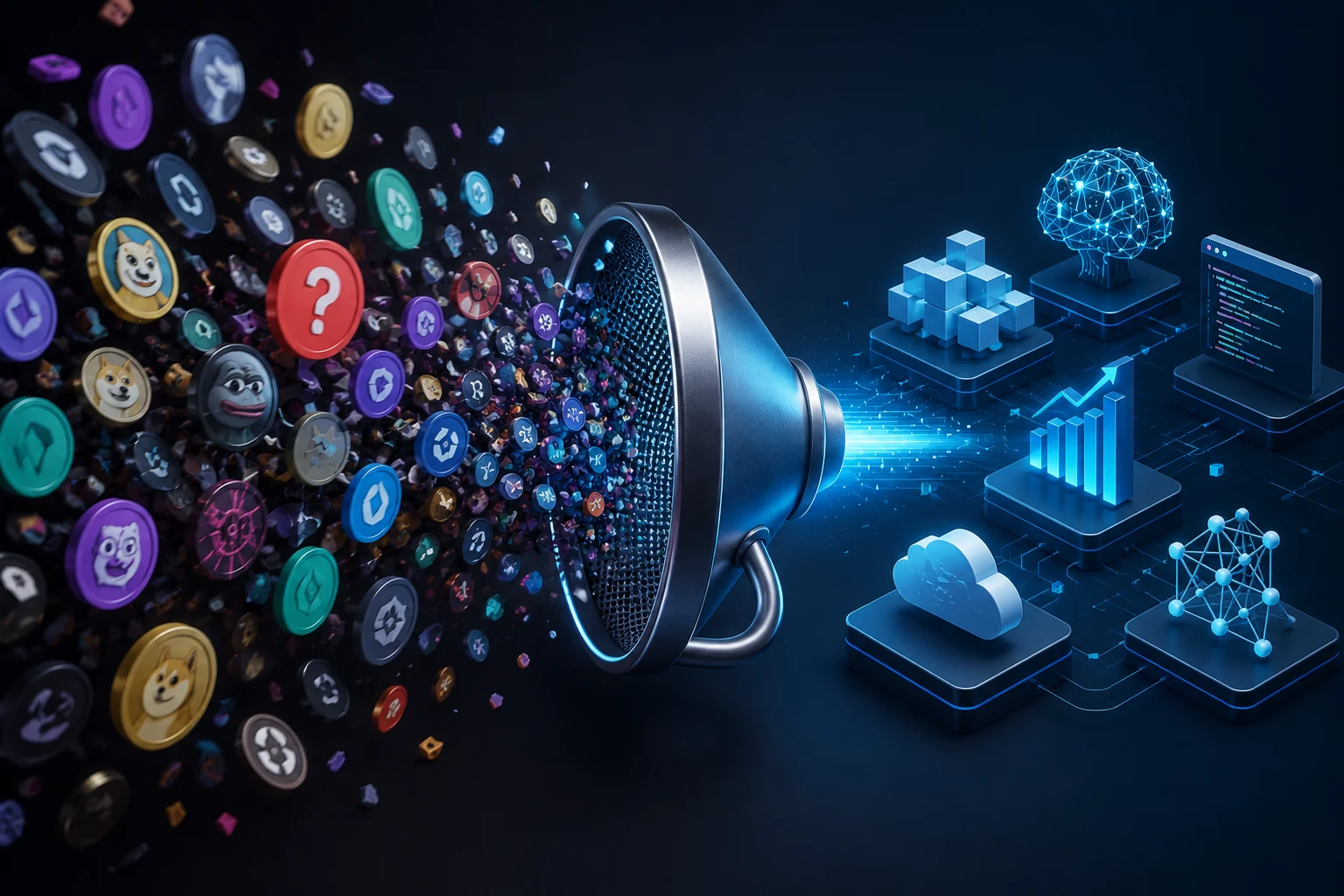
How to tell an agent token from a meme wrapper
The single most useful filter is to ask what the token actually does inside the product. A real agent-coordination token should show up in transaction data as the asset agents use to pay for services or to stake. A real training-network token should be distributed as a reward to subnet miners, with emissions visible on-chain. A real compute token should flow from renters to GPU providers, with usage and fees publicly trackable. If a token does none of these three things, it is most likely a meme wrapper with an AI theme.
Concrete checks. Look for a working product page that names a specific API or service, not just a vision statement. Look for on-chain transaction counts for the token that are not concentrated in a few wallets. Look for revenue: a launchpad should publish fees collected, an API service should publish call volumes, a compute network should publish jobs completed. VIRTUAL's agent launchpad is a useful test case because the Virtuals team has published launchpad revenue numbers, and the VVV token, tied to the Venice API, has been promoted partly on the strength of its API usage claims. The point is not whether those numbers are good. The point is that the numbers are visible, which already separates them from a long tail of AI tokens that publish only price charts.
WLD is worth a separate mention. Worldcoin's WLD sits at the edge of these categories. It is not really an agent, training, or compute token, but a proof-of-personhood token tied to a biometric ID network. It often gets dragged into AI token baskets because AI agents need to verify they are dealing with a human and not a bot, which is a real use case, but the token mechanics are closer to a digital identity project than to any of the three AI theses. Mixing WLD into a basket of agent tokens is a common portfolio mistake.
What the on-chain data actually shows
For agent coordination, the cleanest public signal is launchpad revenue. Virtuals has reported multi-million-dollar quarterly fees from its agent launchpad, which is a non-trivial number for a 2024 launch, and it gives VIRTUAL a measurable claim on activity. FET is older and broader, running the Fetch.ai stack across agent services and a recent merger with other AI-related projects, but its day-to-day agent transaction volume is harder to verify on-chain because much of the activity runs on partner chains or off-chain APIs.
For decentralized training, TAO's subnet emissions are the headline number. The Bittensor network continuously emits new TAO to subnet miners, and the rate of that emission is visible on-chain. That transparency is good for honesty and bad for holders, because emissions are a form of dilution. The thesis is that the value created by subnet outputs will eventually outpace the new supply, but that has to be proven, not assumed. Subnet 19, which is focused on inference, has attracted attention because it ties more directly to the booming demand for running AI models, but it is still early.
For compute, RENDER is the most established name. It completed a migration to Solana in 2024 and now shows real burn-and-mint activity tied to rendering jobs. RENDER does not yet match the revenue scale of a hyperscaler, but it has the most defensible product story of the three buckets, because the use case (rendering and inference) is concrete and the providers and customers are identifiable. The risk is competition from centralized cloud providers and from other token-based compute networks entering the same market.
How to value each bucket without fooling yourself
Agent-coordination tokens are the hardest to value because the product is mostly a story about future activity. A useful mental model is to take the launchpad or transaction revenue, apply a multiple that reflects how durable you think that revenue is, and divide by circulating supply. If the implied market cap is below the current price, you have a rough valuation gap. If the project has no revenue, you are essentially pricing a probability that revenue will exist, and the honest answer is to size the position as if you expect to be wrong.
Training and compute tokens are slightly easier because there is a usage number to anchor against. For TAO, watch subnet emissions versus fees captured by subnets. The more subnet activity is paid for in TAO rather than emitted as subsidy, the more the token behaves like a real economy. For RENDER, watch job counts and average job size, and compare growth in those numbers to growth in token market cap. If the market cap is growing much faster than the usage, the trade is narrative, not fundamentals.
Across all three buckets, one rule of thumb helps. A token that ties to a measurable, on-chain, third-party-verifiable number is a different risk from a token whose main metric is a chart on the project website. The closer you can get to first-party data, the better your chance of not buying the top of a narrative cycle.
What this means for someone building a position today
The practical upshot is that AI token exposure is not a single decision but a basket of separate ones. If you believe agent-to-agent commerce will be a real economy, size VIRTUAL or FET accordingly and accept that most of that bet is in early-stage assets where insider selling risk is high. If you believe decentralized training will produce models that compete with centralized labs, TAO is the cleanest expression, but factor in dilution and the fact that most subnet output today is research, not production traffic. If you believe GPU owners and renters will use a token-based marketplace, RENDER is the most established name, and the work is judging whether its growth keeps pace with its valuation.
Resist the urge to blend all of these into a single AI basket and call it diversified. Holding VIRTUAL, TAO, and RENDER is not the same as holding three AI stocks. It is holding three companies in three different industries that happen to share a theme. Treat them with the same skepticism you would apply to a basket of 2021 DeFi tokens after the summer of yield farming: most of them will not survive in their current form, and the survivors will be the ones that shipped products while everyone else was posting charts.
Track AI crypto tokens with real signals, not vibes
AI tokens move fast and the news around them moves faster. Manually watching launchpad fees, subnet emissions, and API usage is a losing game. Zippfeed aggregates AI token headlines with sentiment scoring (bullish, neutral, or bearish) and an importance rating, so you can spot which projects are shipping product and which are just riding the narrative.