








Learn
Evergreen guides — pick a topic and go deep.
-
 ai-crypto
Virtuals vs Bittensor vs Venice AI: Three Token Theses
Three AI-crypto projects promise different things: agent launchpads, subnet markets, and private inference. None has proven sustainable demand yet, and the audit gaps are real.
-
 ai-crypto
Render vs Akash: GPU Compute Tokens Compared Honestly
Render and Akash both sell GPU power as a token. We compare real tenants, supply overhang, staking yield, and what could go wrong with each.
-
 ai-crypto
Worldcoin WLD vs RAIN: Proof-of-Personhood Compared
Worldcoin scans irises. RAIN rewards data. Both pitch proof-of-personhood for an AI agent era, but the tech, risks, and user counts look very different.
-
 ai-crypto
Solana vs Sui vs Aptos for AI Tokens: A Honest Comparison
Solana leads on launchpad gravity, Sui wins on parallel execution, Aptos lags in volume. Here is where each chain actually fits AI tokens.
-
 ai-crypto
What Is AI InfoFi? The Crypto x Attention Layer Explained
InfoFi turns online attention into AI-scored tokens and leaderboards. KAITO, Cookie.fun, and Snaps show how the category works and where the hype hides.
-
 ai-crypto
Bittensor Subnet Tokens vs Virtuals Agent Tokens: Different Games
Subnet tokens earn TAO emissions by producing useful work. Virtuals agent tokens earn fees from one bot's revenue. Both look like AI tokens, but their value traps differ sharply.
-
 ai-crypto
Render vs Akash vs Filecoin: Which Decentralized Compute Token Wins?
Render, Akash, and Filecoin all pitch 'decentralized compute,' but only two actually compute. Storage vs GPU vs general-purpose clouds serve very different workloads.
-
 ai-crypto
Venice VVV vs Render RENDER vs FET: Decentralized AI Tokens
Three tokens share the 'decentralized AI' label but solve different problems. Here's what real revenue, user counts, and token unlocks reveal about each.
-
 ai-crypto
Worldcoin WLD vs Grass vs Rain: Proof of Humanity Tokens Compared
WLD scans your iris, Grass sells your bandwidth, and newer entrants like Rain promise something different. Here is what each token actually does, pays, and risks.
-
 ai-crypto
KAITO Tokenomics: Inside the AI InfoFi Token Explained
KAITO is the InfoFi token behind Kaito AI, with 1 billion supply and roughly 20% circulating at launch. Here is how attention, Yap leaderboards, and unlocks actually work.
-
 ai-crypto
HYPE vs TAO vs VIRTUAL: three AI token theses compared
HYPE is a perp-DEX token, TAO is decentralized-AI infrastructure, and VIRTUAL is an AI-agent launchpad. They share an AI label, not a thesis.
-
 ai-crypto
AI Agent Launchpad Red Flags Checklist Before You Buy
Most AI agent launches lose 80%+ of value within weeks. Here are the 10 on-chain red flags you can check in under 5 minutes before you buy.
-
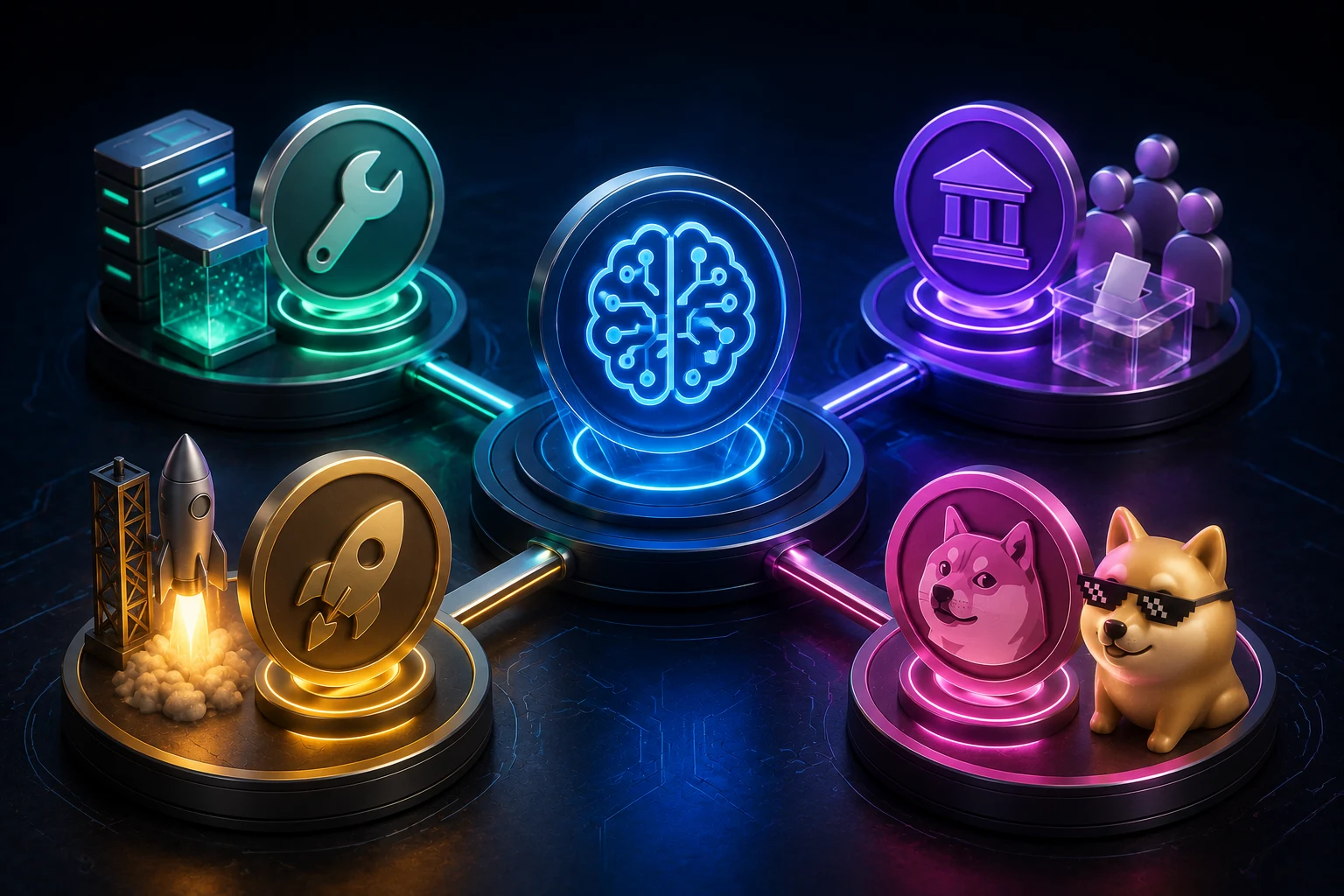 ai-crypto
AI Token Taxonomy: Utility, Governance, Launch, Meme Explained
Four categories explain every AI-token launch in 2025. Learn the honest tests that separate real infrastructure tokens from memecoins wearing AI branding.
-
 ai-crypto
Best AI Crypto Tokens Ranked by Real On-Chain Revenue
Most AI tokens have near-zero third-party revenue. We rank RENDER, FET, TAO, VIRTUAL, and VVV by verifiable on-chain fees, not narrative.
-
 ai-crypto
AI Agent Revenue On-Chain: What's Actually Real
Dashboards claim millions in AI-agent revenue, but most figures count internal transfers, not paying customers. Here is how to read the numbers honestly.
No published guides yet — check back soon.