Why this choice matters
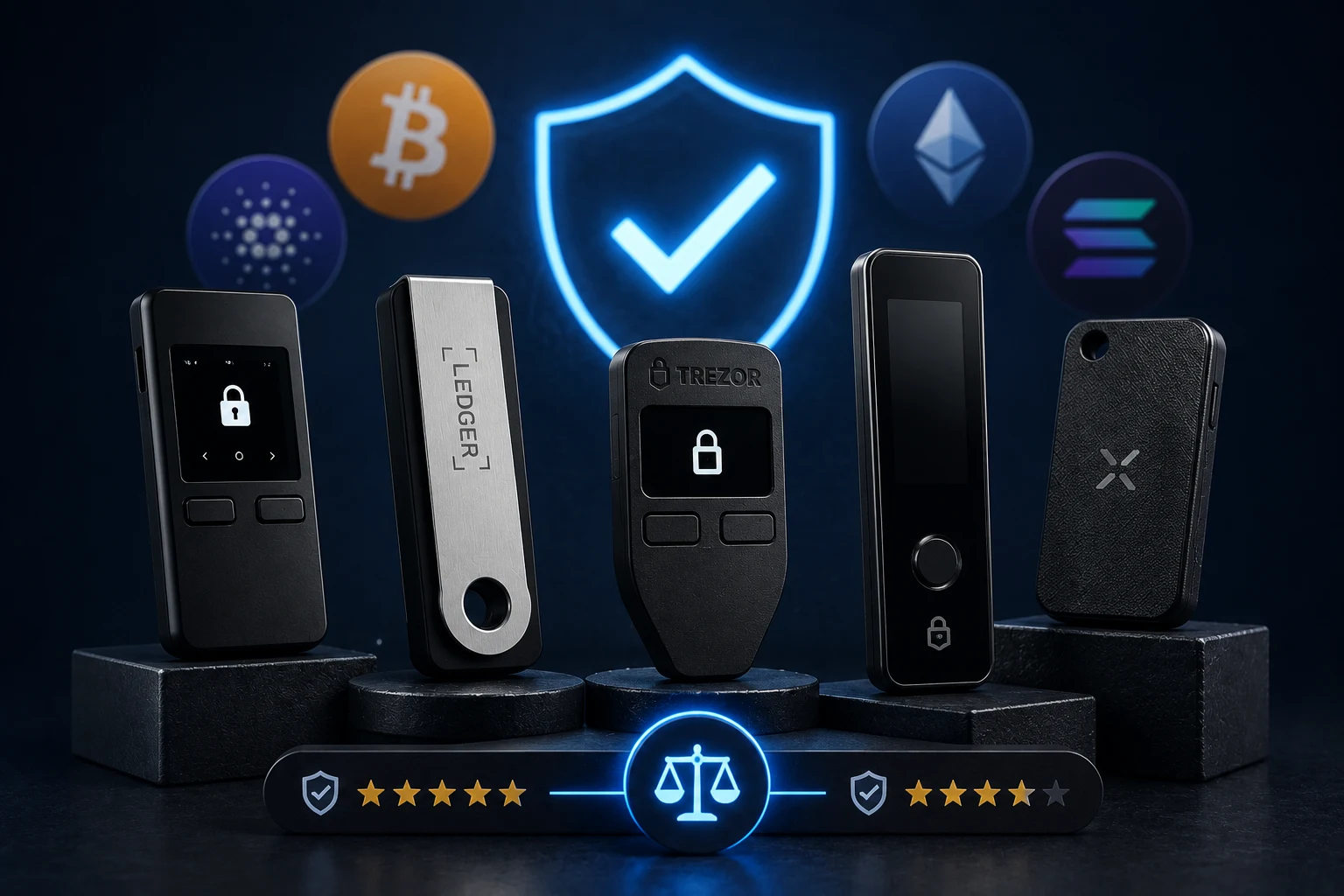
If you have decided to take self-custody seriously — and for meaningful holdings, you should — a hardware wallet is the tool for the job. But "which hardware wallet is best?" is the wrong question to ask in the abstract, because the honest answer is: the best one for *you* depends on what you hold and how you will use it. This guide will not crown a single winner (and beware anyone who does, especially via affiliate links). Instead, it will teach you how to compare them so you can choose well and safely.
For why hardware wallets matter in the first place, see how to store crypto securely. Here we focus on choosing.
What a hardware wallet does
A hardware wallet is a physical device that keeps your private keys offline and signs transactions internally, so your keys never touch your internet-connected computer — even if that computer is compromised. That single property is what makes it the gold standard for security. Every comparison should start from how well a device delivers on that core promise.
The factors that actually matter
Security model and track record
This is paramount. Look for:
- A strong reputation built over years, with a history of responsibly handling vulnerabilities.
- Open security practices. Some wallets are open-source or have well-documented, independently reviewed security. Transparency is reassuring.
- A secure element — specialized tamper-resistant hardware for protecting keys — is common in leading devices.
- No history of serious unaddressed flaws. Research how a company has responded to past security issues.
Marketing claims are cheap; reputation and transparency are not.
Supported assets
A wallet is only useful if it holds *your* coins. Before buying, confirm it supports every asset you own or plan to own — Bitcoin, Ethereum and its tokens, Solana, and any others. Some wallets support thousands of assets; others are more limited. Match this to your actual portfolio.
Ease of use
Security you find too confusing to use correctly is not secure. Consider the quality of the companion app, the clarity of the screen, and how intuitive sending, receiving, and verifying transactions are. A device you understand is a device you will use safely.
Connectivity and features
- Connection type: USB, Bluetooth, or QR-code-based "air-gapped" devices that never physically connect. Air-gapped designs appeal to security maximalists; Bluetooth adds convenience with a slightly larger attack surface.
- Screen: A clear on-device screen lets you verify transaction details on the device itself — important, since it means malware on your computer cannot trick you about what you are signing.
- Backup and recovery options: Understand how the device handles seed-phrase backup and recovery.
Price
Hardware wallets range from affordable to premium. More expensive is not automatically more secure — a reputable mid-range device protects your keys as well as a luxury one. Spend based on features and asset support you need, not prestige. And weigh the cost against what you are protecting: for substantial holdings, the price is trivial insurance.
The buying rules that protect you
This matters as much as the device itself. A hardware wallet's security can be compromised before you even open the box if you buy carelessly:
- Buy only from the official manufacturer or an authorized reseller. Never from third-party marketplaces, auction sites, or random sellers.
- Never buy used. A tampered or pre-configured device can be a trap designed to steal your funds.
- Reject any device that arrives pre-set-up or comes with a "pre-generated" seed phrase. You must generate the seed phrase yourself, privately, during first setup. A wallet that already has a seed phrase is a scam.
- Check for tampering on arrival, following the manufacturer's guidance.
A sensible way to decide
Make a short list: which assets must it support, what is your budget, and do you prefer maximum security (air-gapped) or more convenience (Bluetooth)? Then choose a well-established device that fits — and buy it directly from the maker. None of this is an endorsement of any specific product, and this is not financial advice; it is a framework for protecting yourself.
Stay informed on wallet security
Even reputable wallets occasionally face vulnerabilities, recalls, or supply-chain scares — and the news breaks before official notices reach everyone. Zippfeed tracks crypto security headlines with sentiment and importance scoring, so you can stay aware of issues affecting wallet hardware and the broader security landscape, and keep your storage decisions current rather than set-and-forgotten.