Why the Bitcoin ETF changed everything
When the first spot Bitcoin ETFs were approved in the United States, it was not just another product launch. It was the moment Bitcoin became investable inside the plumbing of traditional finance — retirement accounts, financial advisors, pension allocations, and institutions that are legally barred from holding crypto directly but can hold a regulated fund.
The effect was immediate and large. Tens of billions of dollars flowed into these funds, and Bitcoin's price action started responding to ETF inflows and outflows the way it once responded to exchange activity. If you want to understand modern Bitcoin price movements, you have to understand ETF flows. We cover that link in how crypto ETFs affect Bitcoin price.
What a Bitcoin ETF actually is
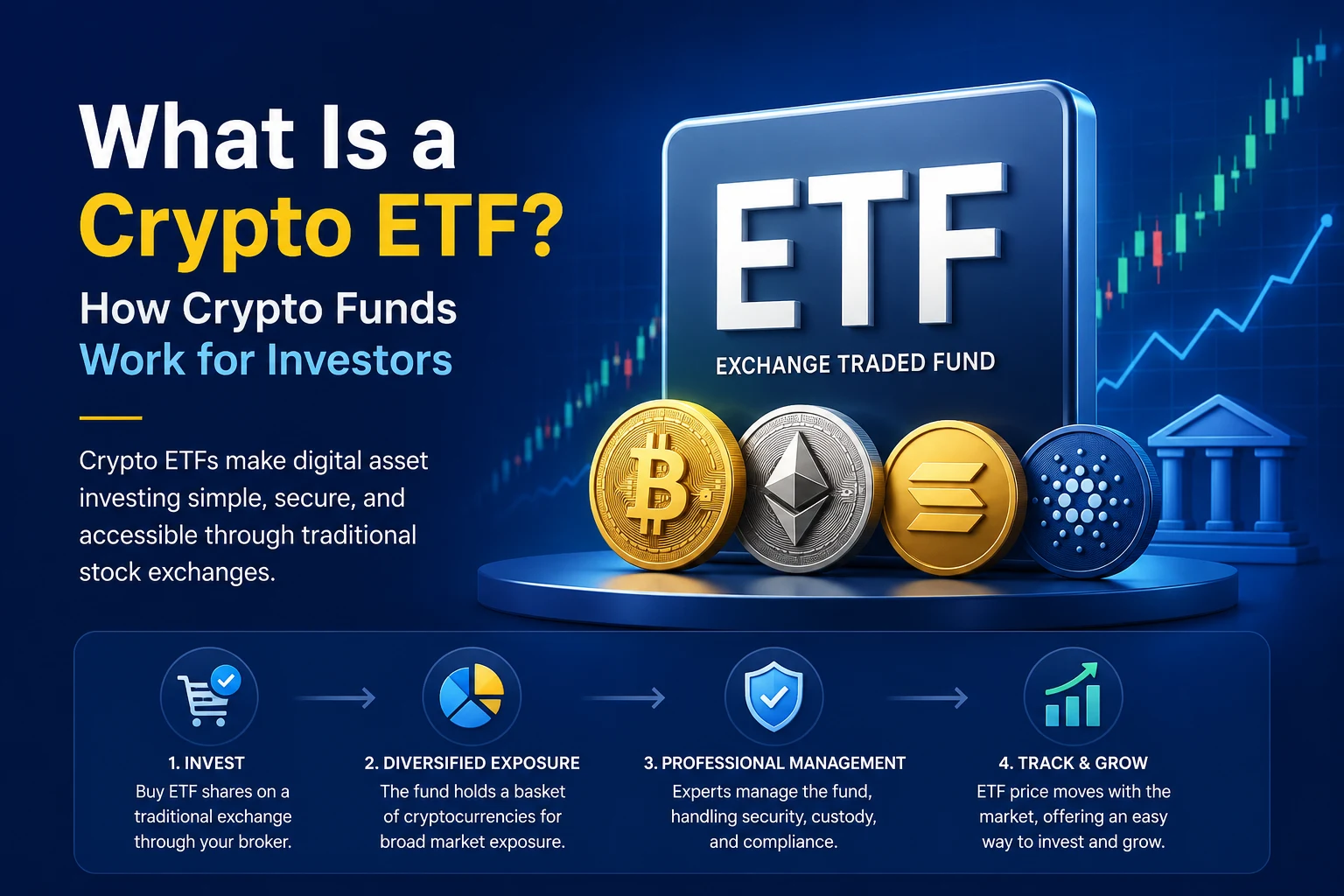
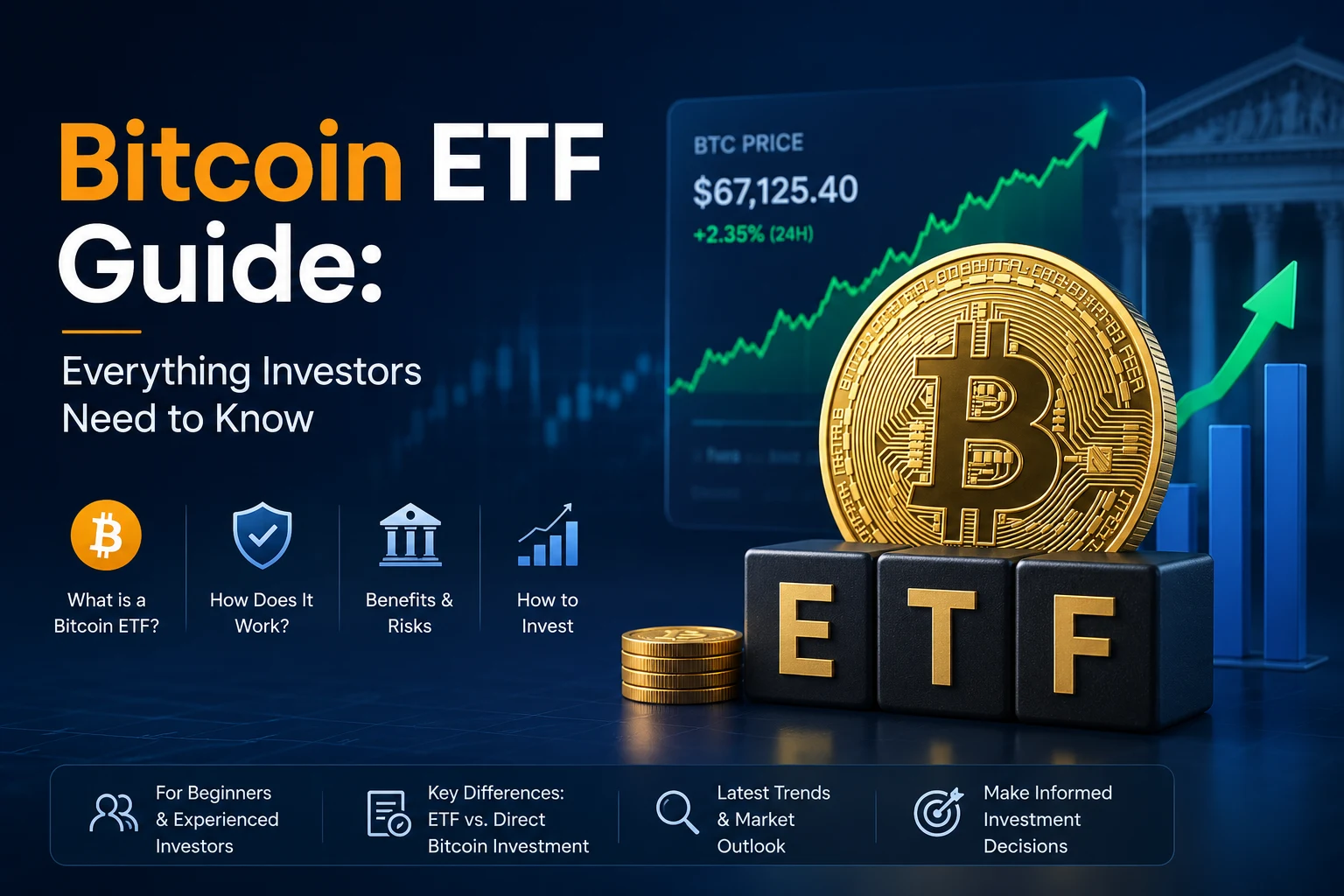
A Bitcoin ETF is a fund that trades on a stock exchange and gives you exposure to Bitcoin's price. You buy shares through a normal brokerage account. The fund handles everything behind the scenes — custody, security, and tracking the price.
There are two fundamentally different kinds, and the difference is not academic.
Spot Bitcoin ETFs
A spot Bitcoin ETF holds real bitcoin in professional custody. Each share represents a claim on actual coins. The price tracks the live Bitcoin market closely. This is the structure most investors mean when they say "Bitcoin ETF" today.
Futures Bitcoin ETFs
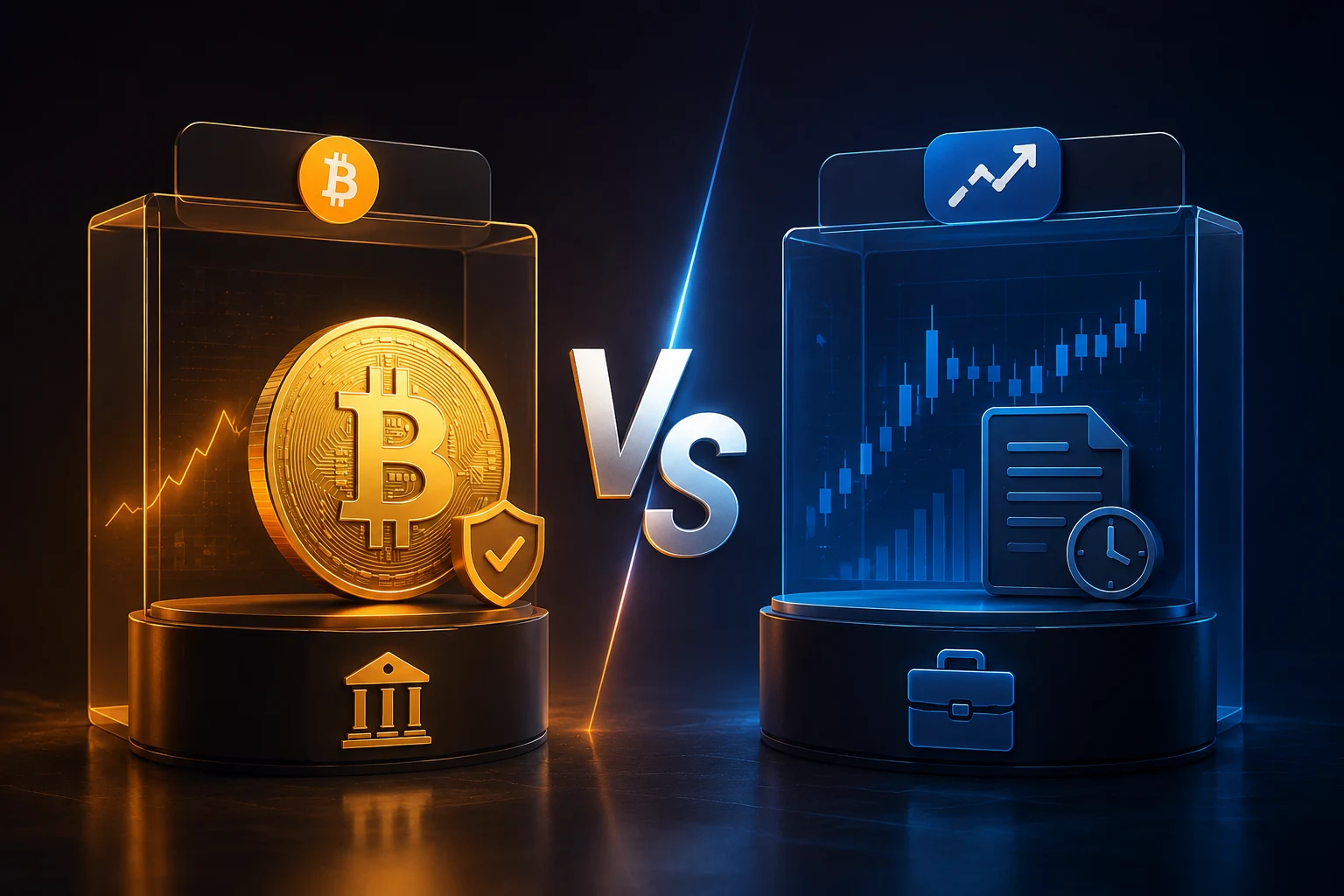
A futures Bitcoin ETF holds Bitcoin futures contracts rather than coins. Because contracts expire and must be rolled forward, the fund can drift from the spot price over time — a cost that is invisible day to day but real over the long run. Our spot Bitcoin ETF vs futures ETF piece compares them directly.
The trade-offs, stated plainly
What you get:
- Bitcoin exposure inside a familiar, regulated brokerage account.
- No private keys, seed phrases, or self-custody risk.
- Eligibility for retirement and tax-advantaged accounts in many regions.
- Standard, simpler tax reporting.
What you give up:
- The coins themselves. You cannot withdraw bitcoin from an ETF. You hold a fund share, not a self-custodied asset. The old saying — not your keys, not your coins — applies fully.
- 24/7 access. Bitcoin trades every second of every day; the ETF trades only during market hours, which can matter during weekend volatility.
- An ongoing fee. Every fund charges an expense ratio.
Fees: small numbers, big compounding
Expense ratios on Bitcoin ETFs are competitive, but they still compound. A difference of a fraction of a percent per year becomes meaningful across a decade-long hold. Compare ratios before choosing, and weigh them against the convenience you are buying.
Custody: who actually holds the Bitcoin
In a spot ETF, the fund uses an institutional custodian to store the Bitcoin, typically in deeply secured cold storage. This removes the personal risk of losing a seed phrase — but it reintroduces a form of counterparty trust. You are trusting the fund and its custodian. For some investors that is reassuring; for Bitcoin purists, holding their own keys is the entire point. If self-custody appeals to you, read how to store crypto securely.
Is a Bitcoin ETF right for you?
It tends to fit investors who want price exposure without operational complexity, who use tax-advantaged accounts, or who want institutional-grade custody handled for them. It fits poorly for people who want to actually use Bitcoin — spend it, hold their own keys, or move it freely.
There is no universally correct answer, and this is not investment advice. The right choice depends on your goals, your jurisdiction, and your comfort with custody. A licensed advisor can help you weigh it against your full portfolio.
Reading the ETF signal
Because Bitcoin's price now reacts to ETF flows and regulatory news, staying informed is part of the strategy. Zippfeed tracks Bitcoin ETF developments — inflows, approvals, regulatory shifts — and tags each story with sentiment and an importance score. Instead of refreshing five sites during a volatile week, you see what is moving the market and how the market feels about it.


 WuBlockchain
 CryptoSlate
 Glassnode
 WatcherGuru
 Altcoin Daily