The simple version
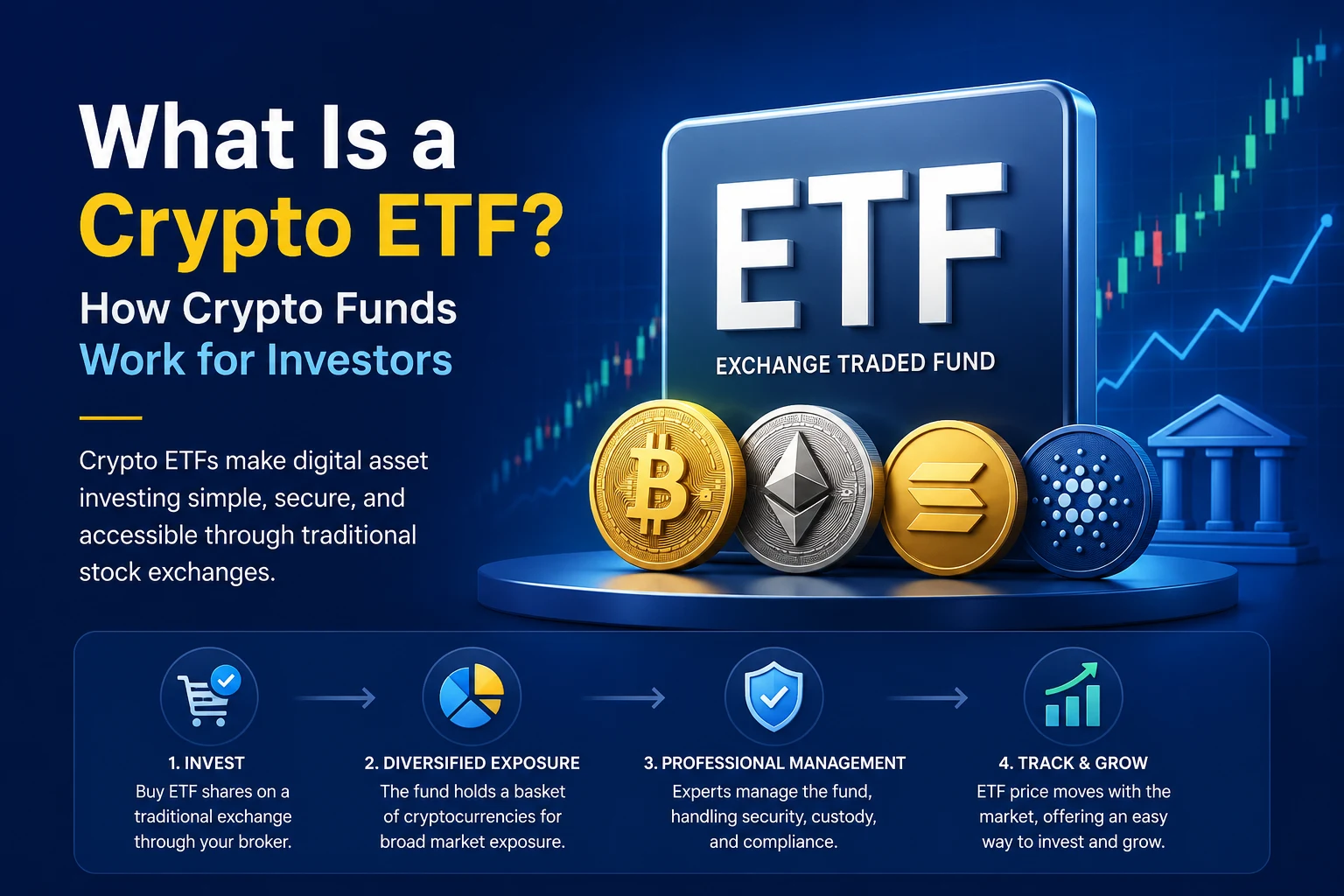
A crypto ETF — exchange-traded fund — is an investment fund that holds crypto (or crypto-linked contracts) and trades on a regular stock exchange under a ticker, just like a share of any company. You buy it through the same brokerage account you might use for an index fund. No seed phrase, no hardware wallet, no worrying about sending coins to the wrong address.
For a lot of people, that is the entire appeal. The ETF wrapper turns something intimidating into something familiar.
Why crypto ETFs became a big deal
For years, regulators were reluctant to approve funds that held crypto directly. That changed when spot Bitcoin ETFs were approved in the United States, opening the door for ordinary brokerage accounts — and the enormous pools of institutional money that can only invest in regulated products — to get exposure. Ethereum products followed. The result reshaped how mainstream finance touches crypto.
If you want the deeper story on the flagship product, see our Bitcoin ETF guide.
Spot vs futures: the distinction that matters most
This is the one technical point every investor should understand before buying.
Spot crypto ETFs
A spot ETF holds the actual asset. A spot Bitcoin ETF owns real bitcoin in custody. The fund's value tracks the live market price closely, because it is literally holding the thing.
Futures crypto ETFs
A futures ETF does not hold the coin. It holds futures contracts — agreements to buy or sell at a set price on a future date. Because those contracts have to be rolled over as they expire, futures ETFs can drift away from the underlying price over time, an effect that can quietly erode returns.
We compare them head-to-head in Spot Bitcoin ETF vs Futures ETF. The short takeaway: for most long-term holders, spot products track the asset more faithfully.
What you give up — and what you gain
You gain:
- Access through a normal brokerage and retirement account.
- No custody headaches — the fund handles storage and security.
- Regulatory oversight and standard tax reporting.
You give up:
- Self-custody. You own a share of a fund, not the coins. You cannot withdraw bitcoin from an ETF. "Not your keys, not your coins" applies.
- 24/7 trading. ETFs trade during market hours; crypto never sleeps.
- A management fee. Funds charge an annual expense ratio that compounds over time.
Fees, taxes, and the fine print
Every ETF charges an expense ratio — a small annual percentage skimmed off. It sounds trivial but compounds across years, so it is worth comparing. Tax treatment depends on your jurisdiction and is generally simpler than self-custodied crypto, but not automatically lower. Our crypto taxes guide covers the moving parts. None of this is tax or investment advice; a licensed professional should review your specific situation.
Who a crypto ETF actually suits
Crypto ETFs tend to fit people who want price exposure without operational complexity: retirement-account investors, those who value regulatory clarity, and anyone uneasy about managing private keys. People who want to actually *use* crypto — staking, DeFi, payments — will find an ETF limiting, because you cannot move the underlying asset.
Staying on top of the ETF beat
ETF flows, new fund approvals, and regulatory signals move crypto markets now more than almost anything else. When billions flow into a spot fund in a week, price tends to follow. Zippfeed tracks ETF and regulatory headlines with sentiment and importance scoring, so you can gauge institutional appetite at a glance rather than piecing it together from a dozen sources.

 CryptoSlate
 Glassnode
 WatcherGuru
 Altcoin Daily
 WuBlockchain