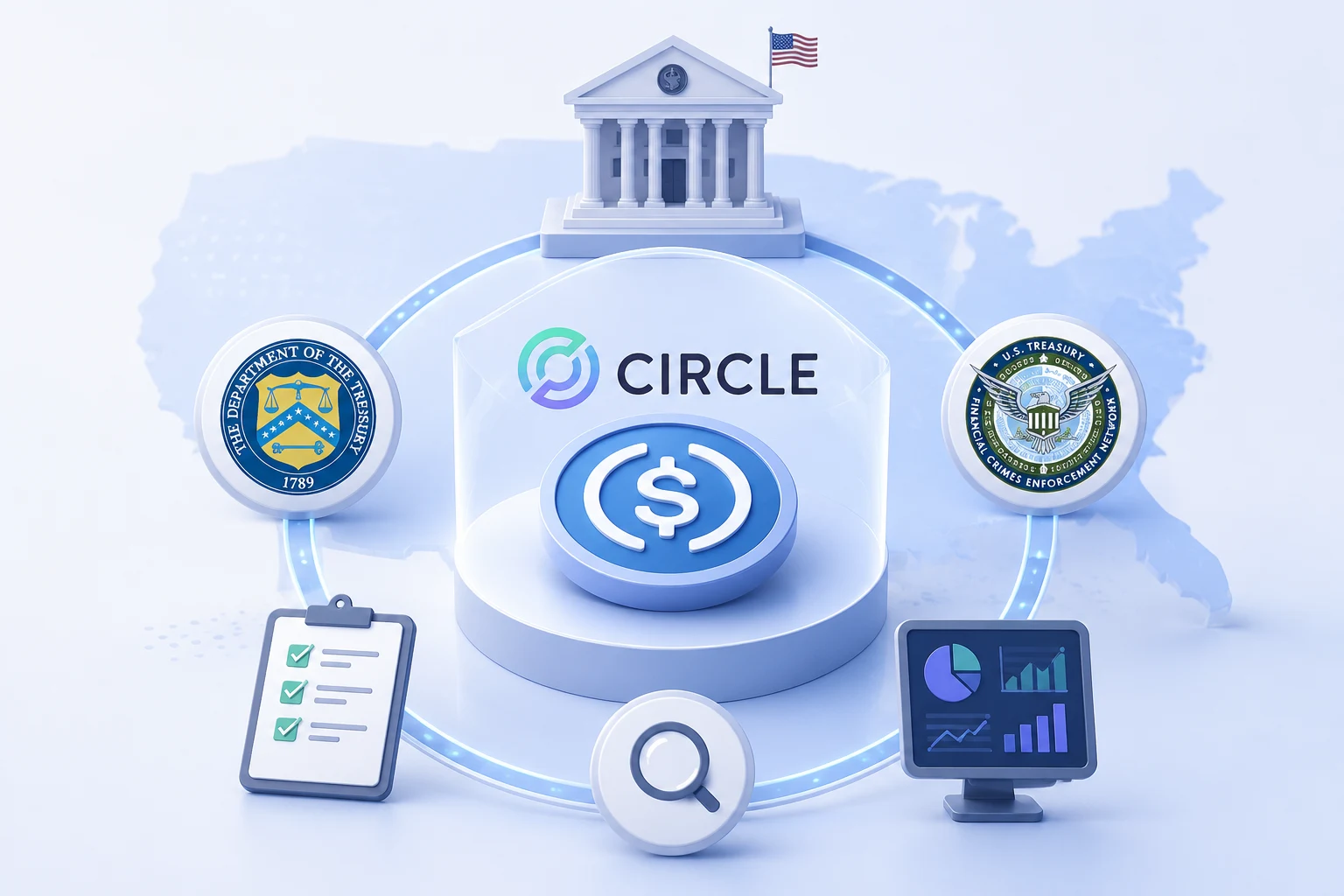
What "regulated" actually means for a stablecoin issuer
Stablecoin issuers often describe themselves as regulated, and the label is not wrong, but it conflates several very different kinds of oversight. A commercial bank is regulated by federal banking supervisors who back deposits up to a limit and run stress tests on the institution. A money services business is regulated mostly at the state level under licensing regimes that focus on consumer protection, anti-money laundering controls, and net worth minimums. A trust company in New York is regulated by the New York Department of Financial Services under a tailored charter that was designed, in part, for crypto firms.
Circle sits across all three of these worlds, and USDC holders interact with each of them in different ways depending on what goes wrong. If the firm's licensing falls out of good standing, state regulators step in. If the trust entity that holds reserves is breached, NYDFS has authority over that entity. If the cash itself disappears at a custodian, the legal question becomes one of property law, bankruptcy priority, and who gets paid first.
This article walks through the actual supervisory map for Circle, the role of each regulator, and the gaps that remain when a token promises to be redeemable one-for-one for dollars. The goal is not to argue that USDC is unsafe or that it is safe, but to explain what supervision does, what it does not, and where the real residual risks live.
State money transmitter licenses: the foundation, and the floor
At the most basic level, Circle is licensed as a money transmitter in most US states. Money transmitter licensing is a state-level regime, not a federal one, and the requirements vary considerably from one jurisdiction to the next. A money transmitter license generally allows a company to hold customer funds for the purpose of transmitting them, and it obligates the licensee to maintain a minimum net worth, file regular reports, pass examinations, and comply with anti-money laundering and know-your-customer rules.
For a stablecoin issuer, the money transmitter license is what makes it legal in most US states to hold dollars on behalf of users and to issue tokens that represent claims on those dollars. Without these licenses, operating as a US-facing issuer would expose the firm to enforcement actions, cease-and-desist orders, and civil penalties in every state where it lacks authorization.
The limits of this layer of supervision are important to understand. State money transmitter regulators typically do not examine the quality of reserve assets in the same granular way that bank supervisors examine bank balance sheets. They generally require that customer funds be held in trust or in segregated accounts, and they impose capital requirements, but they do not run liquidity stress tests and do not have authority over the investment policy of the reserve portfolio. The supervision is real, but its focus is narrower than the word regulated tends to imply.
The NYDFS trust charter: why New York is the headline regulator
New York is the center of gravity for crypto regulation in the United States, partly because of the BitLicense regime that the Department of Financial Services introduced in 2015, and partly because of an older regime, the limited purpose trust company charter, that NYDFS has adapted for digital asset firms. Circle obtained a New York limited purpose trust company charter through the acquisition of a regulated entity, and Circle Internet Financial operates under that charter.
The BitLicense is a virtual currency business license that applies to firms that transmit, store, or exchange virtual currency on behalf of New York customers or residents. It imposes cybersecurity, capital, compliance, and consumer protection requirements, and it is one of the most rigorous state-level crypto regimes in the country. The trust charter is a separate instrument, more familiar from traditional finance, that allows an entity to act as a fiduciary and hold assets for beneficiaries.
For USDC, the trust structure matters because it is what supports the claim that reserves are segregated and held for the benefit of token holders. NYDFS examiners have authority to look at the trust entity's books, examine its custody arrangements, and require corrective action if reserves are not being managed as advertised. This is a deeper level of supervision than a typical money transmitter license provides.
It is also the reason that, in a crisis, NYDFS is the agency most likely to be the point of contact for any wind-down, conservatorship, or enforcement action affecting the trust that backs USDC. State regulators coordinate, but New York tends to lead when a New York-chartered entity is at the center of a problem.
The Cayman banking partner and USYC: where the cash actually sits
For years, the reserves backing USDC were held in a combination of cash and US Treasury bills, with a meaningful portion sitting at several large US banks. That arrangement changed in late 2023, when Circle announced that it would shift the cash component of USDC reserves to a network of banks operating under a structure involving Circle Trust, with Bank of New York Mellon and BlackRock as custodians for the Treasury bill portfolio. The shift was designed to reduce concentration risk and bring the reserve management closer to institutional asset management norms.
Separately, Circle has developed a yield-bearing token called USYC, which is issued through a Cayman Islands entity. USYC is a tokenized money market fund interest, and it sits outside the US regulatory perimeter by design. For US retail users, USYC is generally not directly available, but it represents a piece of Circle's strategy to offer treasury exposure to crypto-native users and institutions in jurisdictions where US-style regulation is not the right fit.
The Cayman component is worth flagging because it illustrates a recurring tension in the stablecoin business: issuers want access to global capital and want to offer yield, but offshore structures sit outside the US supervisory map. The combination of a New York trust charter for USDC, a separate Cayman entity for USYC, and state money transmitter licenses for the rest of the US business is not unusual, but it does mean that a Circle user's claim on assets depends on which Circle entity issued the token they hold.
Monthly attestations, BlackRock, and the audit gap
Circle publishes monthly third-party attestations on the reserves backing USDC, produced by a Big Four accounting firm. These attestations confirm that the quantity of reserves matches the quantity of USDC in circulation, and they give a snapshot of the asset composition. They are not the same thing as a full financial audit of Circle's corporate books, and they do not provide the kind of forward-looking assurance that a bank audit or a securities offering audit provides.
Reserves are custodied primarily by BlackRock, through a government money market fund that holds short-dated US Treasuries. BlackRock's role is significant because it brings institutional scale, a regulated asset manager as the visible custodian, and a structure that is itself subject to SEC oversight. The cash portion sits in regulated US banks under the trust structure, with diversification requirements designed to keep any single bank failure from wiping out a large share of the reserve base.
Critics of stablecoin regulation point out that monthly attestations are a lower bar than continuous auditing, and that the attestation model was tested during the Silicon Valley Bank episode in March 2023, when USDC briefly lost its peg because a meaningful portion of reserves sat at SVB. The episode ended without losses to USDC holders, but it exposed the structural fragility of a model in which reserves can be concentrated at a single bank that fails over a weekend.
For users evaluating Circle's supervision, the practical question is not whether attestations exist but whether they are frequent enough and granular enough to surface problems before they become crisis events. Monthly is meaningfully better than annual or never. It is meaningfully worse than daily mark-to-market with public onchain proof of reserves, the kind of approach some newer issuers are attempting.
The SEC, the CFTC, and the unresolved federal question
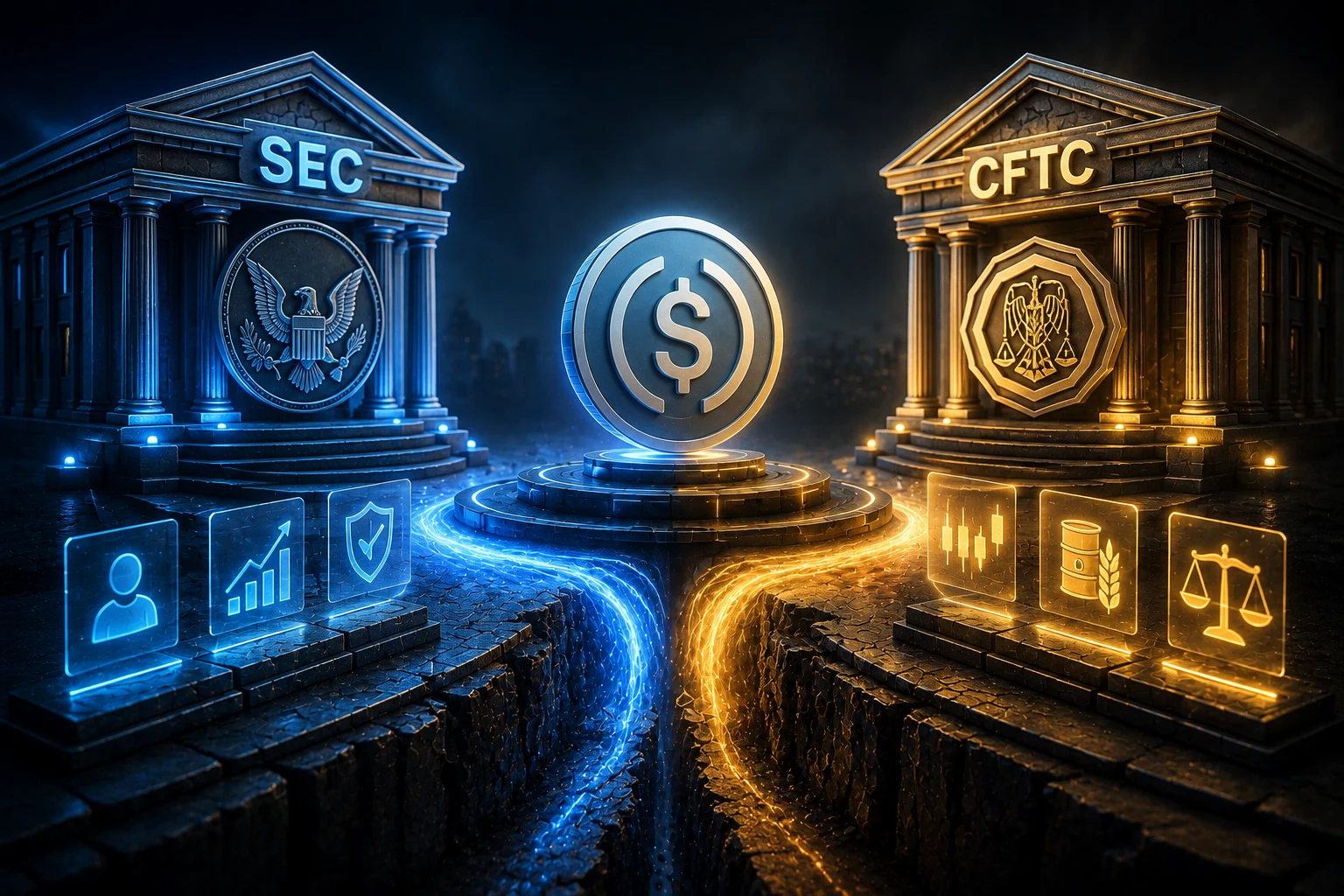
At the federal level, no regulator has formally declared USDC to be a security, but no regulator has formally declared it not to be a security either. The Securities and Exchange Commission under Gary Gensler's leadership pursued enforcement actions against several crypto firms and signaled that many stablecoin arrangements could fall within securities laws, without bringing a case directly against Circle. Under the current SEC leadership, the posture has shifted toward rulemaking rather than enforcement first, but the underlying question remains unsettled.
The Commodity Futures Trading Commission has asserted jurisdiction over certain derivatives tied to USDC, treating USDC as a commodity for those purposes. The Treasury Department, through FinCEN, oversees the anti-money laundering side of Circle's business, and the Office of the Comptroller of the Currency has issued guidance that affects how national banks interact with stablecoin issuers, even though OCC does not directly supervise Circle.
The honest answer for a USDC holder is that federal treatment is in flux. There is no stablecoin framework act in force in the United States at the time of writing, and proposals ranging from the Lummis-Gillibrand bill to narrower House Financial Services Committee drafts have not become law. Until federal legislation passes, USDC operates in a state-supervised but federally ambiguous environment. That ambiguity is itself a form of risk, because the rules of the road can change with each new administration.
What supervision does, what it does not, and what fails first
The supervision Circle operates under does several real things. State money transmitter licenses impose compliance obligations, capital floors, and examination regimes that catch many of the failure modes associated with consumer-facing financial services, including poor recordkeeping, weak AML controls, and outright fraud at the issuer level. The NYDFS charter adds a layer of fiduciary and trust-level supervision that is closer to traditional banking oversight than to typical fintech regulation. BlackRock custody and monthly attestations provide a visible, named, regulated set of actors managing the reserve assets.
What this supervision does not do is provide a government guarantee of the token itself. USDC is not insured by the FDIC, the NCUA, or SIPC. There is no federal deposit backstop, no Exchange Stabilization Fund standing ready to support the peg, and no resolution authority specifically designed for stablecoin issuers. If reserves are lost through fraud, custody failure, market collapse of the underlying Treasuries, or a custody bank failure that exceeds diversification limits, USDC holders become general unsecured creditors of Circle.
In practical terms, the failure modes worth taking seriously are these: a custody bank failure that is large enough and fast enough that reserves are inaccessible for more than a few days, a Treasury market dislocation that impairs the value of the reserve portfolio, a key person or operational failure at Circle itself, and a regulatory action by NYDFS or a state regulator that freezes the firm. None of these have happened to Circle to date. Each of them is the kind of event that supervision is designed to reduce the probability of, but not the kind of event that supervision can fully prevent.
How to follow stablecoin regulation the smart way
Stablecoin regulation moves in fits and starts, and so does the news around it, including SEC speeches, state licensing updates, and the slow grind of federal legislation. Tracking all of those signals by hand is a losing game for most users, and the louder voices on crypto social media tend to oversimplify either the protections or the risks. Zippfeed surfaces stablecoin and USDC headlines with sentiment scoring, marked as bullish, neutral, or bearish, and an importance rating that weighs each story against the rest of the flow, so you can separate meaningful regulatory developments from routine noise. For anyone holding USDC, USYC, or other tokenized dollars, that filter is the difference between reacting to every headline and understanding which ones actually change the picture.


 CoinDesk
 CryptoSlate
 TheBlock
 Lookonchain