Beyond buying and holding
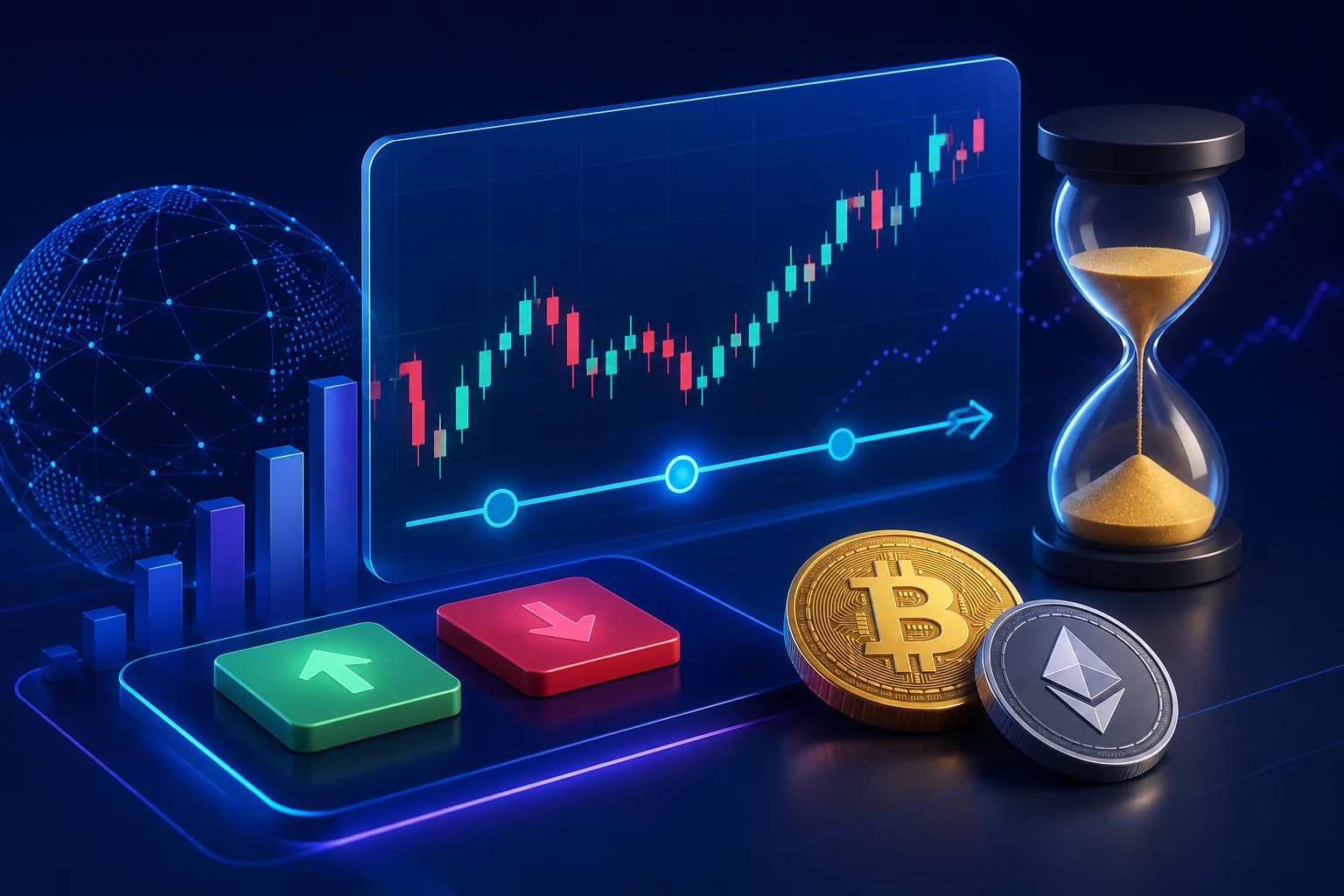
Most people enter crypto by buying coins and holding them — "spot" trading, where you own the actual asset. But a large and influential part of the market operates differently, through derivatives. Crypto futures are the most important of these, and they explain much of the leverage, volatility, and sudden cascading moves you see in the market. Understanding them is valuable even if you never trade them — and essential before you ever consider it.
A clear warning up front: futures trading is among the highest-risk activities in all of crypto. This guide is educational, not an encouragement to trade, and certainly not financial advice.
What a futures contract is
A futures contract is an agreement to buy or sell an asset at a predetermined price on a future date. In crypto, futures let traders take positions on the price of a cryptocurrency without owning the underlying coins.
- If you think the price will rise, you can take a "long" position.
- If you think the price will fall, you can take a "short" position — profiting from a decline, something you cannot easily do by simply holding.
The key conceptual leap: with futures, you are trading a *bet on price direction*, not the asset itself.
Perpetual futures
In crypto, the most common type is the perpetual future ("perp"), which works like a standard future but has no expiry date — you can hold the position indefinitely. Perpetuals use a mechanism called the "funding rate" to keep their price tethered to the spot market, which periodically transfers small payments between long and short traders. This is the instrument behind platforms like Hyperliquid.
Leverage: the heart of the danger
Here is what makes futures so powerful and so dangerous. Futures trading almost always involves leverage — borrowing to control a position far larger than your actual capital.
With, say, 10x leverage, you control a position ten times the size of the money you put up (your "margin"). The effects cut both ways, hard:
- Gains are magnified. A 5% favorable price move becomes a 50% gain on your margin. This is the allure.
- Losses are magnified identically. A 5% adverse move becomes a 50% loss. And higher leverage makes it worse.
Leverage does not change the odds; it amplifies the consequences. This is why traders can make large sums quickly — and, far more often, lose everything just as fast.
Liquidation: how leveraged traders get wiped out
The most brutal feature of leveraged futures is liquidation. If the price moves against your position far enough that your margin can no longer cover the potential loss, the exchange automatically closes your position — and you lose your margin. You do not get a chance to wait for a recovery; the position is gone.
With high leverage, it takes only a small adverse price move to trigger liquidation. This is why volatile assets and high leverage are a devastating combination: a brief, normal-looking price wobble can wipe out a heavily leveraged trader entirely.
Cascading liquidations
When many traders are leveraged in the same direction, a price move can trigger a wave of liquidations, each forced sale pushing the price further and triggering more liquidations — a cascade. This is a major reason crypto can experience sudden, violent price swings. The amount of leverage in the system is hinted at by open interest.
Futures vs spot trading
- Spot: You own the actual crypto. Your maximum loss is what you paid (the asset can't go below zero). Simpler, lower-risk.
- Futures: You hold a leveraged bet on price. You can profit from falls, but leverage means you can lose your margin rapidly through liquidation. Complex, high-risk.
For the related question of how these structures appear in investment products, see spot Bitcoin ETF vs futures ETF.
Why beginners should stay away
The honest, responsible message: crypto futures are tools for experienced traders who deeply understand leverage and risk management, and even many of them lose money. For beginners, futures
are the fastest way to lose capital in crypto. The magnified gains that attract people are inseparable from the magnified losses that ruin them.
If you are new, build understanding with spot trading and the fundamentals first — our how to buy crypto safely guide is a far better starting point. None of this is financial advice; it is a caution grounded in how these instruments actually behave.
Understand the forces behind volatility
Futures-driven leverage and liquidations cause many of crypto's sharpest moves, and they're often set off by news and shifting sentiment. Zippfeed tracks crypto headlines with sentiment and importance scoring, so you can better understand the events that move heavily leveraged markets — useful context whether you're trading futures or simply trying to understand why prices sometimes move so violently.