How four regulatory blocs arrived at very different answers
If you operate in crypto across borders, the hardest question in 2026 is not "is crypto legal." The harder question is: legal under whose rulebook, for which token, on which platform, against which regulator. Four blocs have answered that question in four structurally different ways. Treating "crypto regulation" as a single topic produces bad mental models.
The European Union chose unification. Through MiCA, the Markets in Crypto-Assets Regulation, the EU forced every member state to apply the same definitions, the same licensing categories, and the same stablecoin rules. A token classified as an asset-referenced token in Frankfurt is the same token in Paris, in Madrid, and in Vilnius. That horizontal harmonization is the defining feature of EU crypto policy.
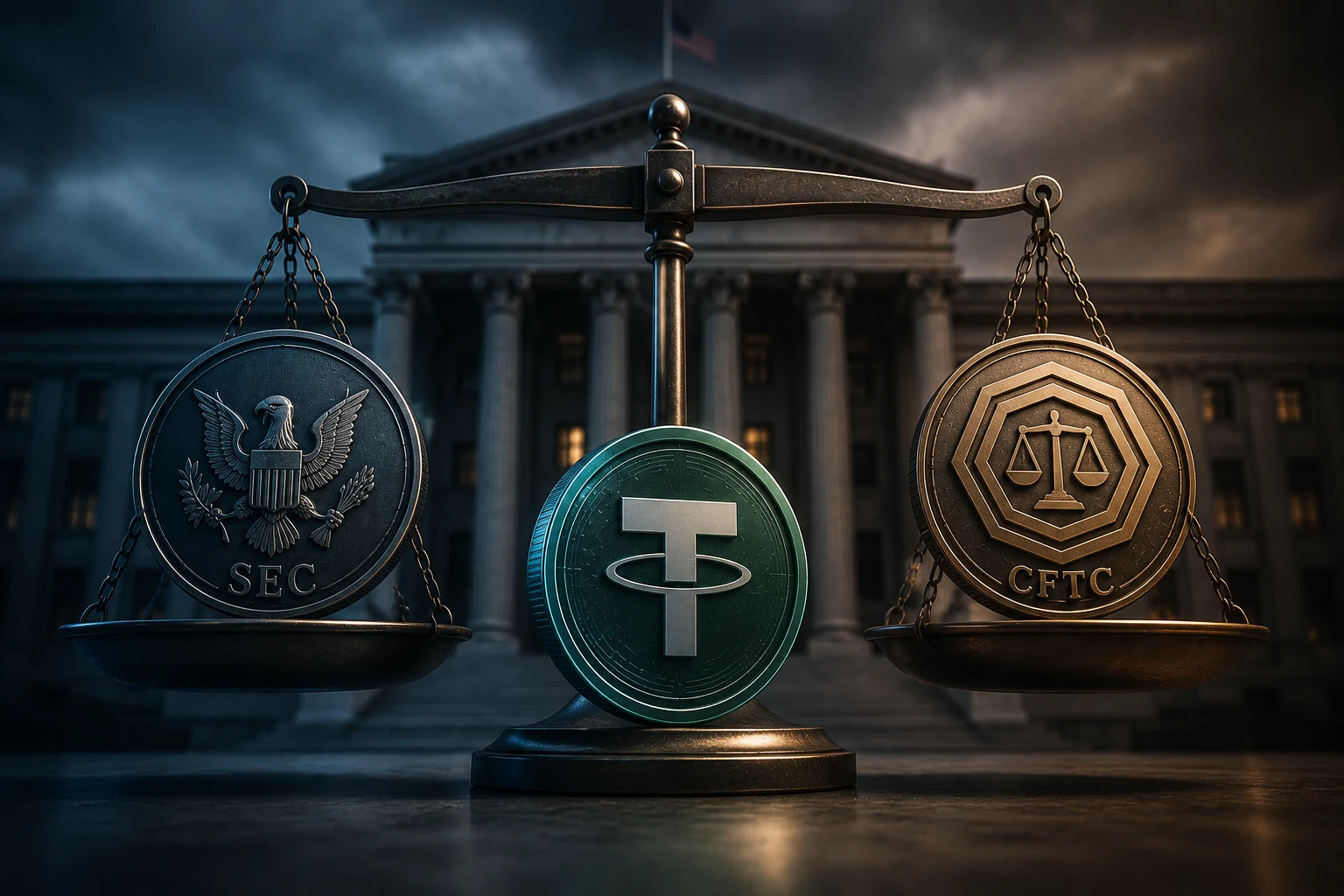
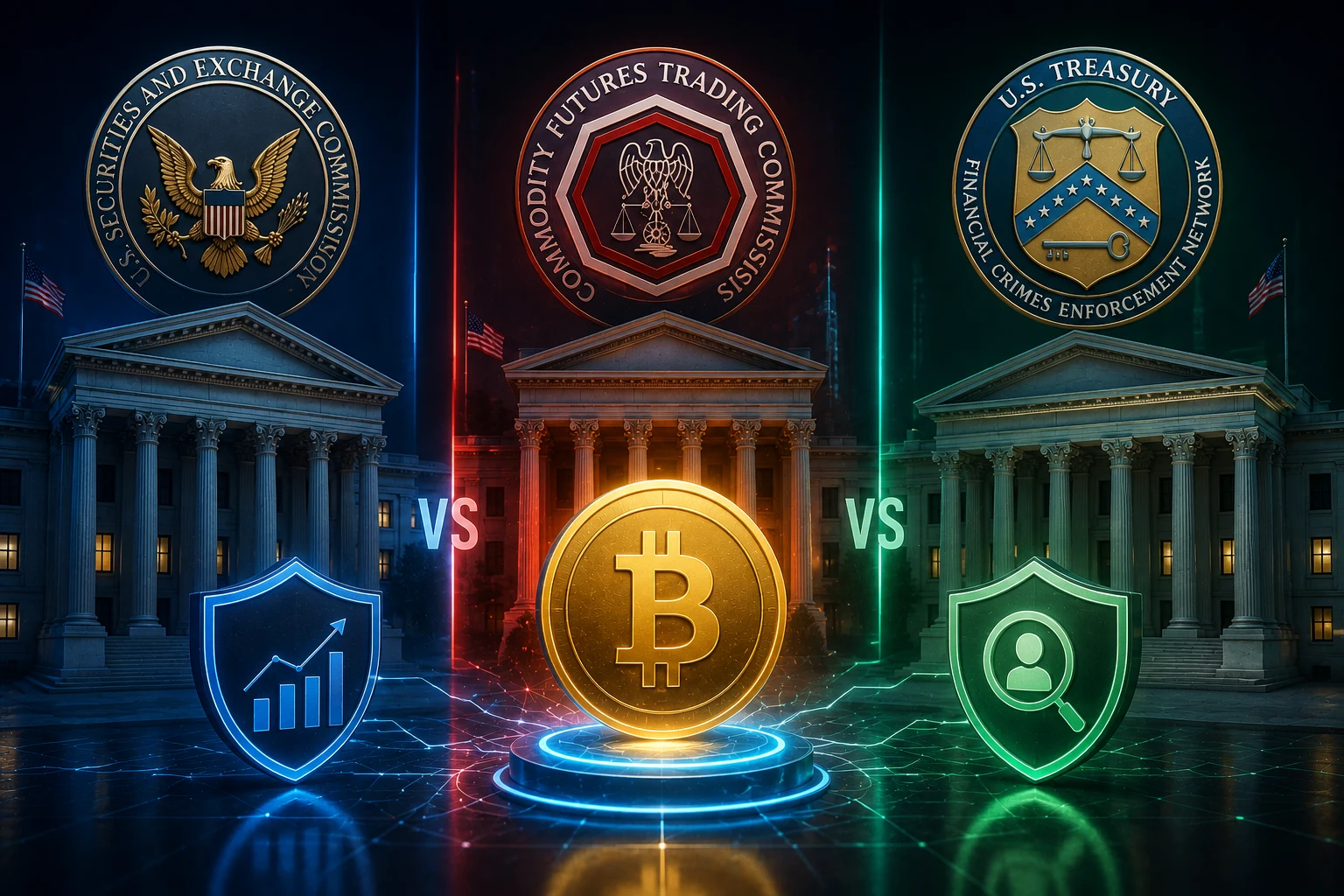
The United States chose the opposite path. Rather than passing a single comprehensive crypto statute, Congress left the architecture inherited from the 1930s intact. The Securities and Exchange Commission, the Commodity Futures Trading Commission, FinCEN, OFAC, and a patchwork of state money transmitter and trust regulators each claim jurisdiction over different slices of the same activity. The result is a market where the legality of the same product can turn on which agency is asked.
The United Kingdom took a third route. It declined to create a bespoke crypto licensing framework in 2026, but pulled cryptoasset promotions and intermediation into the existing Financial Services and Markets Act 2000. The UK is therefore "regulated" but not "licensed" in the same sense as Hong Kong or Singapore. The Hong Kong Securities and Futures Commission and the Monetary Authority of Singapore each built their own dedicated crypto and stablecoin licensing regimes, with different retail-derivatives policies layered on top.
For a user or builder holding BTC, ETH, USDC, USDT, or XRP, the practical question is: under which of these four rulebooks does your token live, today, in 2026. The next section covers the risks of getting that map wrong, because the failure modes are not abstract.
Risks of misreading the regulatory map
Regulatory risk in crypto is not theoretical. Several real categories of loss show up consistently across all four blocs, and they are worth understanding before any comparison of rules.
Platform failure versus regulatory enforcement
The first risk is conflating a platform's collapse with a regulator's action. When FTX failed in 2022, many retail users blamed US regulators, but the immediate cause was internal fraud and misappropriation of customer funds. The regulatory lesson came later: separate custody, segregated client assets, capital floors, and proof of reserves. In all four blocs, those requirements now exist, but enforcement quality varies. A licensed platform in a strict jurisdiction is still not the same as a guaranteed outcome.
Stablecoin de-peg and redemption risk
The second risk is stablecoin-specific. USDT and USDC have each weathered stress tests where redemptions slowed, intermediaries failed, or banking rails were constrained. Even under MiCA's strict e-money-token and asset-referenced-token regimes, a stablecoin issuer in difficulty can throttle redemptions, impose gates, or wind down in an orderly run-off. Holders have no central-bank backstop in any major bloc in 2026.
Wrong-jurisdiction enforcement against users
The third risk is personal. In the US, the SEC and CFTC have brought actions not only against issuers but against individual users on platforms that later proved to be unregistered. The 2022–2023 action against users on a major DeFi protocol demonstrated that "I thought it was regulated" is not a defense if the platform was not. In the EU and UK, similar enforcement is emerging around unauthorized cryptoasset promotions and intermediation. Bottom line: the platform's license status is the user's first line of defense.
Token-classification surprise
The fourth risk is that your token's classification can change. XRP's history shows how a single US enforcement action re-prices the entire asset class around it. ETH's post-Merge transition from proof-of-work to proof-of-stake triggered quiet re-examination in several jurisdictions. Even BTC, framed as a commodity by the CFTC, is not free from token-specific scrutiny under state-level money transmitter rules.
The EU: MiCA as a single rulebook
MiCA is the central reference point for any 2026 crypto comparison. It is a regulation, not a directive, which means it applies directly in every member state without national transposition. That is the structural difference from previous EU financial law.
Scope and licensing tiers
MiCA creates three licensing categories: cryptoasset service providers (CASPs), which covers exchanges, brokers, custodians, and advisors; asset-referenced tokens (ARTs), which are stablecoins pegged to a basket of assets; and e-money tokens (EMTs), which are single-currency stablecoins. Each tier has capital, governance, disclosure, and operational requirements set at the EU level rather than left to national discretion.
For BTC and ETH, neither is classified as an EMT or ART. They trade as non-e-money cryptoassets on CASPs. The licensing obligation falls on the venue and the custodian, not on the underlying token. USDC and EURC, when denominated in euros, fall into the EMT regime and require e-money license authorization plus additional reserve and redemption disclosures. USDT, not being issued from an EU-authorized entity in the euro denomination, is broadly treated as a third-country ART or EMT and is subject to additional quantitative and supervisory thresholds.
What MiCA bans or restricts
MiCA prohibits certain products outright, including anonymous cryptoasset accounts in large sizes, and imposes caps and reserve-quality rules on EMTs and ARTs. It also requires algorithmic stablecoins that do not meet ART and EMT criteria to be restricted. XRP is treated as a standard cryptoasset, with no per-token ban, but venues delisted it in some EU jurisdictions when distribution and disclosure requirements proved commercially unworkable.
The harmonization benefit is real: a CASP licensed in Lithuania can passport services into France and Germany without re-licensing. The cost is granular compliance for issuers, particularly stablecoin issuers, who now face one of the strictest stablecoin regimes globally.
The US: jurisdictional fragmentation in 2026
By 2026, the US remains the most jurisdictionally fragmented major crypto market. The headline reason is that Congress has not passed a comprehensive market-structure statute, so each agency applies its existing authority and case-by-case judgments.
The SEC vs CFTC split
The SEC treats digital assets through the lens of the Howey test from 1946 securities case law. Tokens sold with promises of profit from managerial effort can be securities; the SEC has used this framework against a long list of token issuers, with XRP being the most prominent contested case at the appellate level. The CFTC treats Bitcoin as a commodity and oversees derivatives markets. The practical effect is that the same activity can be prosecuted differently depending on which agency concludes it has jurisdiction first.
For BTC, the CFTC's commodity framing is well established in derivatives, but retail spot markets are supervised at the state level under money transmitter and trust laws. For ETH, classification remains in flux, with the SEC's posture shifting under different administrations and subject to ongoing litigation. For stablecoins like USDC and USDT, the SEC and CFTC claims overlap with state trust-company regulation, and any firm offering stablecoin services in the US is likely regulated at three levels simultaneously.
FinCEN, OFAC, and the states
FinCEN regulates money services businesses under the Bank Secrecy Act and has authority over anti-money-laundering controls for cryptoasset transmission. OFAC administers sanctions and has used that authority against mixers, certain wallet addresses, and platforms serving sanctioned jurisdictions. State regulators layer on money transmitter licenses, trust charters, and special-purpose digital asset charters, creating a 50-state compliance surface.
What is allowed varies accordingly. Spot trading in BTC on a FinCEN-registered, state-licensed money transmitter is one of the safer activities, though not regulated as a securities market. Offering derivatives on BTC or ETH via CFTC-registered futures commission merchants is permitted and supervised. Operating a non-compliant staking-as-a-service product has run into SEC actions repeatedly. The fragmentation means that the rule of thumb "ask your venue what licenses it has, in which states, under which agency" is still the right question to ask in 2026.
The UK: regulated under FSMA, not yet licensed under a bespoke regime
The UK's 2026 approach is structurally distinct from both the EU and the US. Rather than creating a brand-new crypto licensing law, the Financial Conduct Authority and HM Treasury pulled cryptoasset promotions, intermediation, and stablecoin issuance into the existing Financial Services and Markets Act 2000 architecture.
What FSMA crypto promotions cover
The crypto promotions regime treats any communication that invites or induces a UK consumer to engage in a qualifying cryptoasset activity as a financial promotion. Such promotions must be issued or approved by an FCA-authorized firm, follow clear, fair, and not misleading standards, and include prescribed risk warnings and cooling-off periods for retail customers. This is the regulatory layer most directly visible to retail users.
For BTC and ETH, the regime constrains how exchanges and brokers can market products, not whether they can offer them. For XRP, USDC, and USDT, the regime adds the burden of whether the issuer or intermediary is authorized in the UK for the specific promotion activity. UK-authorized intermediaries must also comply with the FCA's high-risk investment classification, which has produced order-routing and appropriateness checks at the platform level.
Stablecoin and custodial rules
In 2026, the UK is also moving toward a regulated stablecoin issuance regime and a broader cryptoasset regulatory framework that the Treasury has signaled for later in the year. Custody rules under existing fiduciary and safeguarding frameworks already apply to platforms holding client cryptoassets. The result is a regime where activities are regulated, not a bespoke licensing regime in the MiCA or MAS sense.
What is currently banned in the UK includes unauthorized retail derivatives on certain cryptoassets, including those referencing XRP and some lighter-liquidity tokens, and any promotions issued without FCA-authorized firm approval. The UK's direction is toward more bespoke licensing rather than less, but a builder or user operating in 2026 must work under FSMA's existing geometry, not a hypothetical future regime.
Asia: Hong Kong, Singapore, and the licensing-first model
Asia's two major hubs, Hong Kong and Singapore, illustrate the licensing-first approach in their clearest forms. Both jurisdictions built dedicated crypto and stablecoin regimes, both require platform licensing before serving the public, and both diverge in ways that materially affect products like stablecoins and retail derivatives.
Hong Kong's SFC-led framework
Hong Kong's Securities and Futures Commission administers a type-1 and type-7 licensing regime plus a virtual asset trading platform regime that requires all platforms serving Hong Kong retail customers to be licensed and to apply know-your-product suitability tests. Spot retail trading in BTC and ETH is permitted on licensed platforms, with leverage caps and token-screening rules layered on top.
Stablecoins in Hong Kong fall under the Hong Kong Monetary Authority's forthcoming stablecoin ordinance, which imposes authorization, reserve, redemption-at-par, and audit requirements, and treats USDT and USDC as third-country issuers subject to additional scrutiny before they can be marketed to Hong Kong users. Retail derivatives referencing certain tokens, including XRP, face tighter constraints.
Singapore's PSA-led framework
Singapore's Payment Services Act covers digital payment tokens, and the Monetary Authority of Singapore has added specific stablecoin regulation requiring issuers of single-currency stablecoins tied to the Singapore dollar or G10 currencies to hold MAS authorization, maintain high-quality liquid reserves, and provide redemption at par on demand. Major stablecoins such as USDC, when offered in Singapore, must meet these reserve and disclosure thresholds.
Singapore restricts retail access to derivatives and leveraged spot trading. BTC and ETH derivatives are generally not offered to retail, but spot access is permitted through licensed major payment institutions. XRP's treatment in Singapore is more permissive than in some other jurisdictions, but token-screening still applies at the platform level. The licensing-first model means that, in practice, a user accessing crypto through regulated Singapore or Hong Kong intermediaries is operating under one of the more supervised regimes in the world, with the corollary that off-shore or unlicensed venues are treated as out of bounds for retail.
Where the Asian blocs diverge
The divergence is most visible on retail derivatives and stablecoin issuance thresholds. Hong Kong allows some retail access to BTC and ETH spot with leverage caps, while Singapore is more restrictive on derivatives. Hong Kong and Singapore both license venues, but their consumer onboarding, token-screening, and reserve rules diverge, so a platform operating in both places must maintain two compliance regimes and may list or delist tokens differently in each.
What this means for someone holding BTC, ETH, USDT, USDC, or XRP
The matrix below translates the comparison into practical guidance for users holding the most common tokens, in each of the four blocs in 2026.
Token-by-token map
- BTC: Commodities-style framing in the US under CFTC and FinCEN overlays; non-EMT, non-ART cryptoasset in the EU under MiCA; financial promotion regime applies in the UK; retail spot permitted on SFC-licensed venues in Hong Kong and on MAS-licensed venues in Singapore, with Singapore restricting derivatives.
- ETH: Classification debated in the US with ongoing SEC and CFTC positioning; non-EMT, non-ART cryptoasset in the EU; UK promotions regime applies; permitted on licensed venues in Hong Kong and Singapore, with staking regulated inconsistently across the US at the state level and permitted in many cases under EU, UK, and Asian regimes.
- USDC: EMT candidate in the EU where euro-denominated, with reserve and redemption requirements; subject to state and federal stablecoin oversight in the US; treated as a stablecoin under development regimes in the UK and as a regulated single-currency stablecoin in Singapore and Hong Kong under authorization thresholds.
- USDT: Treated as ART or EMT in the EU with third-country thresholds, with delistings in some EU venues due to non-issuance from EU-authorized entities; subject to US scrutiny at the state and federal level; restricted in some UK and Hong Kong contexts where authorization cannot be confirmed.
- XRP: Historically the most contested US litigation token, with retail-classification history shaping how some venues treat it; permitted as a non-EMT, non-ART cryptoasset in the EU subject to distribution rules; restricted in some UK derivatives contexts; permitted on licensed venues in Singapore and Hong Kong subject to token-screening criteria.
Wherever you sit, the rule of thumb is the same: identify which regulator licenses your venue, ask which tokens your venue classifies as restricted or permitted, and read the platform's marketing and risk warnings, since those warnings are the regulatory layer most directly enforced against retail users.
How to follow crypto regulation without losing the thread
Crypto regulation moves fast, and the matrix above can shift on a single appellate decision, a MiCA delegated act, or an MAS consultation paper. Trying to track four regulators, five tokens, and a dozen rule types by hand is a losing game. Zipp Learn is the broader Zippfeed knowledge base, and Zippfeed covers crypto regulation with sentiment scoring on each headline (bullish, neutral, or bearish) and an importance rating, so you can see which regulator's actions actually moved the market this week versus which were procedural.
Read crypto regulation with the right mental model
The simplest framing for crypto regulation in 2026 is that no one "the" regulator exists. There is a US that fragments by agency, an EU that harmonizes by regulation, a UK that absorbs crypto into existing financial law, and Asian hubs that license by rulebook. The regulatory perimeter you operate in depends on where you and your platform sit, not on the token's underlying technology. Always tie regulation back to a concrete token and a concrete venue, so you avoid the trap of treating "crypto" as a single asset class with a single regulator.
Zippfeed surfaces the regulatory headlines that matter for BTC, ETH, stablecoins like USDC and USDT, and contested tokens like XRP, scoring each story as bullish, neutral, or bearish with an importance rating, so you can read the news with the matrix above already in mind.





 WuBlockchain
 CryptoSlate
 Glassnode
 WatcherGuru