What an L2 bridge actually does, and why that matters for your money
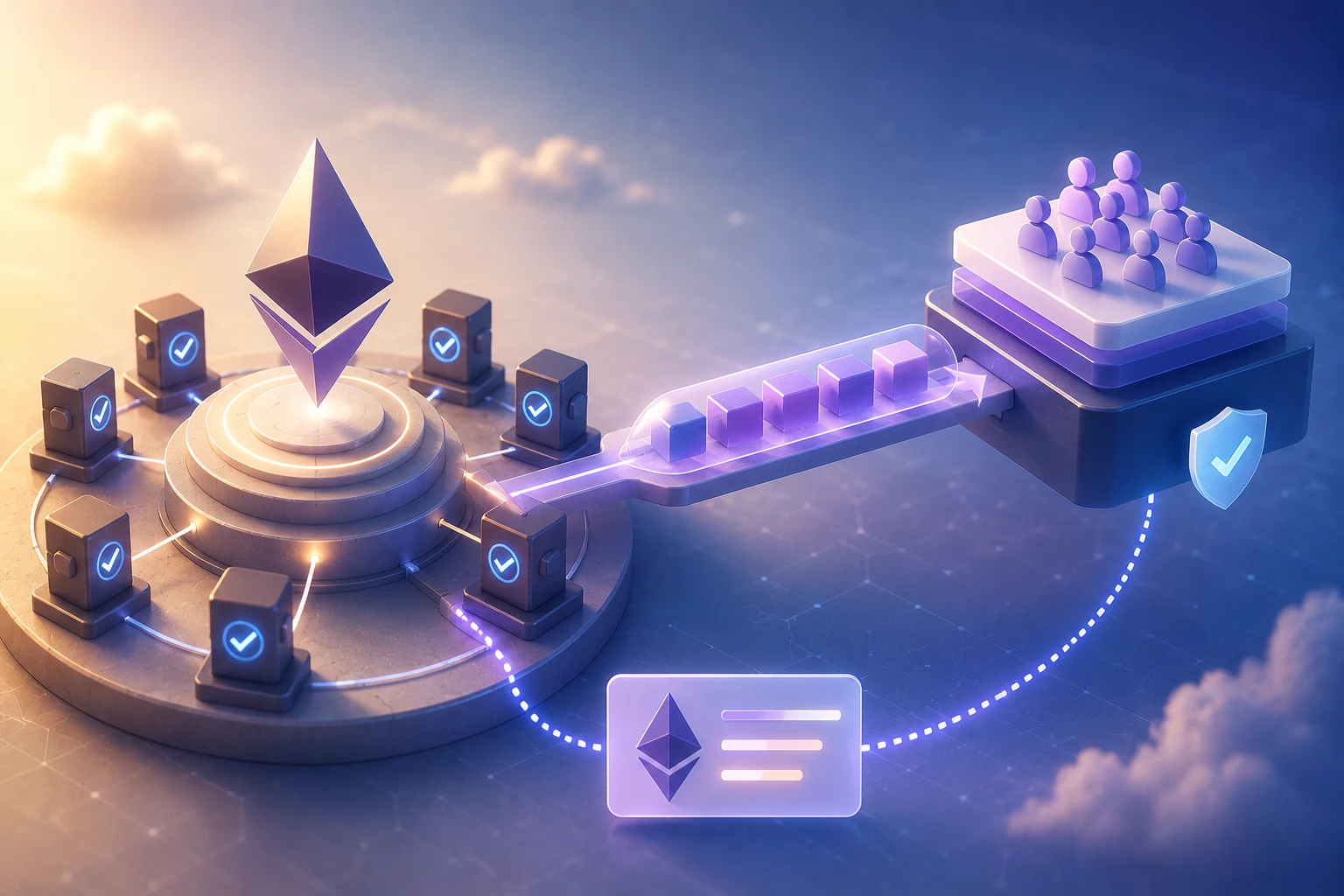
A bridge is a piece of software that lets you move an asset from one chain to another. When you deposit ETH into the Arbitrum bridge, your ETH is locked in a smart contract on Ethereum mainnet and an equivalent amount of wrapped ETH is minted on Arbitrum. When you withdraw, the wrapped ETH on Arbitrum is burned and the original ETH is released on mainnet. In both directions, somewhere in the stack there is a contract holding your real asset, and that contract is the target for attackers.
This is why every bridge, no matter how polished the front end, functions as a custodian of last resort. While your tokens sit in the bridge contract, you do not control them the way a hardware wallet user controls their coins. If the contract is exploited, drained, or frozen by governance, your funds move with it. The history of bridges is largely the history of these contracts being broken: Ronin (over $600 million, 2022), Wormhole (over $300 million, 2022), Multichain (estimated $125 to $265 million depending on the source, 2023), Harmony's Horizon bridge (around $100 million, 2022), and the Nomad bridge (around $190 million, 2022). Billions have been taken from bridges; almost none of those losses came from the L1 or L2 themselves.
That record is the starting point for any due diligence. You are not choosing between two equally safe technical paths. You are choosing between different custodians with different attack surfaces, and your job is to figure out which ones have done the unglamorous work of hardening themselves and which ones are one bug report away from a headline.
Red flags to spot before you sign any bridge transaction
Before going through the 7-point checklist, it helps to know what to walk away from on sight. Bridges with one or more of these red flags have lost user money in the past or are structurally similar to bridges that have.
- No third-party audit, or only a self-hosted audit by an unknown firm. Treat the bridge as unaudited.
- Anonymous team with no history and no legal entity. There is no one to pursue and no way to verify the operators are not already inside the system.
- TVL reported on the project's own dashboard that does not match on-chain data. Fake TVL is a frequent tactic to lure deposits before an exit.
- No bug bounty, or a token-gated bounty so small it does not attract real researchers. If paying $50,000 can drain $200 million, attackers will not report the bug.
- Upgradable contracts controlled by a multisig with a low threshold. A 2-of-5 multisig governing all bridge funds is a single phishing campaign away from a loss.
- Copy-paste codebase from a known exploited bridge. Forks inherit their parent's bugs unless every line has been re-audited.
- Yield-bearing wrapper without a clear yield source. If the bridge promises 4% on your stablecoins and the page cannot explain where the yield comes from, the yield is probably your principal.
If you see two or more of these on the same bridge, the only safe move is to not deposit. The checklist that follows is what to check when none of the above is screaming, but you still want to verify before you commit size.
Checklist point 1: canonical bridge versus third-party bridge
The single most important question is whether the bridge you are about to use is the canonical bridge run by the rollup team itself (Arbitrum's official bridge, OP Stack's standard bridge, the bridge that comes with a zk-rollup such as zkSync) or a third-party bridge operated by an external protocol (Across, Stargate, Hop, Wormhole, Synapse, Rhino.fi and so on).
A canonical bridge inherits the security model of the rollup. If you trust Arbitrum to be a faithful execution of an optimistic rollup, you extend that trust to its canonical bridge. A third-party bridge adds another trust assumption on top of the rollup, because the third party runs its own contracts, its own node infrastructure, and usually its own message-passing logic. Some third-party bridges, like Across, have moved toward validator-light designs with bonded relayers and fraud proofs in the relayer layer, which narrows the trust gap. Others still rely on multisigs or external validator sets.
For a user who simply needs to move funds between Ethereum and Arbitrum or OP, the canonical bridge is usually the default right answer. Use a third-party bridge when you specifically need what it offers: faster withdrawals on optimistic rollups, multichain one-click sends, or routes that the canonical bridge does not support. In those cases, the next checklist points matter even more.
Checklist point 2: proof system and what it means for withdrawal time
Bridges are not all equally fast, and the speed difference is not cosmetic. It is a direct consequence of the proof system the rollup uses.
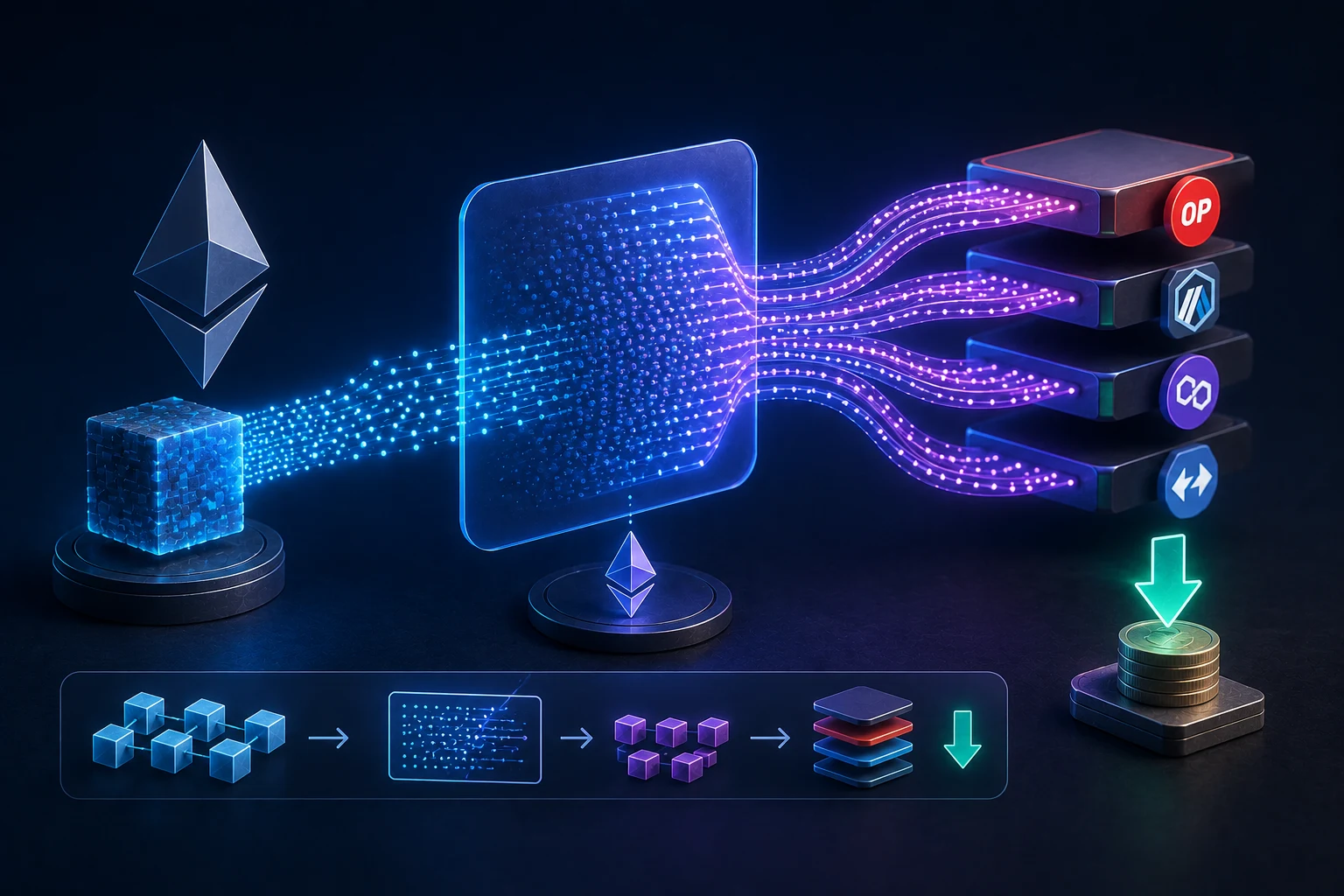
Optimistic rollups (Arbitrum, OP Mainnet, Base) assume transactions are valid unless challenged during a dispute window. The challenge period is currently around 7 days on Arbitrum and OP, with shorter windows in newer configurations. When you withdraw back to mainnet through the canonical bridge, you wait roughly that long before funds are claimable, because the bridge will not release the locked asset until the fraud-proof window has closed without a successful challenge. The trade-off is cheaper fees and a battle-tested design.
Validity rollups (zkSync, Starknet, Linea, Polygon zkEVM, and newer OP Stack chains moving toward fault proofs with shorter windows) generate a cryptographic proof that each batch of L2 transactions is correct. Once that validity proof is verified on L1, the bridge can release funds. Withdrawals typically complete in tens of minutes to a few hours, depending on the prover and L1 congestion, rather than days.
What this means in practice: if a third-party bridge offers a "fast withdrawal" on an optimistic rollup, it is doing something under the hood to give you liquidity now (typically fronting you the asset from a liquidity pool, then collecting the canonical withdrawal later). That product is reasonable if the bridge is reputable, but it adds a counterparty that you should understand. The slow canonical bridge is the trust-minimized option; the fast bridge is the convenient option with extra risk.
Checklist point 3: audits, bug bounty, and the difference between "audited" and "safe"
An audit is a point-in-time review of smart contract code by an outside firm. It does not cover every possible bug, it does not cover governance or economic risk, and it does not cover upgrades introduced after the audit was published. Bridges can be audited and still be exploited, just as bridges can be unaudited and still operate for years without incident. Audit posture is a probability signal, not a guarantee.
What to look for: audits from reputable firms (OpenZeppelin, Trail of Bits, Spearbit, ChainSecurity, Zellic, Cantina, Code4rena-affiliated reviewers, Certora for more formal work) published with clear scope, dates, and version of code reviewed. Multiple audits over time. A bug bounty on a platform like Immunefi or Code4rena with a meaningful size (a $50,000 bounty on a bridge holding $10 million is theater; a $2 million bounty on a bridge holding $500 million is at least in the right neighborhood).
Equally important: a documented incident-response process, public post-mortems for any past issues, and a multisig with a high threshold and publicly known signers. The Wormhole exploit in 2022 happened in part because the guardian network's upgrade path bypassed adequate review; the team patched and reimbursed users, but the lesson is that procedure matters as much as code.
You can verify most of this in an afternoon. Look at the project's documentation, search GitHub for audit reports, check Immunefi for the bounty page, look at the upgrade permissions on Etherscan (read contract, check owners, check proxy patterns), and read the last year of governance forum posts.
Checklist point 4: TVL concentration, hack history, and exit-window pressure
TVL, or total value locked, is the dollar amount sitting in a bridge's contracts. Two opposite risks live inside this single number.
First, concentration risk. If a bridge holds $3 billion in a single contract, it is a bigger target than a bridge with the same TVL split across many smaller pools. Bigger honeypots attract more sophisticated attackers, and the blast radius of a single bug is larger. If a bridge holds $3 billion and a 2-of-5 multisig can upgrade it, that is a structural problem regardless of how nice the UI is.
Second, the runway question for the bridge itself. Bridges earn fees on flow, but the larger ones also need to keep paying audits, monitoring, and incident-response. Bridges that struggle to fund themselves sometimes cut corners, and corners cut on security tooling show up as bugs two years later. Look at whether the bridge has a sustainable revenue model and whether the team has been around long enough to have weathered at least one major market downturn.
Hack history is the third leg of this point. A bridge that has been exploited and rebuilt with the cause of the previous loss addressed (Nomad post-mortem and re-audit, Wormhole's guardian-network overhaul) is a different animal from one with no track record at all. A bridge that has been exploited and quietly relaunched without addressing the cause should be treated as compromised.
Cross-reference the on-chain TVL with what the bridge advertises. DefiLlama, L2Beat, and Dune dashboards for the specific bridge let you compare actual contract balances to the project's marketing. A project claiming $400 million in TVL when the contracts hold $40 million is doing something you do not want to participate in.
Checklist point 5: which asset you actually receive
This is the one most users skip, and it costs them the most. When you bridge USDC from Ethereum to Arbitrum, what lands in your wallet depends entirely on which bridge you used and which contract is on the receiving end.
Native USDC is issued by Circle directly on each chain Circle supports. As of 2025, Circle issues native USDC on Ethereum, Arbitrum, OP Mainnet, Base, Polygon, Avalanche, and a growing list of others, via a Cross-Chain Transfer Protocol (CCTP) that burns USDC on the source chain and mints native USDC on the destination. When you receive native USDC, the asset on Arbitrum is the same issuer as the one on Ethereum, and Circle's attestations apply.
Bridged USDC is a different token. It is a wrapped version minted by a third-party bridge (USDC.e on Arbitrum, for example, or USDC on chains where Circle has not issued). The issuer is the bridge, not Circle. Circle does not attest to that wrapped token. If the bridge is exploited, the wrapped USDC becomes worthless; the native USDC on the same chain is unaffected.
Why this matters in practice: many DeFi protocols on Arbitrum still list USDC.e rather than native USDC, sometimes both, sometimes only one. Before you bridge, check which token the destination protocol accepts and which token you will actually receive. Receiving native USDC through Circle's CCTP is closer to a trust-minimized bridge than a generic third-party bridge because Circle's mint/burn mechanism means there is no pooled liquidity held by a third party; the USDC is destroyed on the source and recreated on the destination.
Checklist point 6 and 7: upgrades, governance, and small operational signals
The final two points are smaller on their own but catch problems the first five can miss.
Checklist point 6 is upgradeability and governance. Is the bridge contract behind a proxy? Can it be upgraded, and by whom, and how quickly? Bridges with timelocks on upgrades (a 24 to 72 hour delay before changes take effect) give the community time to react to a hostile governance action. Bridges with no timelock, or with a single EOA owner, are not suitable for serious deposits. For an ETH-sized position, the bridge's upgrade governance is a higher-leverage decision than which L2 you eventually park on.
Checklist point 7 is the human layer. Is the team public, do they have a track record, have they shipped upgrades on schedule, do they have a working status page, do they post incident reports in English on a public forum? A bridge team that is responsive during an incident can prevent a loss from becoming a wipeout. A bridge team that goes silent during incidents makes panic worse. The Harmony Horizon bridge was exploited in June 2022 partly because monitoring missed the initial intrusion; better monitoring might have shrunk the loss.
You can assemble these into a one-page checklist before each bridge transaction: canonical or third-party, proof system, audits and bounty, TVL and history, asset received, upgrade governance, team quality. Most of this takes thirty minutes of reading the first time you vet a bridge and five minutes on a return visit. The cost of skipping it is paid by people who thought their bridge was someone else's problem.
How to follow L2 bridges the smart way
L2 bridges move fast and so does the news around them. Tracking which bridge just got an audit, which one added native USDC support, which one saw a governance vote that weakened its upgrade path, is a job in itself, and most users do not have time to monitor it manually. Zippfeed surfaces L2 and bridge headlines with sentiment scoring (bullish, neutral, or bearish) and an importance rating, so you can spot changes to the bridges you already use, hear about new ones early, and avoid the ones that are about to make the news for the wrong reasons.



 WuBlockchain
 Crypto Capital Venture
 Lookonchain
 TheBlock