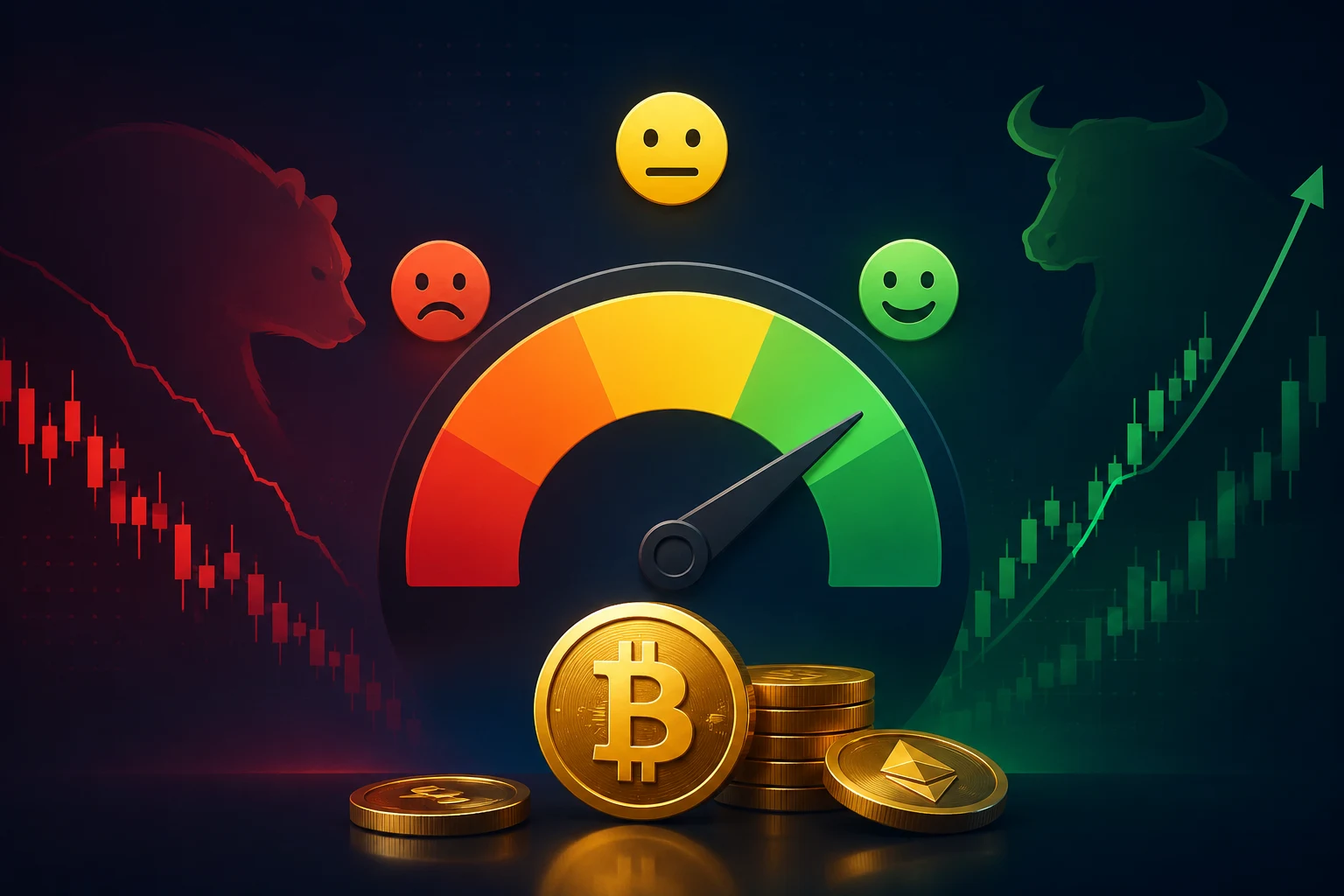
Why mood moves crypto
In traditional markets, prices are supposed to reflect fundamentals — earnings, cash flow, growth. Crypto has fundamentals too, but it is also famously, powerfully driven by *emotion*. Fear and greed move crypto markets with a force that often overwhelms any spreadsheet. Learning to read that emotional current — market sentiment — is one of the most useful skills for navigating crypto with a clear head.
Market sentiment is simply the overall mood of market participants: are people feeling greedy, optimistic, and eager to buy, or fearful, pessimistic, and eager to sell? When sentiment is extreme, it tends to show up in prices, and recognizing it helps you avoid being swept along by the crowd.
The tools for reading sentiment
No single signal tells the whole story. Skilled observers combine several.
Sentiment indices
The best-known are "fear and greed" style indices that aggregate multiple data points into a single mood reading, from extreme fear to extreme greed. They are useful as a quick snapshot — but they are blunt instruments, and they describe the present, not the future.
On-chain data
One of crypto's unique advantages is that the blockchain is public. On-chain data lets you observe real behavior: are coins moving to exchanges (often a prelude to selling) or off them (often accumulation)? Are long-term holders selling? Our guides on understanding on-chain data and total value locked go deeper. This is harder to fake than social chatter.
Social and search signals
Spikes in social media activity, search interest, and the sheer volume of crypto chatter often map to sentiment extremes. When your non-crypto friends start asking how to buy, that itself is a (contrarian) signal worth noting.
News flow and its tone
The volume and *tone* of news matters. A relentless stream of positive headlines can fuel greed; a wave of negative coverage can deepen fear. Reading not just the news but the *sentiment of the news* is central — and is exactly the kind of signal that is hard to track manually across dozens of sources.
Derivatives signals
Indicators like open interest and funding rates in crypto futures markets reveal how leveraged and one-sided positioning has become — often a clue to how fragile a move is.
The contrarian insight that protects you
Here is the counterintuitive heart of sentiment analysis: extreme sentiment often signals the opposite of what it feels like.
When everyone is euphoric and certain prices will keep rising, much of the buying may already be done, and the market can be primed for a fall. When everyone is terrified and convinced it is over, the selling may be exhausted, and conditions can be set for a recovery. This is why seasoned observers get nervous during euphoria and curious during despair. It does not mean reflexively betting against the crowd — timing is brutal — but it does mean treating extreme consensus as a yellow flag, not a green light.
How to use sentiment wisely
- As context, not a command. Sentiment tells you the emotional weather, not a guaranteed forecast.
- Combine signals. No single indicator is reliable alone. Look for agreement across several.
- Watch yourself, too. Your own fear and greed are part of the sentiment you are reading. The hardest bias to spot is your own.
- Never let it override risk management. Sentiment is a lens, not a license to abandon caution.
None of this is investment advice. Reading sentiment is about understanding the crowd — and yourself — well enough not to get trampled by either.
See the mood at a glance
Tracking sentiment manually means watching indices, social feeds, on-chain dashboards, and endless news — an impossible full-time job. This is precisely what Zippfeed is built for: crypto news scored for sentiment (bullish, neutral, or bearish) and importance across many sources, so you can read the market's actual mood in one place and recognize when emotion has detached from reality.