The risk no one warns beginners about enough
Here is an uncomfortable truth: in crypto, you can be completely right about the market and still lose everything — to a hack, a scam, or a simple mistake. Crypto puts you in charge of your own security in a way traditional banking never does, and that power cuts both ways. Storing your crypto securely is not optional; it is the difference between owning your assets and merely hoping to keep them.
This guide covers the practical essentials. The good news: the core principles are simple, and following them puts you ahead of most people.
First principle: who controls the keys?
Everything in crypto security comes down to private keys — the secret codes that prove ownership and authorize spending. Whoever controls the keys controls the crypto. This gives rise to the most important phrase in crypto: "not your keys, not your coins."
- Custodial storage (leaving crypto on an exchange): the exchange holds the keys. Convenient, but you are trusting the company, which can be hacked, fail, freeze withdrawals, or restrict access. Fine for small trading amounts; risky for serious holdings.
- Self-custody (your own wallet): you hold the keys. You get full control and responsibility. This is where significant holdings belong.
The first major upgrade for most people is simple: do not leave large amounts sitting on an exchange.
The seed phrase: guard it with your life
When you set up a self-custody wallet, you receive a seed phrase (also called a recovery phrase) — typically 12 or 24 words. This phrase *is* your wallet. Anyone who has it can take everything; if you lose it, your crypto may be gone forever. So:
- Write it down offline. On paper or, better, etched on metal. Never store it as a photo, in a cloud note, in email, or in a password manager that could be breached.
- Store copies safely and separately. Protect against fire, loss, and theft with more than one secure physical copy.
- Never, ever share it. No legitimate service, support agent, wallet, or airdrop will ever ask for your seed phrase. Anyone who asks is trying to rob you. This single rule prevents a huge fraction of losses.
- Be wary of how you enter it. Only enter a seed phrase when genuinely restoring a wallet, and never type it into a website.
Hot vs cold: matching storage to purpose
A practical setup uses different storage for different jobs:
- Hot wallets (connected to the internet — mobile or browser wallets) are convenient for everyday use, small amounts, and interacting with DeFi. But being online makes them more exposed. Keep only what you need for active use here.
- Cold storage (offline) is far safer for holdings you are not actively using. The leading form is a hardware wallet.
The common pattern: a hot wallet as your "spending wallet" with limited funds, and cold storage as your "savings vault" for the bulk of your holdings.
Hardware wallets: the gold standard for serious amounts
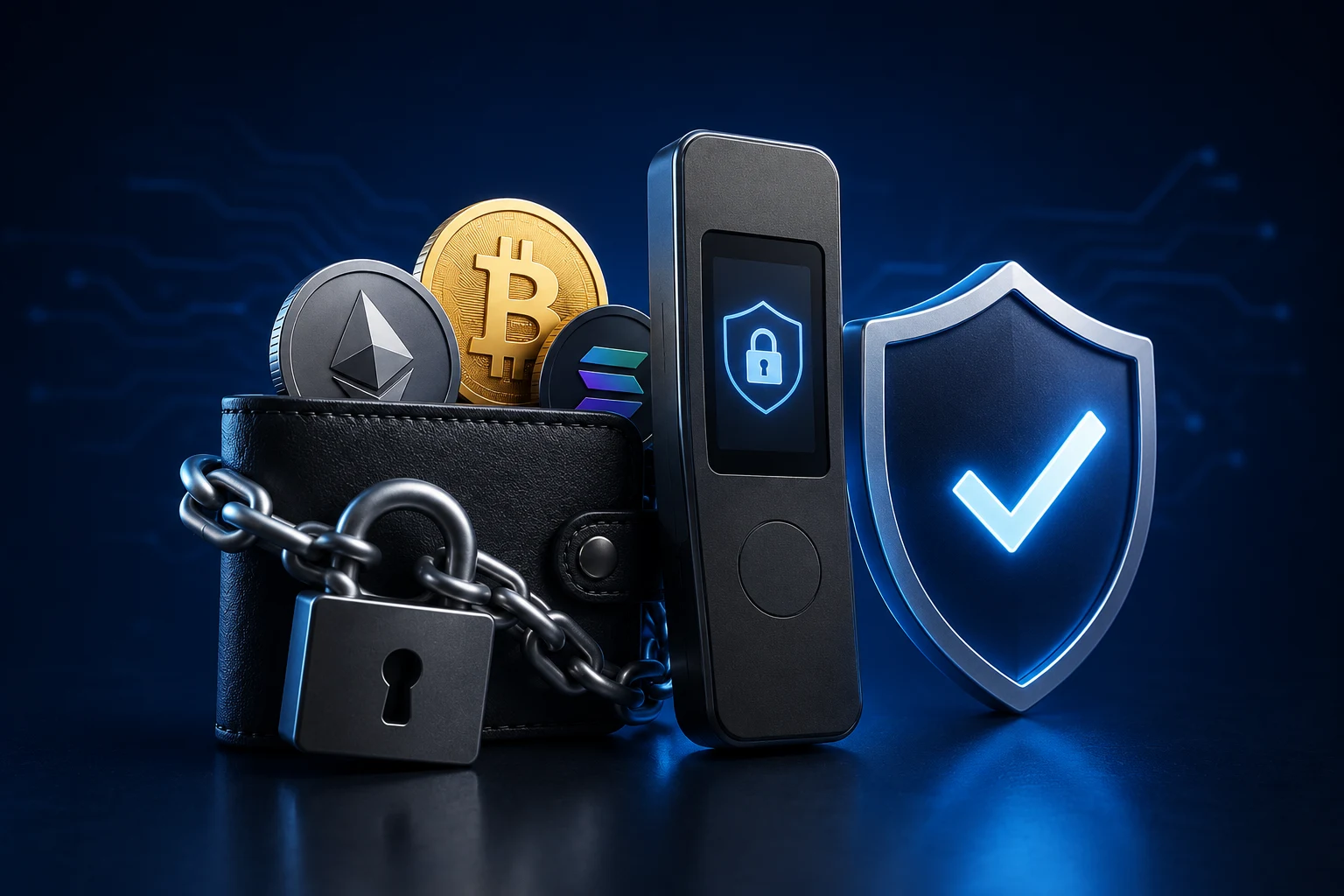
A hardware wallet is a physical device that stores your private keys offline and signs transactions without exposing the keys to your internet-connected computer. Even if your computer is infected with malware, the keys never leave the device. For meaningful or long-term holdings, a reputable hardware wallet is widely considered the best practical security. Our best hardware wallets compared guide covers choosing one.
A few hardware-wallet rules: buy only from the official manufacturer (never second-hand or from random sellers, which can be tampered with), and set it up yourself so you alone generate and hold the seed phrase.
Everyday security habits
Beyond storage, simple habits prevent most attacks:
- Use strong, unique passwords and app-based two-factor authentication (not SMS, which can be hijacked).
- Verify addresses carefully. Malware can swap copied addresses; check the first and last characters before sending.
- Beware phishing. Fake sites, fake apps, and fake support are everywhere. Bookmark official sites and be skeptical of links.
- Understand what you approve. Connecting your wallet to a malicious smart contract can drain it. Only interact with trusted applications, and review approvals.
- Distrust unsolicited contact. No legitimate entity DMs you about urgent crypto problems, giveaways, or "support."
Stay ahead of threats
New scams, exchange problems, and security exploits emerge constantly, and the earliest warnings usually surface in the news. Zippfeed tracks crypto security headlines with sentiment and importance scoring, so you can hear about active threats — exchange issues, exploits, widespread scams — early enough to act, rather than discovering them after your funds are already at risk.